
By CRAIG E. CAMPBELL
As 2020 comes to a close, and not too soon for me, I am encouraged that a vaccine for the China virus is finally being distributed. President Trump’s Operation Warp Speed is a phenomenal achievement of will and focus that was only possible because of American exceptionalism.
While not everyone may want to be vaccinated, those who do and those who need it due to high risks, age, or underlying health conditions, will happily welcome this ability to become inoculated.
Which brings me to the aerospace industry. The achievements of aviation over the past century are incredible. From hot air balloons; to piston powered planes; to the 1950’s gilded era of commercial aviation; to the magnificent flying machines of the 21st Century; humanity has enthusiastically pursued flight.

Now, albeit set back a bit by the China virus, commercial aviation has opened up the world to travel and is as commonplace to most as riding a bus or train used to be.

The 21st Century will be the century of space. It will take its place in history as the time when humanity establishes settlements on the Moon and Mars, mines asteroids for precious metals, and explores beyond our galaxy to find answers to the existence of the Universe. These are exciting times for galaxy explorers.
Throughout the 1960’s the United States dominated space exploration, surpassing Russian Yuri Gagarin’s historic feat of being the first human to fly in space when he orbited the earth on April 12, 1960. I had the honor of visiting the Russian Cosmonaut Training Center, Star City, outside Moscow and touring the Gagarin Museum. I was astonished at the unsophisticated technology used to accomplish his historic flight. It confirmed to me that if one has the conviction to succeed, they can.
Under the dynamic leadership of President John F. Kennedy, the United States dedicated itself to becoming the premier space nation. So started the Mercury program, led by Alan Shepard’s flight into space on May 5, 1961. Between 1961 and 1963 Project Mercury launched six times, each with a single American astronaut orbiting the earth.
This was followed by the Gemini Project, launching two man crews into orbit ten times between 1963 and 1996. The Apollo Program culminated President Kennedy’s goal of landing on the moon, when Neil Armstrong first stepped onto the surface of the moon on July 20, 1969.
America proved it could energize a nation to become the world leader in space exploration. As of today, the Russians still have not landed a person on the moon.
Following eight years of rudderless Obama Administration leadership at NASA, President Trump reinvigorated the passion for space exploration. Today, NASA is led by a space visionary, Jim Bridenstine.
I know Jim. He was a fighter pilot, Director of the Tulsa Air and Space Museum, and represented Tulsa in the US Congress prior to becoming the NASA Administrator. With Jim at the helm, all things are possible.
He has refocused NASA on returning to the moon and is passionately working with private sector aerospace companies to support exploration flights to Mars. Under Jim’s leadership, NASA is aggressively pursuing the Armetis project, to return a person to the moon in the next few years. And time is of the essence, we must not stumble.
Our prime competitor, China, is rapidly developing a comprehensive space program and already has sent a lunar landing module to the moon to collect samples. In fact, two weeks ago China became only the second nation to place their national flag on the surface of the moon. They have announced their intention of also being the second nation to land a person on the moon by 2036.
Now is no time for the US to withdraw from space exploration. The Chinese space program is our most significant competitor and will determine which nation gains the benefits of outer space.
This is the dawn of private sector space operations in America which will ensure our role both in achieving historic accomplishments, as well as gaining the financial benefits.
SpaceX has demonstrated the capability to reuse launch boosters, resupply the International Space Station (ISS) with cargo, and now has used the Dragon capsule to be the first private company to deliver American astronauts to the ISS. SpaceX is now focused on reaching Mars with the first human landing by 2024.
Think bold and you can accomplish miracles.
SpaceX is not alone. Blue Origin is developing the New Shepard launch system that will deliver astronauts to the moon’s surface using the new Blue Moon lunar lander. As stated by Blue Origin “our road to space opens the door to the infinite and yet unimaginable future.”
Virgin Galactic, Virgin Orbit, Astra, Rocket Lab, and other companies are actively pursuing private sector launch vehicles to place satellites into orbit around the earth.
The exciting part is that the private sector has demonstrated both the ingenuity and financial capabilities to do what historically has been solely within the government domain.
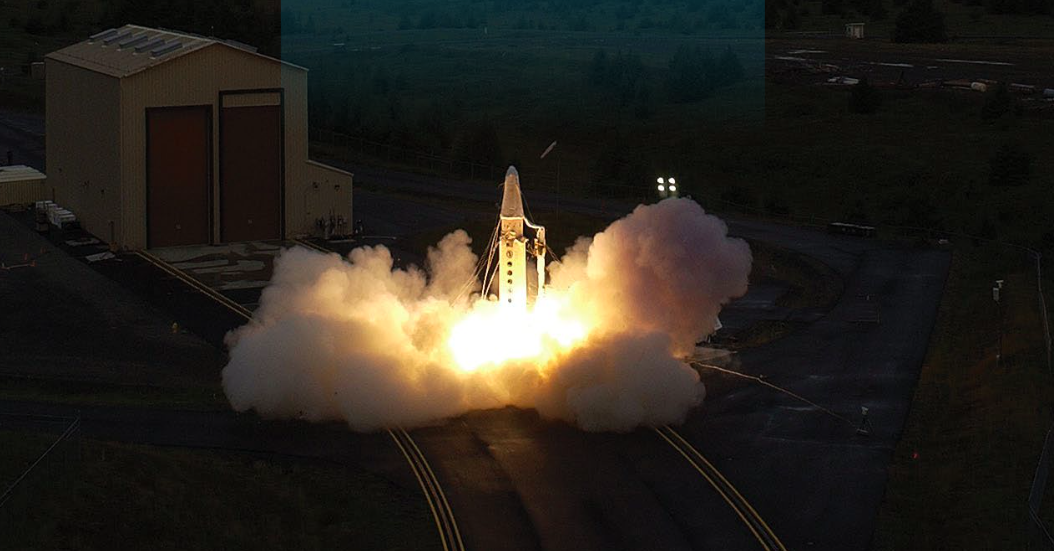
This is exciting for America and great for Alaska. The Alaska Aerospace Corporation operates the state-owned Pacific Spaceport Complex – Alaska (PSCA) on Kodiak Island. Operating without state general funds, Alaska Aerospace maintains one of the most modern launch complexes in America. With America regaining leadership in space, PSCA has an opportunity to attract an aerospace industry to our state. We must not let this pass.
As we look to diversify our economy, the aerospace industry should be a focused effort. Providing an optimum trajectory to place satellites into highly elliptical, polar orbit, PSCA offers an ideal location to attract the space industry for private sector companies looking to have global coverage of communications, imagery, and navigation.
With the strong military operations in Alaska, we also offer the US government a secluded, efficient, and cost-effective option to provide an alternative launch facility to US Government owned and operated Vandenberg AFB in California and Hawaii’s Barking Sands Pacific Missile Range Facility.
The question that must be asked is whether President-elect Biden has the vision and fortitude of President Kennedy to continue President Trump’s leadership in making America a global leader in space exploration, or will he return us to the Obama days, being content at having Russia and China the global leaders in space, gaining superiority over American innovation, reaping the economic potential, and threatening our national security.
It’s time to make the Last Frontier, America’s Gateway to the Final Frontier.
Craig E. Campbell served on the Anchorage Assembly between 1986 and 1995 and later as Alaska’s Tenth Lieutenant Governor. He was the previous Chief Executive Officer and President for Alaska Aerospace Corporation. He retired from the Alaska National Guard as Lieutenant General (AKNG) and holds the concurrent retired Federal rank of Major General (USAF).



