

SHUTS DOWN ‘AMNESTY BOXES’ FOR CONTRABAND
Corrections Commissioner Nancy Dahlstrom has put an end to Gov. Walker-era programs that allowed inmates to be checked out of prison for a day on passes, and gave them the right to secretly deposit contraband into drop boxes before their cells were searched. She also ended a program that allowed “super volunteers” unlimited access to prisons and prisoners at nearly any time of day or night.
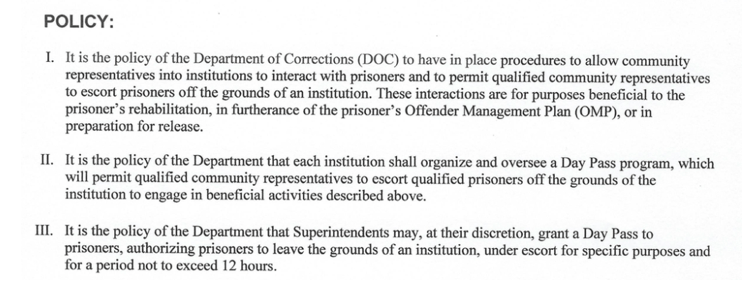
The day-pass program had been quietly adopted by former Corrections Commissioner Dean Williams a year ago. It had several safety problems identified by critics, the most significant being that there was no mandatory victim advance notification. Even police were not notified when a prisoner was checked out, and if an officer by chance had done a computer search, he or she would have found that inmate listed as still behind bars, not walking in the community.
Dahlstrom says that she looked for records to find out how many inmates were checked out under the program, but couldn’t find any documentation. But when inmates left the prison in “day clothes,” they were not searched upon their return, under order of the prior commissioner.
Dahlstrom also ended the use of property drop boxes, into which prisoners were allowed to secretly drop their contraband. If prisoners learned that cell searches were being done, they could declare “amnesty,” and the corrections officers would have to take them and their contraband to the “amnesty box.” There, the corrections officer would be required to turn his or her back, while the prisoner got rid of drugs, weapons, or other illegal items.
The amnesty box forced officers to ignore the infractions they knew were going on, and promoted smuggling in the prisons. Dahlstrom said there is evidently no written policy on the use of the boxes, but she’s ended the practice out of an abundance of caution and to support the corrections officers as they try to reduce crime inside the facilities.
Dahlstrom also ended a program that allowed some volunteers unlimited access to prisons, and this included women volunteers who had complete access to men’s prisons and men volunteers with unfettered access to women’s prisons.
In one instance, a woman volunteer had access to the prison where her husband was incarcerated. Such access can be disruptive to maintaining order in the facilities. Unlike volunteers from the faith-based programs, who are carefully vetted, the “super volunteers” required little screening.
“I fully support the governor’s mission to make Alaska much safer and protect our citizens, and it’s not right for the public’s money to pay for programs that cause citizens to feel unsafe,” Dahlstrom said. “I take that very seriously. We need to restore the people’s trust in government. I am continuing to review every single policy there is, and I anticipate other changes.”


