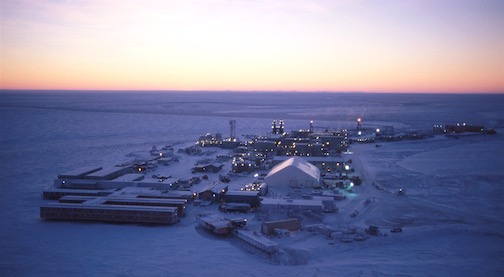
ConocoPhillips says it has mobilized numerous resources to respond to a natural gas release at the CD1 pad at its Alpine Central Facility. There is no interruption of natural gas being supplied to the Native community of Nuiqsut, population 500, “and we do not anticipate the need for a relocation of Nuiqsut residents based on current data,” the company said.
Ongoing air monitoring is in place both at the facility and in Nuiqsut, the company said. A third party contracted by ConocoPhillips has been collecting monthly air samples in the Nuiqsut community since 2014; the most recent results obtained have not shown anything outside normal conditions. No natural gas has been detected outside of the CD1 area. ConocoPhillips has taken the additional step to install more continuous air monitors in Nuiqsut, including daily sampling of volatile organic compounds.
Essential personnel remain on-site, supported by subject matter experts, and the company said it is in regular contact with regulatory agencies and community leaders. “Our primary focus is protecting our workforce and the community,” ConocoPhillips said Friday.

The Colville River Unit, also known as Alpine, is located in the Colville River Delta on Alaska’s western North Slope, 34 miles west of the Kuparuk River Field and eight miles north of the Inupiat village of Nuiqsut. Kuparuk is one of the largest conventional onshore oil fields developed in North America in the past 25 years. Alpine is considered a model for future oil developments as directional drilling and other innovations minimize its environmental footprint. In 2020, net crude oil production was 25,000 of oil equivalent per day.