
On New Year’s Eve, hundreds of thousands of people crowded together in stadiums to watch football games, as they have all season. They yelled, they chanted, and they were inches from each other.
But the day before, the Centers for Disease Control and Prevention warned Americans to postpone cruise ship travel in 2022, due to the spread of the omicron variant of Covid-19. The most vaccinated and tested people in the world — American cruise travelers — are being told to stay away.
The latest version of CDC advice singling out the cruise industry says that even fully vaccinated passengers can catch and spread the newest version of Covid.
The CDC raised the risk level for cruise travel to its highest level. Previously, the agency said only unvaccinated people should avoid cruises.
The new CDC advisory says:
- Avoid cruise travel, regardless of vaccination status.
- Even fully vaccinated travelers may be at risk for getting and spreading COVID-19 variants.
- The virus that causes COVID-19 spreads easily between people in close quarters on board ships, and the chance of getting COVID-19 on cruise ships is very high, even if you are fully vaccinated and have received a COVID-19 vaccine booster dose.
- Outbreaks of COVID-19 have been reported on cruise ships.
- If you travel on a cruise ship, make sure you are fully vaccinated before travel and get a COVID-19 vaccine booster dose if you are eligible.
- People who go on a cruise should get tested 1–3 days before their trip and 3–5 days after their trip, regardless of vaccination status or symptoms.
- Along with testing, passengers who are not fully vaccinated should self-quarantine for a full 5 days after cruise travel.
- People on cruise ships should wear a mask to keep their nose and mouth covered when in shared spaces. While CDC is exercising its enforcement discretion under CDC’s Mask Order to not require that persons wear a mask under certain circumstances on board foreign-flagged cruise ships subject to the Temporary Extension & Modification of the Framework for Conditional Sailing Order (CSO), including onboard cruise ships choosing to follow the requirements of the CSO on a voluntary basis, individual cruise lines may require travelers (passengers and crew) to wear masks on board the ship.
Cruise ships already have rules that say all people onboard must be vaccinated and tested before they board.
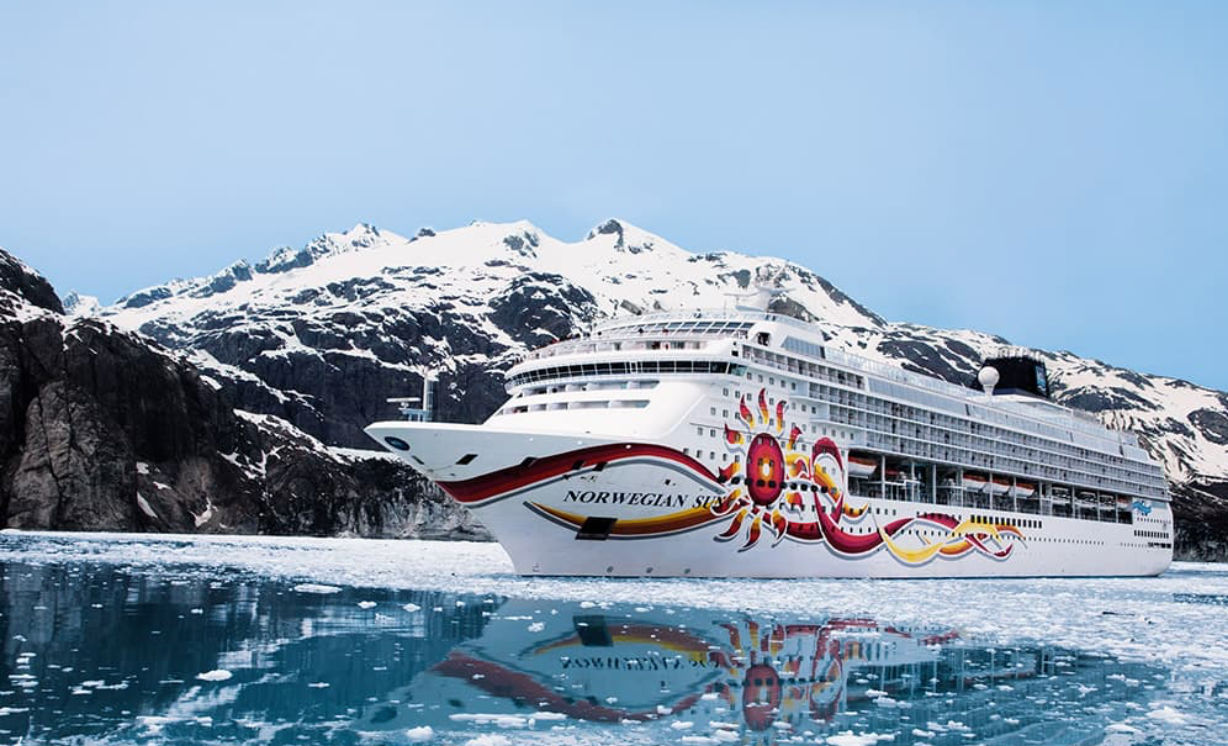
The 2022 Alaska cruise season officially begins on Saturday, April 23, 2022, according to Cruise Critic, when Regent’s Seven Seas Mariner makes a call on remote Dutch Harbor in the Aleutian Islands. On April 25, the Norwegian Bliss arrives in Juneau.
There’s no word yet from the major cruise lines as to whether they will cancel, as they did for the entire 2020 season. But likely not.
Bookings for Alaska begin in early January, so the news casts uncertainty for businesses across Alaska, which have suffered greatly from pandemic policies over the past two years. The 2021 cruise season was limited in Alaska, but considered successful because there were no great Covid outbreaks.
For 2022, one of the biggest challenges for Alaska businesses is going to be labor — tour guides, coach drivers, and small boat captains, for instance. Businesses will have to pay a lot more for those workers, and they may have fewer customers to support the businesses, so prices will be driven higher for tours. But if the cruise ships are booking people at cheaper cruise prices, those types of passengers won’t go on shore excursions in the numbers needed to support a business.
In Juneau, companies are so desperate for workers that $1,000 signing bonuses are being offered to seasonal bus drivers.
“A lot of tour operators decided not to open this season, mostly because they couldn’t get staff,” Skagway Borough mayor Andrew Cremata told Cruise Critic in September. “I think one of the biggest challenges for business owners next year is going to be getting people to come up here and work. The price of the tours is going to go up. The cost of doing business is going to go up. If you can work at McDonalds in Seattle for fifteen bucks an hour, and someone is telling you, ‘Hey, come work in Alaska, live in dorm-style housing for $12 an hour’…it’s a tough sell.”


