
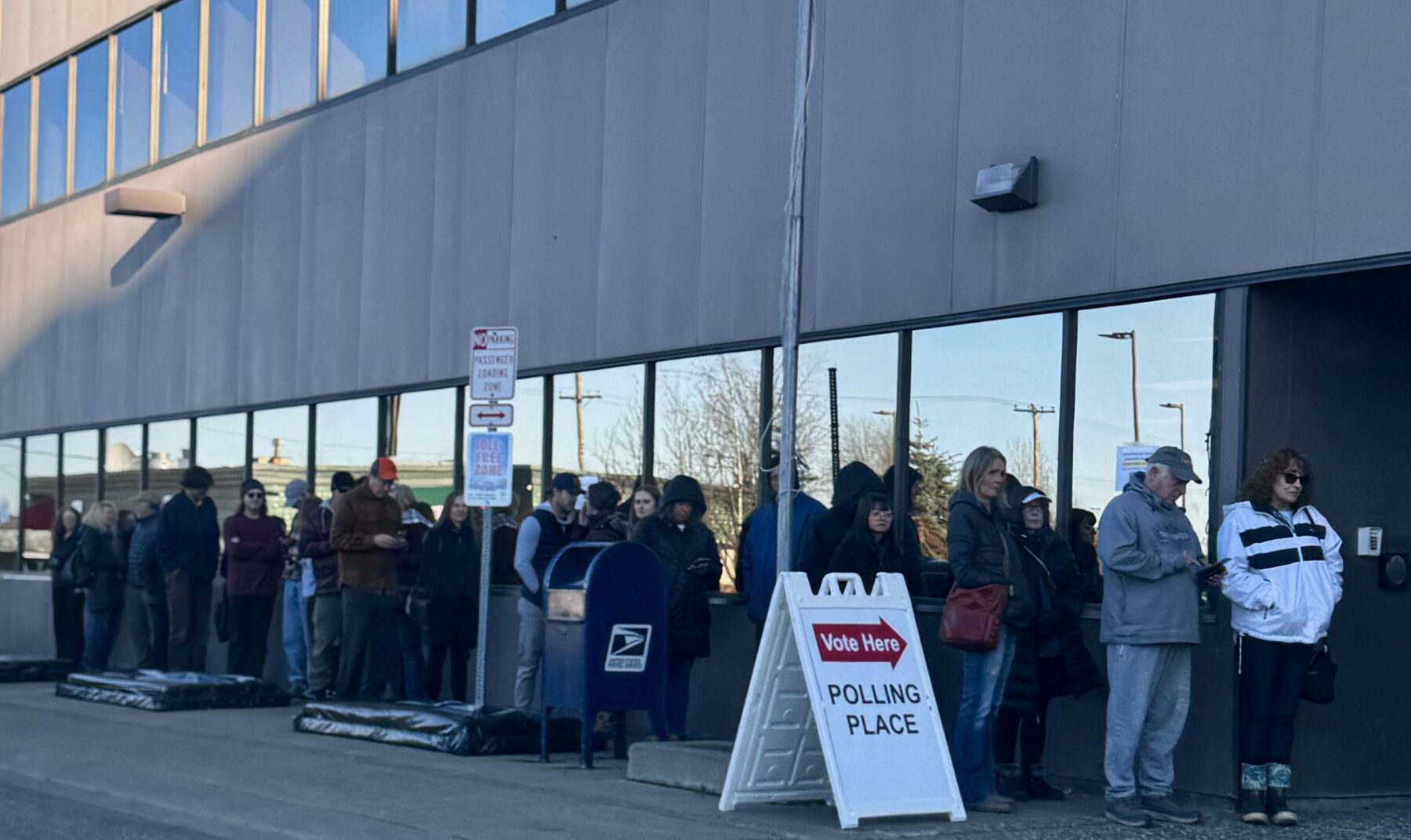
The Department of Justice has initiated formal requests for voter registration records and other election-related data from at least nine states, according to official state confirmations and federal documentation. The states contacted include Alaska, Arizona, Colorado, Minnesota, Nevada, New Hampshire, New York, Pennsylvania, and Wisconsin.
The requests, sent through the DOJ’s Civil Rights Division, focus on how states manage voter registration, clean their rolls, and identify ineligible voters.
The DOJ is seeking information on processes used to verify voter eligibility, such as checks against state databases to flag duplicate registrations, noncitizens, deceased individuals, and those disqualified due to felony convictions or mental incompetence.
Here is the letter sent to Alaska Lt. Gov. Nancy Dahlstrom:
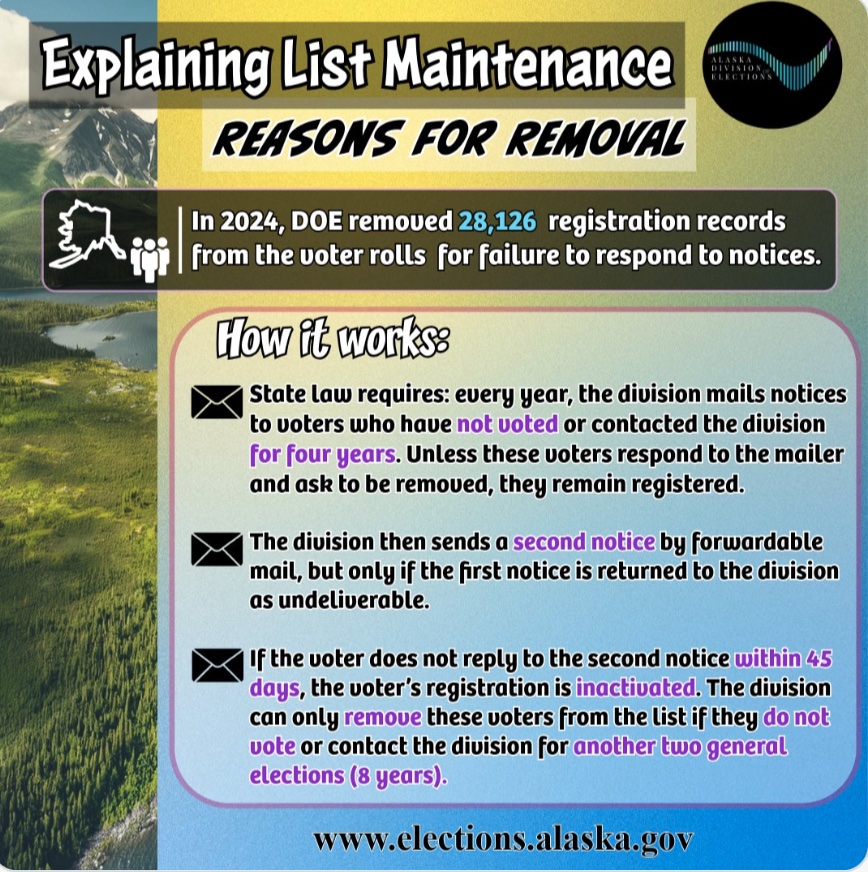
Last week, nearly three weeks after the Justice Department request was made to Dahlstrom, the Alaska Division of Elections sent out a social media post explaining how voters are removed from the voter rolls:
In Colorado, the Justice Department asked for “all records” related to the 2024 general election, which may include ballots and voting equipment records. State officials have described the scope of the request as highly unusual.
Similar letters were sent to other states with varying levels of detail and specificity, ranging from general voter roll maintenance procedures to inquiries about voter verification methods, such as Arizona’s use of driver’s license numbers for identity confirmation.
These requests are issued under the authority of a March 2025 executive order signed by President Donald Trump, directing the Department of Justice to investigate suspected election-related crimes. The executive order also allows the DOJ to withhold certain federal funds from states that fail to comply with such investigations.
State responses to the DOJ inquiries have varied. Some, like Wisconsin, referred the DOJ to publicly accessible voter information portals that require payment of a nominal fee. Others, like Arizona, provided limited data consistent with federal law, while affirming their existing voter verification safeguards. Pennsylvania confirmed its cooperation with the DOJ but did not publicly disclose the extent of its data sharing.
The Alaska Division of Elections, under the direction of Dahlstrom, is working on a response.
Election officials in Colorado expressed concern over the unprecedented scope of the DOJ’s demand, noting that public voter data is readily accessible under state law but emphasizing restrictions on sensitive information such as Social Security numbers or drivers’ license numbers. Additionally, election officials in several states have cited statutory limitations on releasing certain types of data, even to federal agencies.
Under federal law, including the National Voter Registration Act of 1993, the Department of Justice is empowered to monitor voter roll maintenance to ensure accuracy and prevent ineligible voting. Federal law permits oversight of voter list maintenance, demands for records encompassing all election materials and voting infrastructure could test the boundaries of federal authority.


