
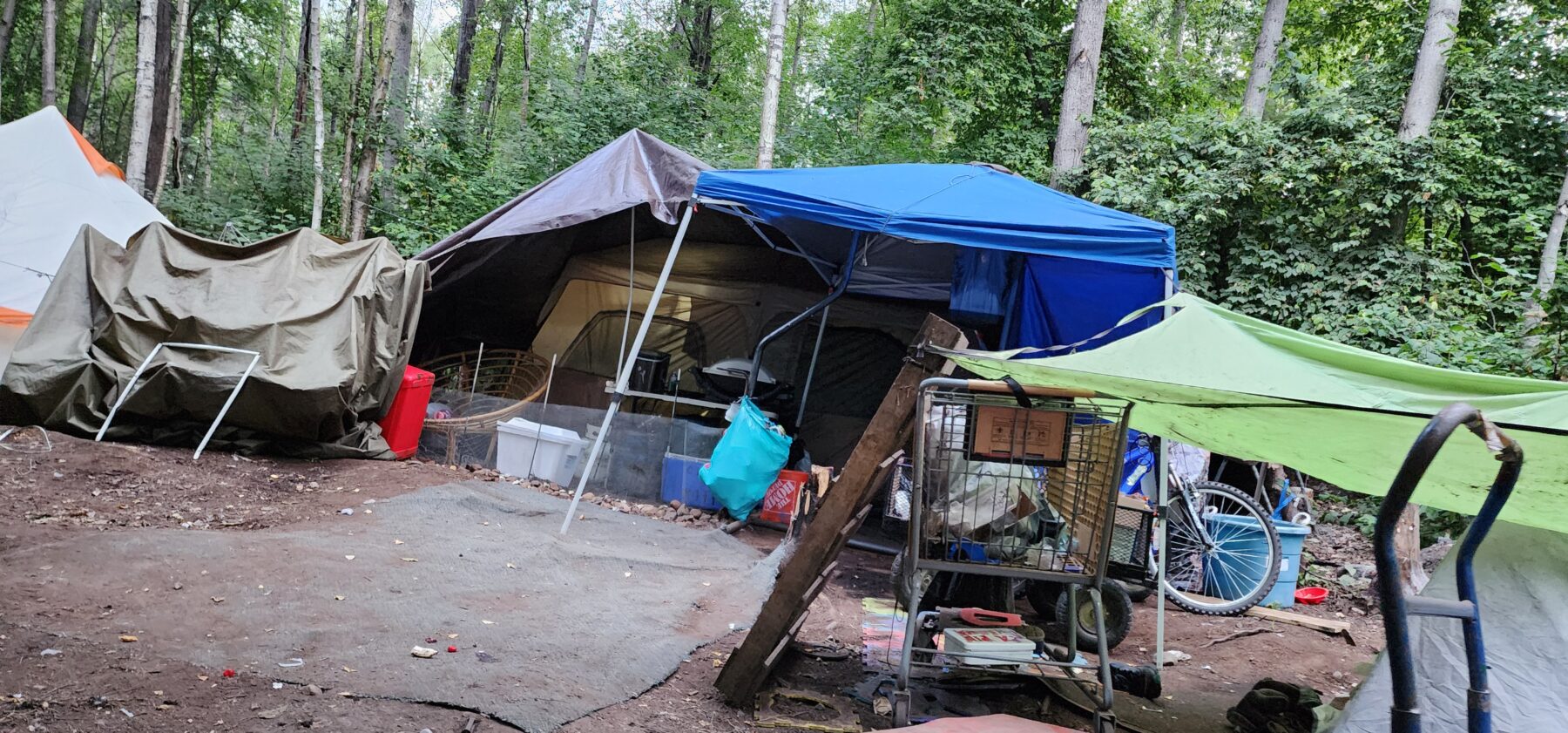
The Anchorage Assembly is holding a work session Monday, July 28, to deliberate two major contract awards totaling over $18 million for congregate shelter services aimed at chronically homeless individuals who are not adaptable to other forms of shelter because they generally cannot follow rules of more structured shelters.
The proposed awards come as part of Request for Proposal 2025P012:
- Assembly Memorandum AM 562-2025 recommends awarding up to $11,115,360 to MASH Property Management, LLC.
- Assembly Memorandum AM 567-2025 recommends awarding up to $7,147,126 to Henning, Inc.
Both contracts would be administered through the Anchorage Health Department, with the total not-to-exceed amounts contingent on all renewal options being exercised.
The stated goal of the funding is to provide safe, supervised, and appropriate congregate shelter environments for individuals who have not successfully transitioned to other housing models such as low-barrier shelters, hotel conversions, or permanent supportive housing.
The contracts add to a growing list of public expenditures aimed at managing Anchorage’s homeless crisis. In 2024:
- The Assembly approved $4 million in emergency funds in September to secure 450 winter shelter beds.
- The state budget drafted in April included another $4 million for a year-round, 200-bed low-barrier shelter in Midtown.
- The municipality spent $1.5 million to move 150 clients into permanent housing with supportive services.
These figures represent only a portion of the city’s annual spending on homelessness, and does not include all the overhead of running programs, or the public safety responses, including incidents such as the vagrants who set fire to a park in protest of the city’s abatement of the encampment.
A 2023 report noted that Anchorage had spent $161 million on the crisis since 2020, an average of roughly $40 million per year. That figure is likely only a portion of the real costs.
Despite the enormous outlay, residents of Anchorage continue to grapple with escalating problems associated with chronic hobo lifestyles, including shoplifting and camp violence fueled by alcohol and drug transactions and addiction.


