
By ART CHANCE
I go to see a movie at the theater every couple of years; they’re overpriced, the service sucks, and the audience is usually a bunch of punks who can’t get off their phones. But nostalgia demanded that I go see “Top Gun – Maverick.” I saw the original when it came out at the 20th Century Theatre in downtown Juneau; surround sound was a new and neat thing in 1986.
That movie is responsible for the fact that you could trace the evolution of surround sound in the dead cables in my Juneau crawl space; if that chain slicing across the deck as the F14 catapults doesn’t addict you to surround sound, you’re immune – or something. In my experience, the original “Top Gun” was the first movie with truly good sound.
The new movie is just a modernized version of the old movie, but 1986 was an eon ago and it is time for a new audience that will think it is new. While the movie is a resounding box office success, I have to wonder if it is reaching that new audience. Admittedly, anecdote isn’t data, but my observation is that the audience was made up of people who saw it the first one. The only young people were the kids they brought with them. I don’t think this movie has much attraction to the man-bun and pink pussy-hat set. You can’t say it has “woke” conformity, but they’re careful to skirt any subjects or situations that might set the woke crowd off. To their credit, the producers kept the Nationalist Chinese flag on Maverick’s jacket despite the opposition of the Communist Chinese, who provided financing for the movie. Chinese financing of US movies is something we should address.
The protagonist, Pete Mitchell, call-sign “Maverick,” played by Tom Cruise, is a character many of us who have worked in government and corporations are very familiar with; he is very, very good at what he does and almost everyone above him or around him in the organization hates him. I think I know that guy. Maverick is the kind of guy who gets the assignments that can get you killed or your reputation ruined, and the people who gave you that assignment can claim they don’t know you. I’ve been there, done that.
In the original Maverick was a hair on fire “naval aviator” and the only things he chased more aggressively than enemy aircraft were pretty women. Orders and procedures were suggestions, often laughable suggestions from inferior men. Maverick becomes something of a hero by acting against orders and thwarts those who would like to destroy him. He receives a plum assignment and that is where we leave it in 1986.
In 2022, Maverick is still a captain and promotion has been impossible. One of his antagonists from almost 40 years before, “Iceman,” has become an ally, has also become an admiral, and is something of a protector. The Admiral, “Iceman,” steps in to rescue the still “dangerous” Maverick from yet another contretemps with the pencil-necked weenies and gets him assigned back at “Top Gun” to instruct a group of pilots for a very demanding and secret mission, an only thinly disguised covert raid on an Iranian nuclear site. Needless to say, many of the pencil-necked weenies in command don’t like the new addition to their mission.

The new one is essentially the same plot line as the original and the same characterizations, but with a couple of ironic twists. There are plenty of nostalgic cues to bring back memories for those of us familiar with the original. Maverick may have been a hero in the first one, but he wasn’t and isn’t a hero to the Navy bureaucrats above him so he remains a captain after all these years and everyone outranks him in every way except in reputation.
The original movie was unkind to the Navy brass. The new one is even less kind and is very much reflective of these times. The three-star in charge of the mission that is the focus of the story steps into the training that Maverick is conducting. The mission profile is very demanding and the team is having difficulty accomplishing the mission in simulation. The three-star changes the mission profile to make it less demanding so that the team can meet the metrics in the training for the mission. That means that the team is prepared for the mission but also all but guarantees that some or all of them will not survive it and the mission might not succeed.
That is unfortunately typical of today’s public management. The manager’s metric is to plan and train up a mission, so if he meets his metrics he is a success. If the team fails to carry out the mission successfully, the failure is on them. In less business school-like terms, he’s willing to sacrifice their lives to move any responsibility for failure away from himself.
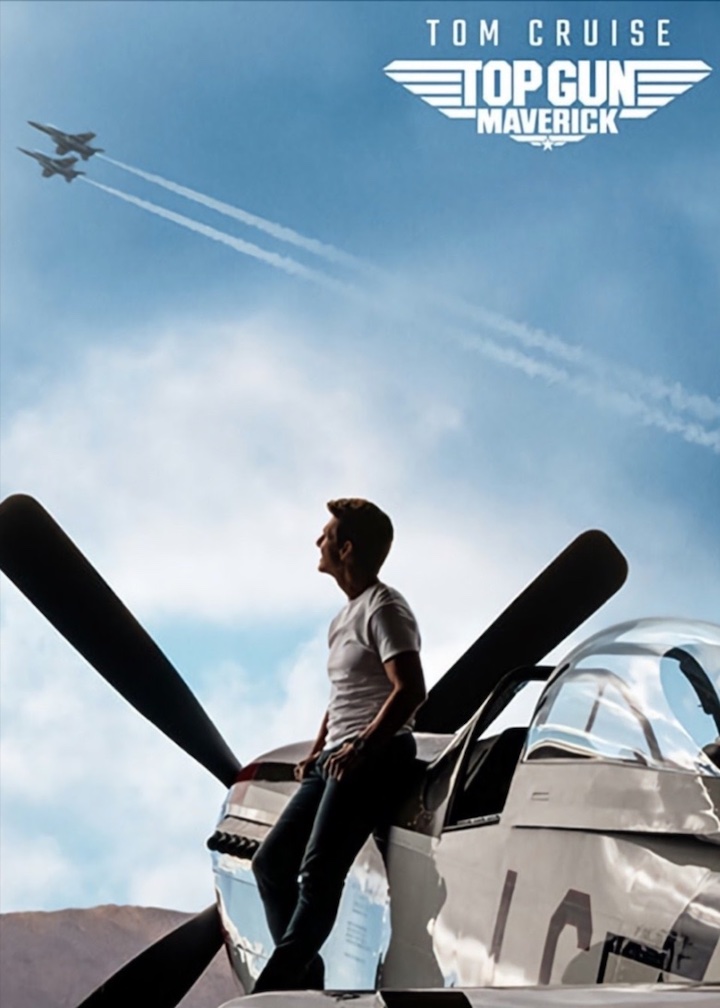
Since you know the genre, I won’t be a spoiler if I tell you that Maverick and his team accomplish the mission, make an heroic, if unlikely though nostalgic, getaway, and Maverick rides off into the sunset with the pretty woman, and does so in a vintage WW II P-51, which may in fact be his. Tom Cruise does own and fly one.
It’s a good movie worth seeing and one that might do some good for our indoctrinated youth to see, so if you can tear your kids away from Tik-Tok take them to it. Without regard to the story, the graphics are stunning. No CGI or animation was used and all the flying was done by real Navy pilots flying real Navy aircraft although the websites are abuzz about whether the SU-57s depicted were real or whether they were US F-22s made to cosmetically resemble the SU-57. Of course, that is the sort of controversy that makes we who argue about stuff like that sometimes unpleasant to go to movies with.
Art Chance is a retired Director of Labor Relations for the State of Alaska, formerly of Juneau and now living in Anchorage. He is the author of the book, “Red on Blue, Establishing a Republican Governance,” available at Amazon.



