
By ART CHANCE
Sept. 10, 2001, was just another day. I was a labor relations analyst IV for the Department of Administration, Division of Personnel, and I had an arbitration scheduled to begin the next day.
The hearing was with the Alaska State Troopers’ union and, as it was decades ago, I don’t have a clue what it was about. I think it was held in Juneau because the union representative was there.
Sept. 11 promised to be just another day at the office, at least if your office is an adversarial proceeding in front of a labor arbitrator.
I awoke at my usual 5:30 am, went to the kitchen and brewed a cup of coffee. I turned on the radio, as was my custom, and instead of the local announcer on KINY, it was an ABC network feed with Peter Jennings. I knew something was going on in the world, so I turned on the TV.

To this day I can’t sort out what I saw in real time and what was on tape; time is pretty elastic that day.
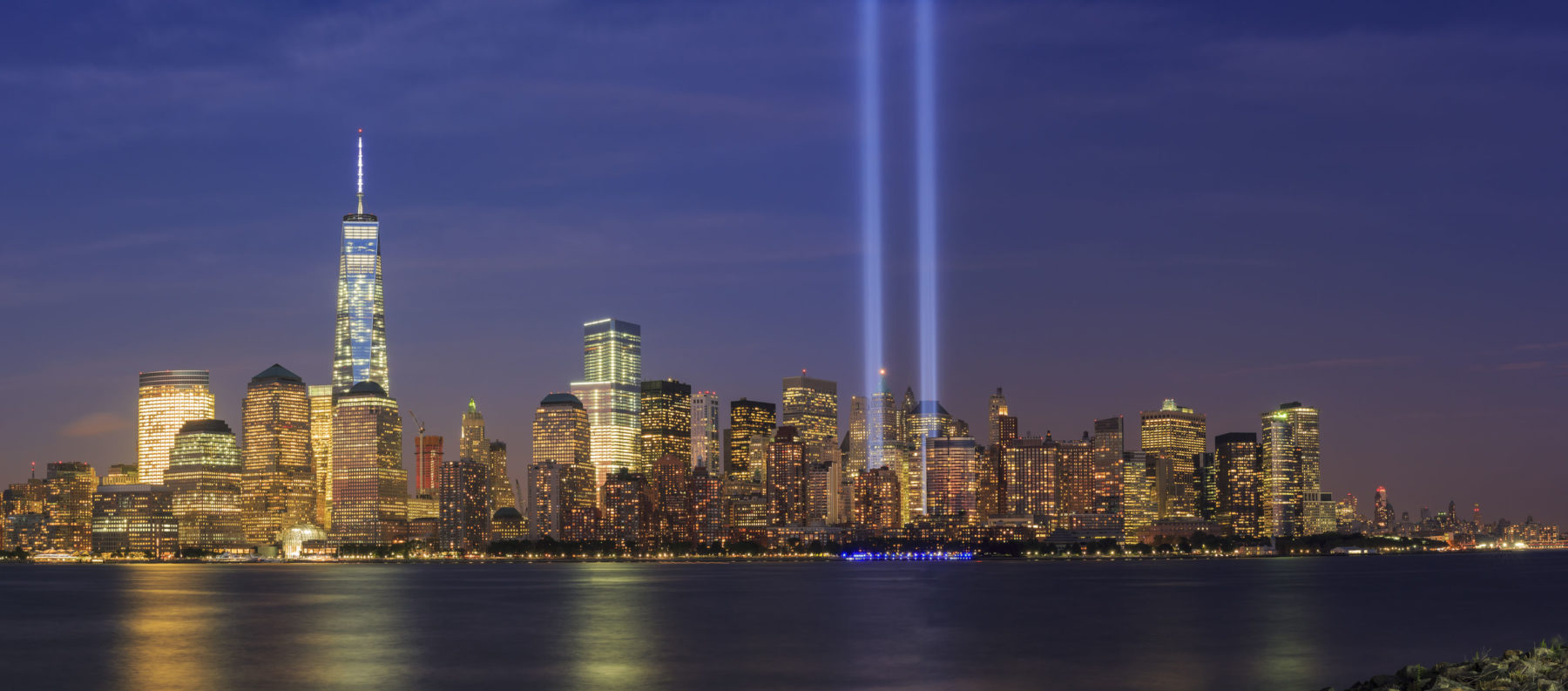
I do know that the first aircraft had hit the first World Trade Center tower at 4:45 am Alaska Daylight Time, so I began watching about an hour after the first impact and 20 minutes after the second tower was struck.
After the first tower was hit, there had been talk of it possibly being an accident. During World War II, a US B-25 crashed into the Empire State Building and the World Trade Center was built to withstand the impact of aircraft of the time of its design, the late 1960s. When the second aircraft struck the South Tower, that ended talk of accidents; it was evident that the world had changed.
I awakened my wife, told her we were likely at war, and quickly set off to work. I told her I’d see her when I saw her.
I wasn’t the first one at the office; everyone knew it was going to be an interesting day. You don’t know what you don’t know until people start asking questions you never even thought about. We knew enough about emergencies to know that this day was going to result in something between extraordinary security and martial law.
I got a couple of people working on how we exercised emergency powers and how we differentiated between an emergency and martial law and had someone get on the horn with the Department of Law to see who was in command if there was a federal declaration of martial law. I still don’t know a hard answer for that and I’m really glad we never had to find out, though we might yet.
Being bureaucrats, the first questions were of course who could do what and who was on top. Then the practical questions began to arise. As soon as the U.S announced the ground stop of all aircraft, it became evident that we had employees and State authorized travelers scattered all over Alaska and the United States.
Fortunately, we didn’t seem to have anybody traveling internationally; that luxury mostly passed with the mid-80s oil price crash. It also quickly became evident that we had no centralized way to know who they were or where they were and we had no reliable way to contact them.
Cell phones were far from ubiquitous in 2001, and the State didn’t issue them to any but very high-level employees; I was a direct report to a political appointee and I didn’t have a State phone.
The internet was still in its infancy. The State had a website and we could post information and notices, but it offered no real communications capability. We basically resorted to bureaucrat instincts; we knew we couldn’t direct it or control it, so we had to concentrate on making sure that whatever happened. we could fix it.
It’s been lost in the clutter over 20 years but there was no certainty that the threat was over. There had been chatter of an attack on the West Coast using trans-Pacific airliners, and Alaska was in the cross-hairs of that. Some airliners en route from Asia got to look at Elmendorf F-15s off their wings and were escorted to a ground stop at Anchorage Ted Stevens International Airport. Some major buildings were evacuated. In those days the State was pretty cranky about closing buildings. Our basic attitude was if the building is habitable, the State will inhabit it, and you will come to work or use your own leave.
After what we’d seen on TV that morning it didn’t seem that we should quibble about whether people should get out of tall buildings.
In something that seemed straight out of World War II, the Air Force put up a combat air patrol over most of Alaska. I’d been in a few conversations with law enforcement, emergency, and military people over the threat of an aircraft attack on the Valdez Terminal and its effect on the Alaska and US economy; we took it seriously.
Most of the day was a blur. Typical of bureaucracy, every question went up the org chart at warp speed; there was a helluva lot of “upward delegation” that day. Since there were only a couple of steps on the org chart above us, a lot of it landed on us, and we’d been around long enough to know we didn’t want to explain why we couldn’t handle it and sent it to the commissioner or the governor. I think we got most of it right, but some if it we just “winged it” and hoped for the best.
As I look back my most striking memory from that day other than the event itself was going out on the eighth floor deck of the State Office Building in Juneau for a smoke, (yeah, I smoked back then), sometime that afternoon and experiencing the astounding quiet. You don’t realize how much aircraft noise there is in Juneau in summer, and Sept. 11 is still sort of summer, until there is no aircraft noise and almost no traffic noise; things seemed to have just stood still.
I worked with a pretty rowdy crowd and long, busy, demanding work days often, even commonly, ended in an “after action analysis” at some local watering hole. It had been a long, hard day, but nobody wanted to do anything other than just go home and be with their family.
Don’t get me started on what I think of the current White House resident and the events of August and September 2021.
Art Chance is a retired Director of Labor Relations for the State of Alaska, formerly of Juneau and now living in Anchorage. He is the author of the book, “Red on Blue, Establishing a Republican Governance,” available at Amazon.



