
By DAVID BOYLE
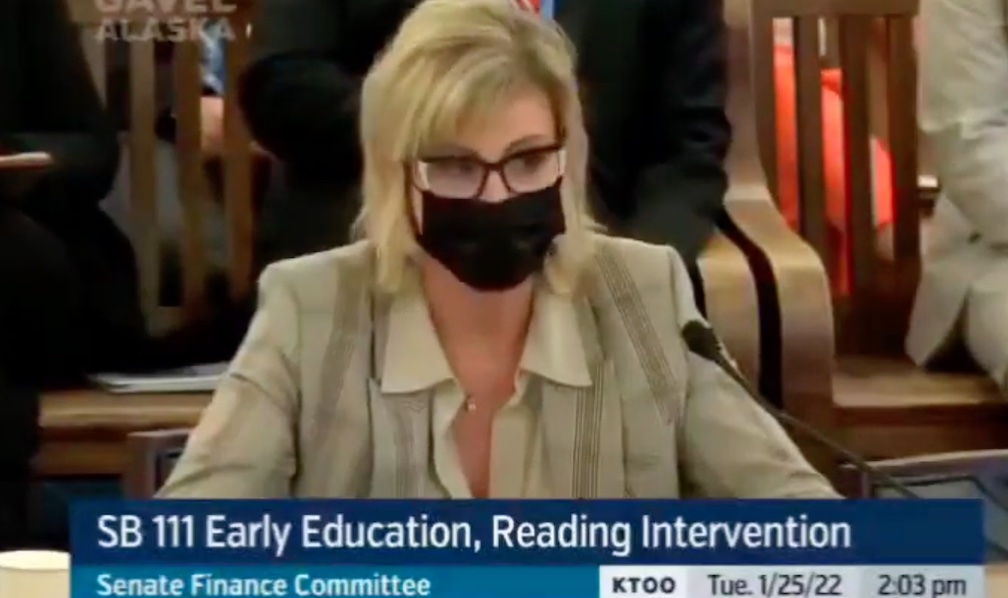
The Alaska Senate is hearing a bill, SB 111, that is touted as being able to increase student achievement in reading. The legislation also includes universal pre-K which is supported by the education industry stakeholders to get more funding. Some version of universal pre-K has been around for about three years.
The Legislature has failed to improve reading academics since 2003, even though K-12 spending has increased more than 90 percent since that time.
Concurrently, Alaska fourth graders went from 49th to 51st among the states in the National Assessment of Educational Progress reading scores.
Our 4th graders have been behind most of the nation even prior to Covid. This chart shows the trends in 4th grade reading in Alaska:
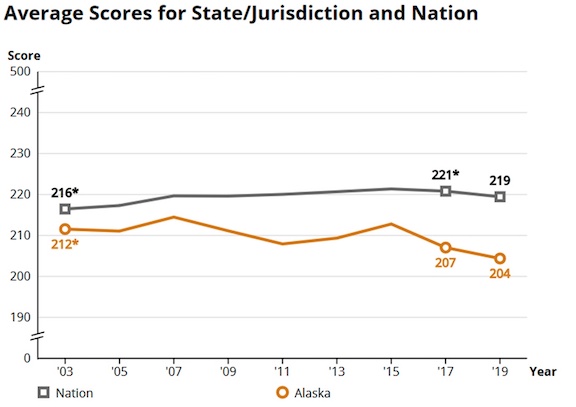
Now only 25 percent of Alaska students are proficient in reading. More money has not and will not improve student achievement unless school districts are held accountable for results.
The education community is banking on establishing pre-K as a solution to the reading problem. But if Alabama is any indication this will be just another effort at throwing money at a problem.
Alabama has had the highest quality pre-K program in the nation for the past 13 years according to the National Institute of Early Education Research. Today, Alabama ranks 48th in the 2019 4th grade reading scores.
The education community wants to increase funding by putting the pre-K students into the Foundation Funding formula. We do know that once it is put into the formula, it is near impossible to pull it back.
Anchorage Superintendent Bishop testified that former Superintendent Jim Browder changed the early reading requirement to 90 minutes per day: “He made it happen with no extra funding.” It’s clear districts do have the authority to emphasize reading within current funding.
Superintendent Bishop stated that because we have constant change in leadership and school boards kids lose ground. And she stated there are no policies in place to require accountability from districts. The State Board of Education needs to put these accountability requirements in place now. She also stated they had sufficient funds. A simple “read-by-nine” policy would hold districts accountable and teachers as well. The effective classroom teachers should welcome this.
Teachers who are effective in teaching reading should be identified and their best practices implemented. Why can’t we make that happen?
Sen. Natasha Von Imhof asked “How will pre-K improve reading?” She asked about Head Start students who go to public school: “Where are the Head Start students in K-3 reading?”
Commissioner Michael Johnson did not know but said he will try to track it down.
It would seem if the department is asking for more money and an expanded pre-K program, the department would have that information. Those Head Start students should be followed to see the impact of a current pre-K program on reading achievement prior to funding for all.
The U.S. Department of Health and Humans Services study of Head Start showed that there were short-term gains in cognitive skills, but these gains diminished by the time the children entered elementary school.
Sen. Bill Wielechowski asked Commissioner Johnson, “Why is Alaska worst in the Nation in 4th grade reading?”
“In Alaska, we may not always attach policy to funding like other states do. We send funding to districts out in bulk,” Johnson answered.
Funding school districts and allowing them to do as they want with the money does not focus them on measurable outcomes.
“Other states send out funding programmatically and ask for certain things from districts for that funding,” Johnson said. They require accountability for results.
Regarding accountability, Sen. Von Imhof asked if we cannot meet our current standards, what guarantee do we have we can meet these new standards?
Bishop said that the accountability built in to SB111 will make that happen.
But the reports mentioned in the bill do not specify accountability. The only real accountability is to defund the program by district if inadequate progress is made.
The bill sunsets in 2034 and a final report is due in 10 years.
The Senate Finance hearing was an admission that all past “fixes” have failed. Alaska does not have policies nor accountability in place. And yet proponents of universal pre-K want to wait until 2034 to tell us if this newest approach is effective.
By that time, thousands of students may still not be able to read at grade level.
David Boye is former executive director of Alaska Policy Forum and is Must Read Alaska’s education writer.


