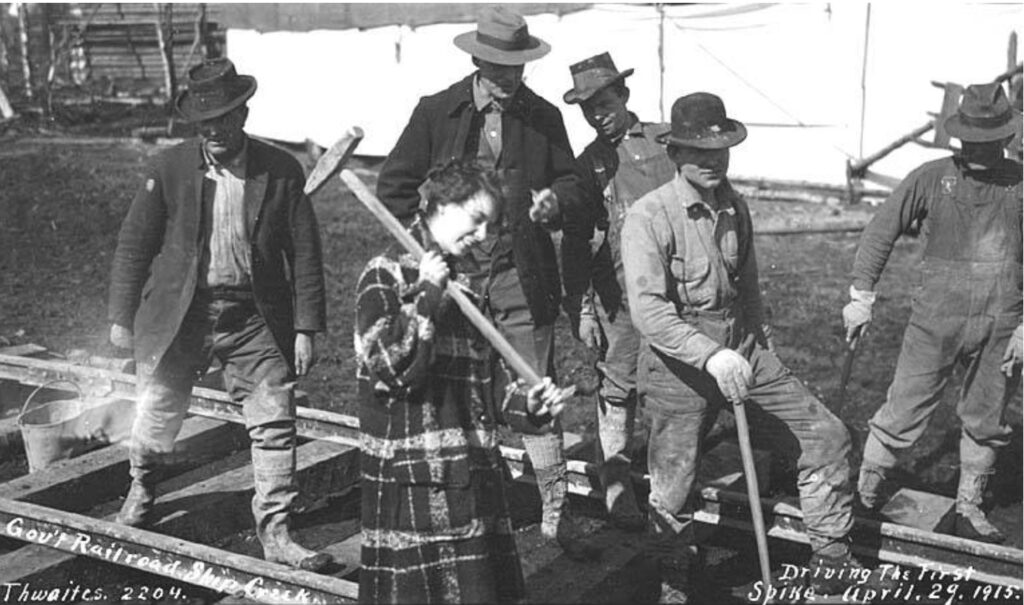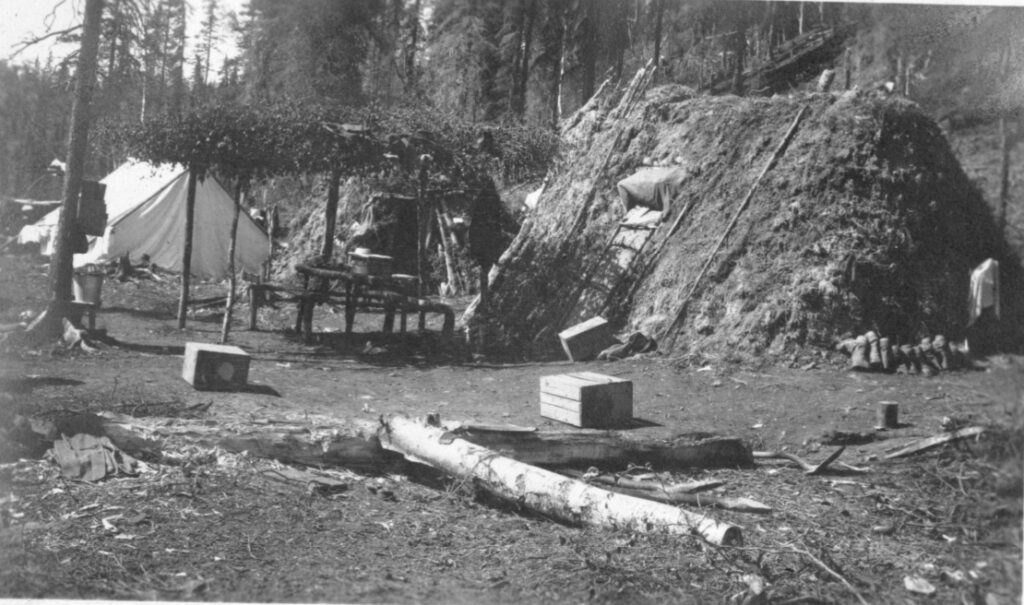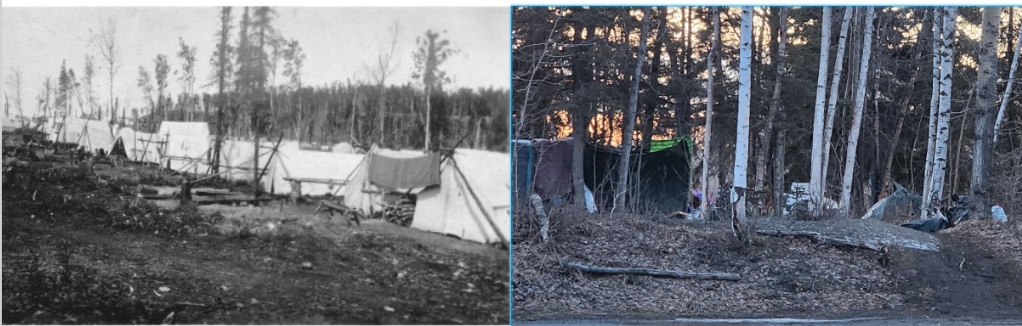
In the spring of 1915, a tent and shanty community grew along the banks of Ship Creek, as workers headed north to work on the Alaska Railroad. The conditions were rough and unsanitary, but the workers were there to be part of something and make a living. There was no safety net for the people who set up the tent city.
In 2025, Anchorage still sees tent communities popping up along roadways, trails, and sometimes on the streets themselves. The difference is that those in the tent communities are drug- and alcohol-addicted mentally ill people who are not looking for work, but looking for a fix.
Between 2020 and 2024, Anchorage appropriated nearly $190 million toward fighting homelessness, with no success. The Assembly is now focused on making Anchorage more affordable, in hopes that the street people will find a place to live.
A gallery of Anchorage’s lost souls who make the streets their home, photographed during the past week:
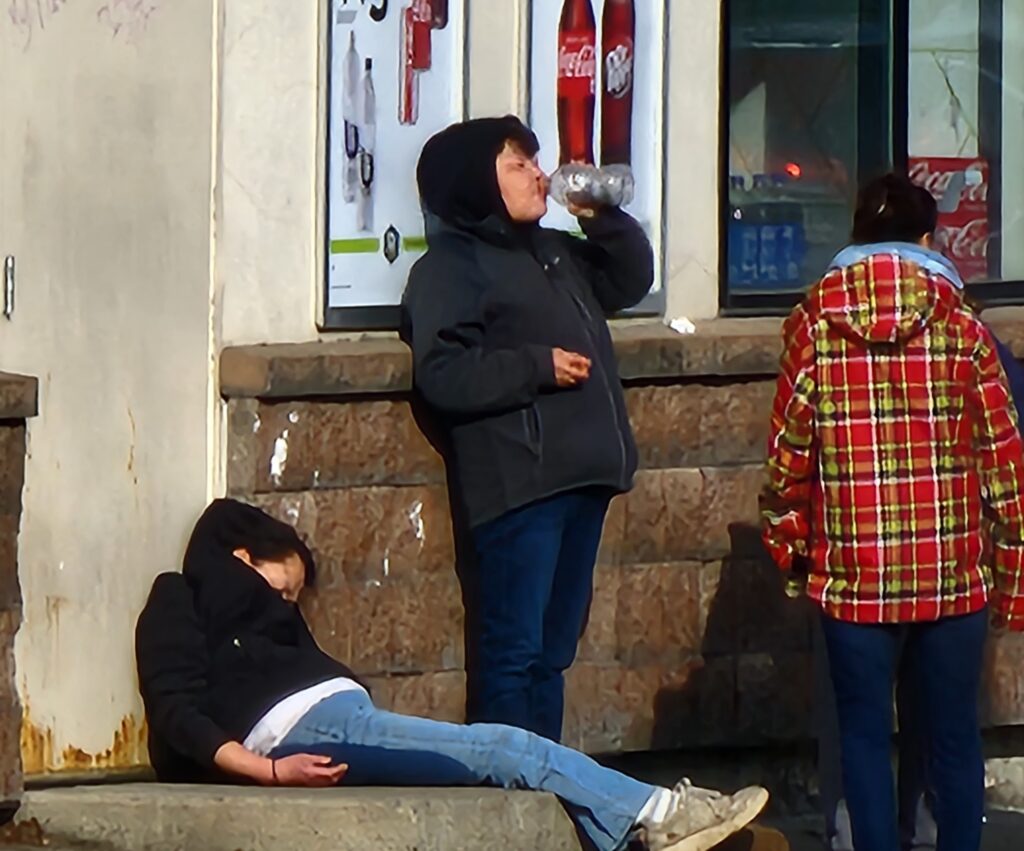
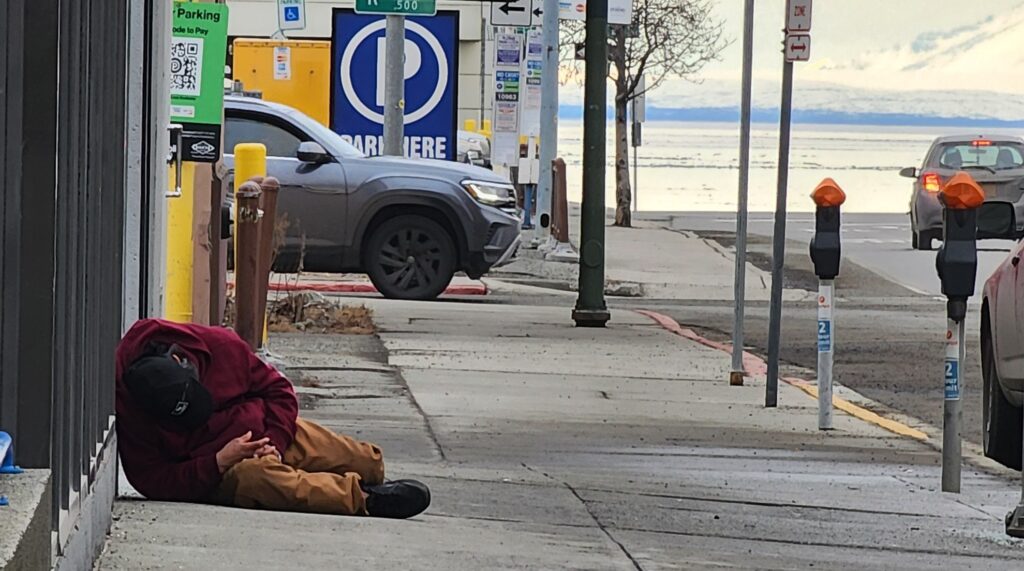
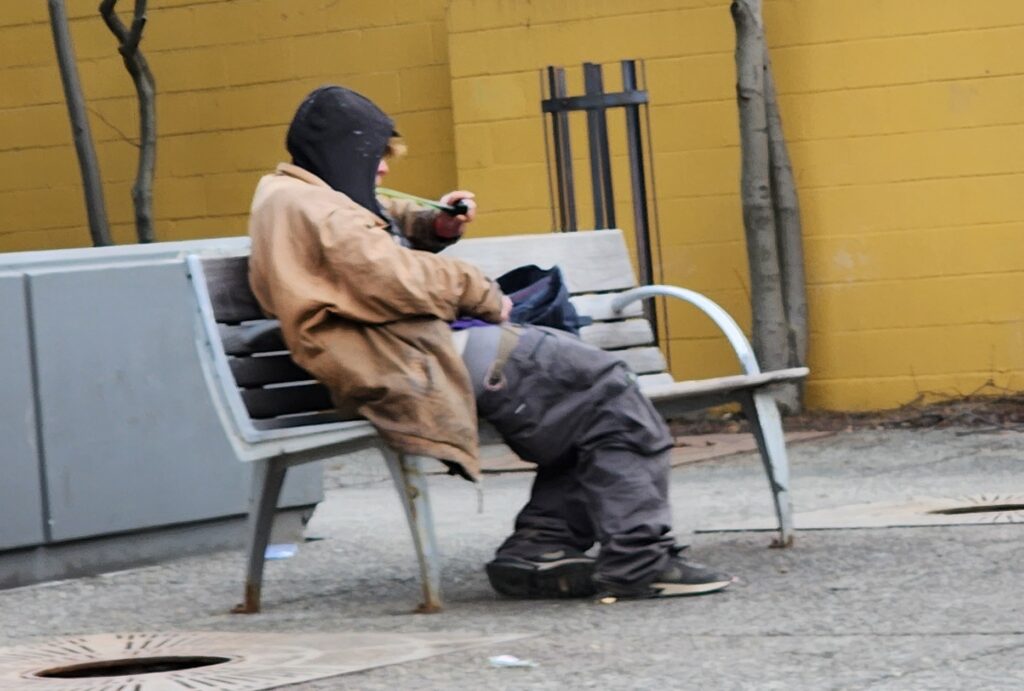
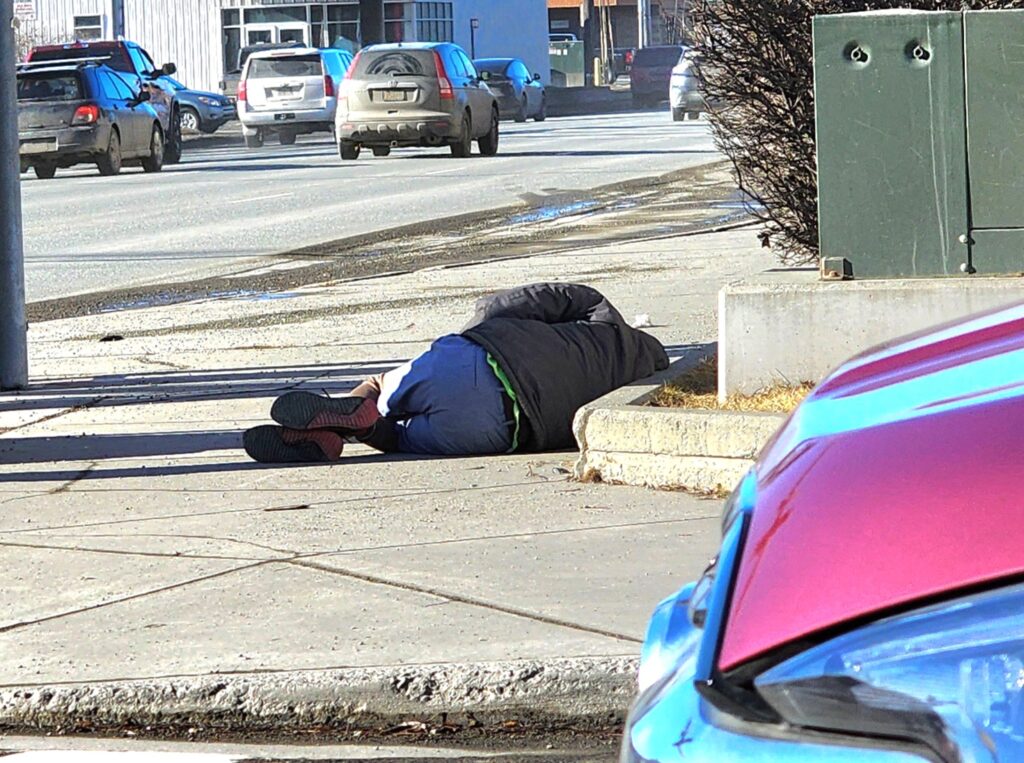
Photo at top of this page on the left is credited by the US Library of Congress to August Cohn, who worked for the Alaska Engineering Commission in 1915-17 as a civil engineer and surveyor. In the photo gallery directly above, Anchorage in 2025 is littered with addicts and forlorn individuals living on the streets, in greenbelts, and inside abandoned buildings.
Assemblywoman Meg Zaletel, who is the CEO of Anchorage Coalition to End Homelessness, says homelessness is escalating in Anchorage. That has been clear to the public for some time.
At a Friday news conference, Zaletel called for immediate action, although tens of millions of dollars have gone to her agency, and the problem is getting worse.
“Anchorage is facing an escalating affordable housing emergency, with more than 1,000 households at risk of eviction due to rising rental costs and lack of available affordable housing,” Zaletel said.
But the people who are living on the street are not the ones being impacted by rising rental costs, because they could not pay even a nominal amount of rent, due to their personal problems.