The Anchorage Assembly has a government-to-government meeting scheduled for Thursday with the Native Village of Eklutna, as it does twice a year since 2021, when it formally acknowledged the 70-member tribe as a co-equal government in Anchorage.
On the agenda is a briefing on the makeshift casino now operating in the Birchwood neighborhood, which is a significant issue for the community.
Last month, Debbie Ossiander of the Chugiak Eagle River Advisory Board, which is established by municipal code to advise the city on planning relating to the area, sent a resolution to the Assembly complaining that it was never consulted about the Chin’an Gaming Project, a casino that is being built in a quiet residential area near the Birchwood Airport in Birchwood, approximately 20 miles northeast of downtown Anchorage.

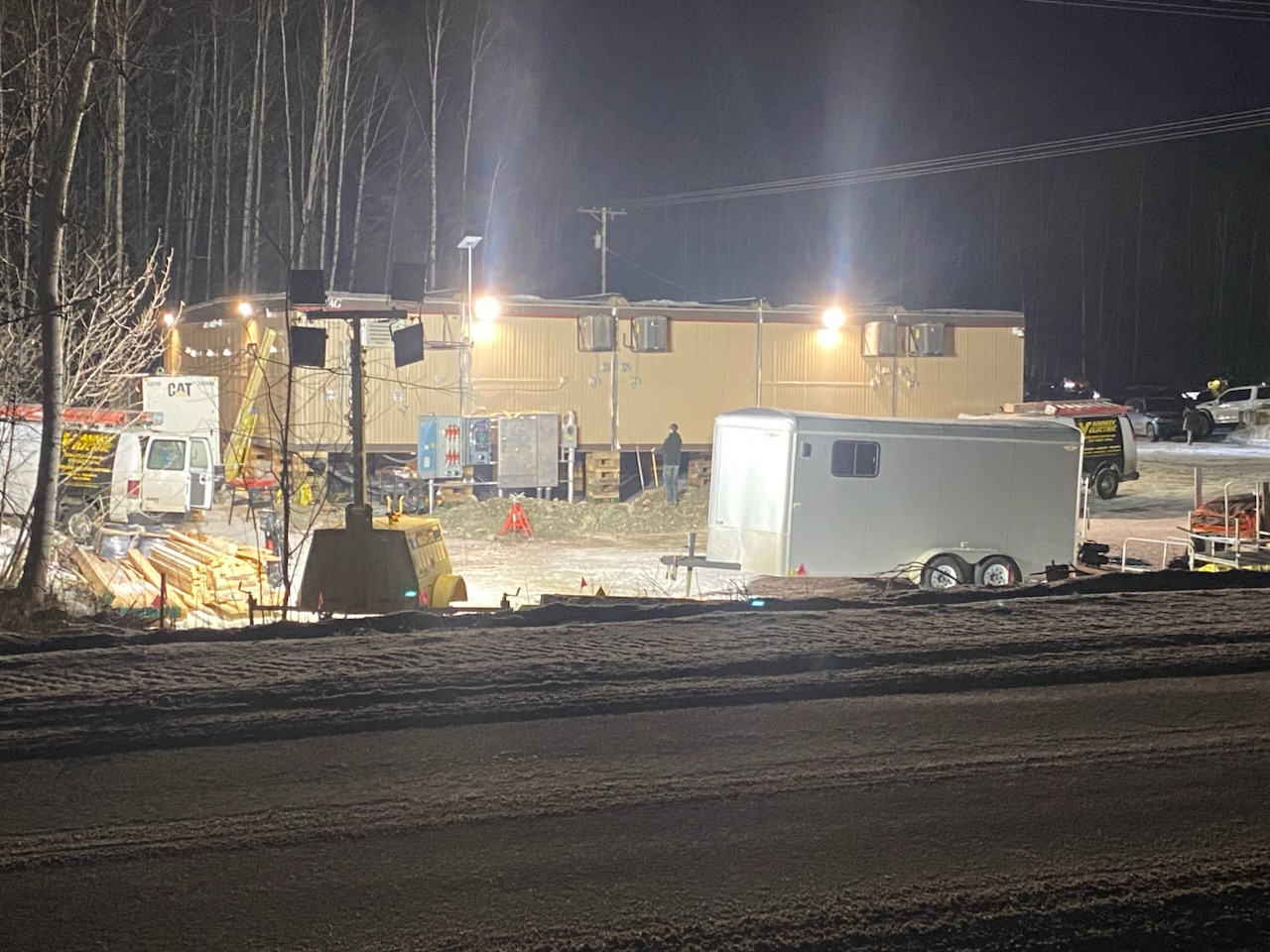
The site, owned by the village through Native allotments, is situated off Birchwood Spur Road, close to the Alaska Railroad tracks and Peters Creek, within the Municipality of Anchorage. Currently, it’s a doublewide trailer casino being operated by the Native Village of Eklutna on an 8-acre Native allotment owned by tribal members.
The Mayor’s Office is acting as though it has no planning or zoning control over the site, and has allowed the massive project to go forward with no planning or environmental oversight.
The advisory board says that the project has had multiple violation of land use code and policies, a lack of community involvement, and potential negative effects on the community. Residents report excessive dust coming from the construction onto the road to their homes. The Mayor’s Office is taking a “not my problem” approach to the massive change to the community.
Per code, the Municipality of Anchorage must give the community councils and advisory boards notice about issues impacting their neighborhoods.
No such notice was ever given to the community council or the planning advisory board for the area.
The resolution by the community advisory board is demanding the municipality adhere to municipal code and give the relevant councils notice about what is happening in their neighborhoods, and listen to the council and board input:
The first resolution was ignored.
A second resolution was also passed, challenging the exemptions that the gaming hall claims it has from state and local regulatory law, including the payment of local taxes. It says residents are getting no response from code enforcement over noise, dust, and traffic complaints. The resolution asks for clarity over jurisdiction. It was also ignored by the municipality.
Neither of these resolutions from legal entities established by the Assembly in municipal code were included on the agenda for Thursday’s meeting with the Village of Eklutna.
However, the joint meeting of the Assembly and the village has agenda items such as the Eklutna River restoration, renaming local places in the area, public safety, boarding school investigation, use of alcohol tax funds for “culturally relevant programming,” and municipal employee training.
Although Debbie Ossiander, with the Chugiak Eagle River Advisory Board, said she asked if she could be part of Thursday’s meeting, she was told that while she could attend, she could not speak, except during the public comment section of the meeting.
The advisory board continues to voice its concerns not only with noise, traffic, and environmental impacts to Peters Creek, which is 50 yards from the unregulated building project, but also jurisdictional questions.
Meanwhile, the State of Alaska has filed a lawsuit to clarify these jurisdictional issues and the federal decision on the casino, the first in Alaska.
The state’s lawsuit, filed on Feb. 4, challenges federal decisions by the U.S. Department of the Interior and the National Indian Gaming Commission that authorized the Native Village of Eklutna to conduct gaming on what is known as the Ondola Allotment, a Native-owned parcel of land. The State argues that these decisions, particularly the DOI’s 2024 Anderson Opinion, unlawfully reversed decades of precedent — specifically the 1993 Sansonetti Opinion and a 2021 federal court ruling — by granting the tribe jurisdiction over the allotment for gaming purposes.
The Chin’an Gaming Hall temporarily opened in doublewide trailers to the public on Feb. 3, just one day before the lawsuit was filed, and has since reported brisk business.
The State seeks declaratory and injunctive relief to overturn the federal approvals and halt gaming operations, asserting that the Alaska Native Claims Settlement Act (ANCSA) of 1971 intended for the State to maintain primary jurisdiction over such lands, not tribes.
No court ruling has been issued, but the case could have significant implications for tribal sovereignty and gaming in Alaska, where Indian Country was extinguished by the ANCSA.
Legal proceedings of this nature typically take months to progress, but while gaming goes on in trailers, the construction of the main commercial facility has been under way, all guided by a Las Vegas developer. The developer’s strategy is to establish gaming before the decision comes down, setting up a case for a challenge to a higher court over whether the federal government has ultimate jurisdiction over the six-acre parcel, as it does in Indian Country.
Another lawsuit was filed by Birchwood residents in the U.S. District Court for Alaska, a case that also remains unresolved.