Housing discrimination is woven into in the fabric of the American Rescue Plan Act grants approved last year by the Anchorage Assembly.
During the administration unelected Mayor Austin Quinn-Davidson, noncompetitive federally sourced American Rescue Plan Act grants were awarded to several nonprofits by the Assembly and the mayor. The grants were supposed to respond to hardship conditions caused by the Covid-19 pandemic.
One of those grants was a $500,000 award to Choosing Our Roots, a new nonprofit based in Mountainview that helps homeless youth, ages 13-24, who are self-declared to be lesbian, gay, bisexual, transgender, or queer.
This particular nonprofit is a pet project of openly gay members of the Assembly, including former Mayor Quinn-Davidson, Assemblyman Chris Constant, and Assemblyman Felix Rivera.
With the $500,000 already in hand, Choosing Our Roots will purchase a residential building that will house up to 10 LGBTQ young people at a time. The building has not yet been purchased as of this writing, but the grant says it must be bought by December of 2022, and a copy of the deed must be provided to the Anchorage Health Department as proof that the organization fulfilled the grant requirement.
Choosing Our Roots is an organization that, in its mission statement, discriminates against straight youth, or may be reasonably seen as pressuring vulnerable, homeless youth in crisis into declaring themselves gay in order to receive services.
“The Choosing Our Roots (COR) Core Mission: To ensure that all queer Alaskan youth and young adults have access to safe homes, supportive communities, and opportunities to thrive,” the group’s grant application said.
COR is dedicated to housing “homeless and marginally housed Alaskan youth (ages 13-24) who identify as lesbian, gay, bisexual, transgender, and/or queer.” Non-queer youth need not apply.
The nonprofit organized in 2017 and became operational in 2019. That year it received $201,000 in grants. It gave out $40,000 in grants, had $90,000 in payroll, and had over $50,000 in other expenses, according to its IRS form 990 filing. The organization is run by like-minded LGBTQ people, some of whom identify as intersex, polygamous, Indigiqueer, genderfluid, and queer transman, among others.
COR uses a host home model — finding safe host homes for homeless LGBTQ youth. That model has been challenging with Covid, as host homes became more difficult to find, the group wrote in its grant application.
“As a result, COR maintains a substantial waitlist, and those young people are often waiting in congregate shelters, couch-surfing in crowded settings, and generally living with high risk for COVID-19 and other dangers,” the group said.
The answer was to buy a place to house youth ages 18-24 who are awaiting home placement. Each participant would have his or her own housing unit, and access to the group’s case management and support services.
“COR estimates the project will serve at least 10 unique individuals per calendar year for the duration of the grant term,” COR says.
The federal money for the grant came from the Coronavirus State and Local Fiscal Recovery Funds, also known as American Rescue Plan Act or ARPA funds, approved by the Anchorage Assembly in Assembly Resolution 2021-167. That resolution, passed in May of 2021, allocated more than $51 million of $100 million in Anchorage ARPA money, and it passed 7-3, with Eagle River Assemblywomen Jamie Allard and Crystal Kennedy, and Assemblyman John Weddleton voting no.
The Assembly was criticized at the time by those who said that it rushed through the grants before the new mayor, Dave Bronson, could take office and veto any of the expenditures.
The windfall of billions of dollars of federal pandemic aid created a climate of waste, fraud, and abuse, with little oversight as to how billions of dollars will be spent across the country. The parameters are broad, and local communities shape their own grant sideboards. The Municipality, under the unelected Mayor Quinn-Davidson, stated that “Part of the funding in this category was used to support the rapid rehousing of homeless youth transitioning out of shelters, and to provide temporary housing awaiting host home placement. Also used for providing housing, addiction treatment, vocational training for the homeless, and transitional housing for homeless young adults 16-24 years.”
But nearly a year later, the money didn’t provide for any immediate need or rapid rehousing of youth. It’s still in an account owned by Choosing Our Roots, waiting to be spent on a building.
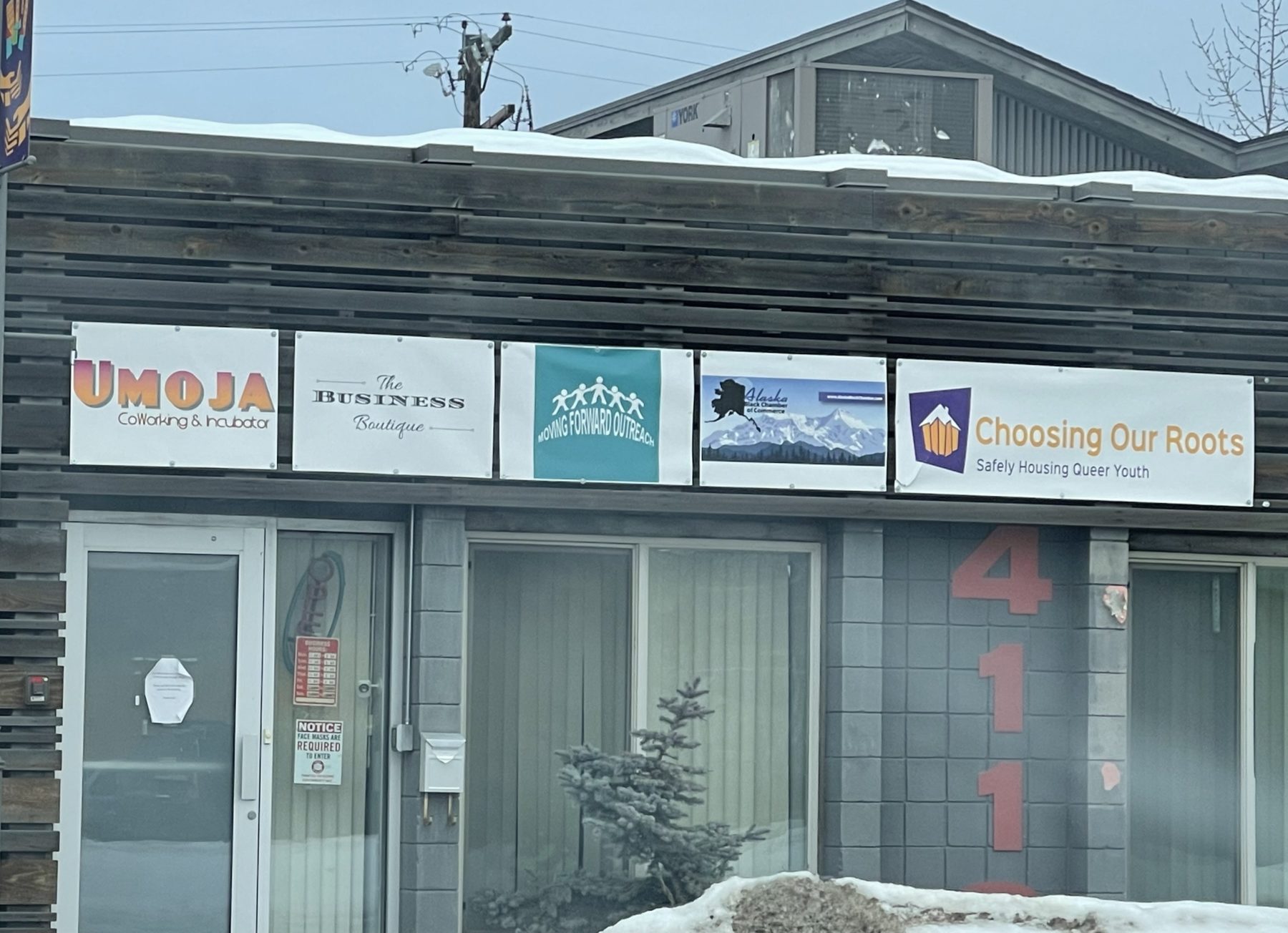
Choosing Our Roots shares the same business address as The Business Boutique, a black-owned enterprise associated with Black Lives Matter that received a noncompetitive $2.5-million grant from the city to help residents in various ways through management of a gift card program.

According to the Department of the Treasury, recipients may use SLFRF funds to:
- Replace lost public sector revenue, using this funding to provide government services up to the amount of revenue lost due to the pandemic.
- Respond to the far-reaching public health and negative economic impacts of the pandemic, by supporting the health of communities, and helping households, small businesses, impacted industries, nonprofits, and the public sector recover from economic impacts.
- Provide premium pay for essential workers, offering additional support to those who have and will bear the greatest health risks because of their service in critical sectors.
- Invest in water, sewer, and broadband infrastructure, making necessary investments to improve access to clean drinking water, to support vital wastewater and stormwater infrastructure, and to expand affordable access to broadband internet
“The Coronavirus State and Local Fiscal Recovery Funds provide substantial flexibility for each jurisdiction to meet local needs within these four separate eligible use categories,” the Treasury Department says on it website.
How much flexibility? Organizations receiving federal money are not allowed to violate any federal law in the use of funds. But Choosing Our Roots’ very mission puts it in direct violation of the Fair Housing Act, which says it is illegal to discriminate in housing due to race, color, national origin, religion, sex (including gender, gender identity, sexual orientation, and sexual harassment), familial status, and disability.
In the grant agreement with Choosing Our Roots, discrimination is specified as an unallowable activity:
“The Grantee shall not discriminate against any employee or applicant for employment because of race, color, religion, national origin, ancestry, age, sex sexual orientation, gender identity, or marital status or who is a ‘qualified individual with a disability.'” And the grantee also has to comply with all applicable federal, state, and local laws that prohibit discrimination, the agreement says.