It’s “hide the decline” time with this one “nature trick,” per the New York Stock Exchange.
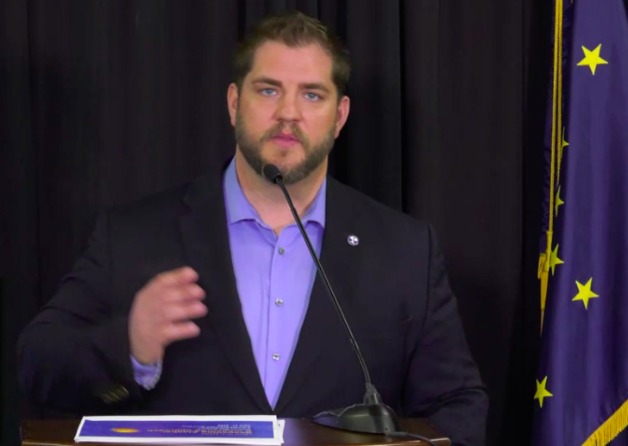
Alaska Revenue Commissioner Adam Crum has signed on with 29 other states opposing a proposal in front of the Securities and Exchange Commission that would allow “Natural Asset Companies” (NACs) to be traded on the New York Stock Exchange as part of a eco-land preservation system that promises, mysteriously, to yield profit as it ties up productive land. Read the proposal at this SEC link.
Alaska would be a target for such a scheme, since more than 60% of the state is owned by the federal government, Commissioner Crum said.
“To convert natural assets into financial capital, IEG has developed an accounting framework to measure ecological performance. Natural assets produce an estimated $125 trillion annually in global ecosystem services, such as carbon sequestration, biodiversity and clean water,” according to a description by the New York Stock Exchange.

This is carbon sequestration, next generation.
“The NAC is a transformational solution whereby natural ecosystems are not simply a potential resource to extract, but an investible productive asset which provides financial capital to responsible stewards of ecological resources. As a publicly traded equity, NACs will enable investors to allocate capital efficiently to meet their sustainability objectives,” the NYSE says.
It’s all part of ESG — Environmental, Social, Governance — the new fad in woke company and government management, where social and environmental goals are part of a social scoring system.
While it sounds somewhat benign on the surface, Crum and other states’ officers signing the letter say this novel accounting trick is even a threat to national security.
“Alaska’s focus on food security will be hampered if farmers can’t access lands and waters for crops and livestock. Access to Mining districts for critical minerals could be cut off, and petroleum industry workers could find themselves shut out of large swaths of productive lands. This shift, influenced by the administration’s environmental priorities, could lead to increased dependence on external sources for critical minerals and energy, as resources within the US become restricted under NACs,” Crum said, according to the letter obtained by the Daily Caller News Foundation.
“Our concerns with this proposal are many. However, the fatal flaw underlying the concept under consideration is the attempt to create economic value from processes not backed by economic activity,” the officials argue. “First, NACs are private entities which make a business out of reducing economic activity. Second, NACs rely on untested methods of accounting which we do not believe have any place in the public markets. Third, NACs present serious national security concerns.”
The fact that NACs “cannot make money through productive use of the lands they will manage” is of concern to the officials, and they contend that the alternative accounting system used to value NACs – standards that deviate from Generally Accepted Accounting Principles (GAAP) – “are not suitable for use in the US capital markets,” the state officials say in the letter.
What’s worse, is there are no controls on foreign companies’ investments in NACs, which could allow enemy nations to essentially shut down land to destroy the American economy by ending mining, ranching, and energy development.
According to the Daily Caller News Foundation, the House Natural Resources Committee has the SEC’s proposed new rule on the table for scrutiny. Republicans have concerns about productive land use and management as well as private interests potentially taking control of public lands.
The Republicans on the committee are concerned that the concept of NACS was developed by Intrinsic Exchange Group Inc. (IEG), a private company incorporated in Delaware. Douglas Eger, the CEO of Intrinsic Exchange Group, says, ” As a conservationist, I preserved 7,000 acres of land 100 miles NW of New York City in partnership with The Open Space Institute and The Trust for Public Lands,” on his LinkedIn page. His idea seems to be to put all public land in America into a gigantic land trust that companies can make a profit from. It’s a cyber currency scheme but for ecological goals.
Stranger still, the New York Stock Exchange has acquired a minority stake in IEG and has even obtained a seat on IEG’s board of directors.
In IEG’s words, “Intrinsic Exchange Group (IEG) is introducing a new type of company whose equity captures the value of natural assets and the ecosystem services they produce. Natural Asset Companies (NACs) are fundamentally different than traditional companies because they are chartered to protect, restore, and grow the natural assets under their management to foster healthy ecosystems.”
“IEG partnered with the New York Stock Exchange (NYSE) to create a special listing section for NAC equities, and we are going through the process of obtaining SEC approval for the NAC listing rules, based on IEG’s NAC Reporting Framework,” the company writes on its website.
“By taking a NAC public through an IPO, the market transaction will succeed in converting the long-understood – but to-date unpriced – value of nature into financial capital. This monetization event will generate the funding needed to manage, restore, and grow healthy ecosystems around the world and bring us closer to achieving a truly sustainable, circular economy,” IEG writes.
The proposed rule change due to the efforts of the NYSE, which has a seat on the IEG board, seeking SEC approval for the “unique listing requirements tailored to NACS and incorporating IEG’s accounting methodology.”