
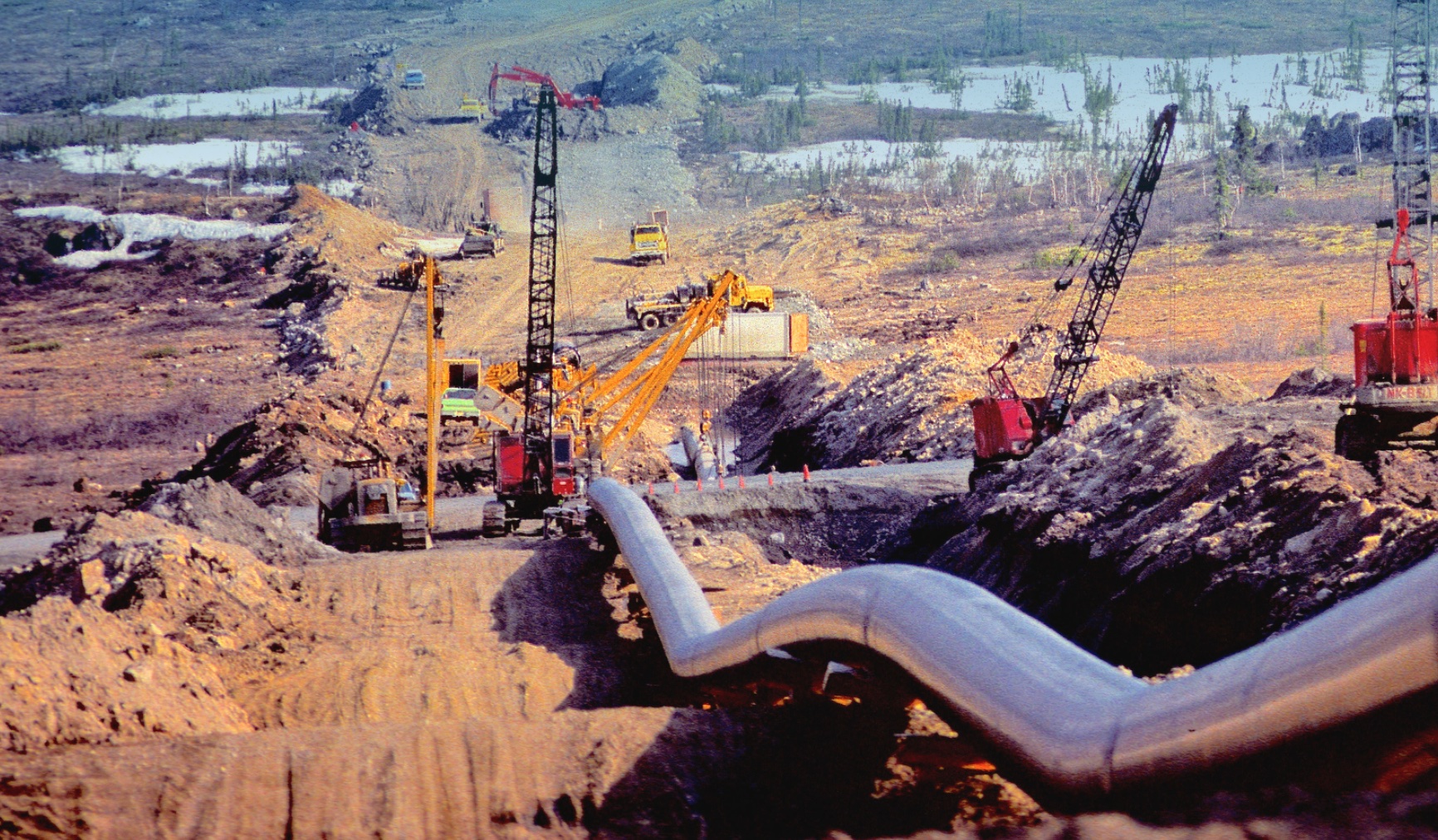
December 12, GaffneyCline Energy Advisory submitted the final draft of “Key Issues: Legislative and Policy Options for Alaska LNG” to the Alaska Legislative Budget and Audit (LB&A) Committee.
GaffneyCline is a subsidiary of the Baker Hughes Company, a global company who owns and operates businesses specializing in the energy sector. LB&A requested the report from GaffneyCline to help legislators better understand the financial, economic, and regulatory issues associated with the Alaska LNG project. The report is the latest in a long list of materials requested by LB&A from various hired consultants.
According to the report, key inputs such as “capital cost estimates, gas supply arrangements, degree of federal support, and other important parameters” are not yet known. GaffneyCline admits, “It is not yet possible to set out a definitive picture of what steps may be required of the legislature in the coming months.” However, the report posits that “with over 170 LNG export facilities in 22 exporting countries, there is a considerable body of experience from which Alaska can draw and helps to provide guidance on what may be expected.”
The single most significant hurdle for the project identified by the report is the high capital and risk of cost inflation. Despite multiple budget assessments over the years, cost estimations have only been conducted at a Class V3 level, producing only a preliminary, highly uncertain estimation.
The Executive Summary of the report proposes two action steps for developing a “definitive package of enabling legislation and fiscal framework for the project:”
- A detailed economic model of the project is required before the legislature can take an informed view as to the appropriate degree of government take that the project can sustain, and how this could evolve over time.
- Given the likely involvement of federal government agencies in the evolution of the project, the degree of federal support and fiscal stimulus (if any) could also materially influence how the Alaska legislature approaches its own fiscal policy towards AK LNG.
GaffneyCline then details various economic considerations and market details related to the steps the Alaska Legislature needs to pursue to continue the project.
The report concludes: “The AK LNG project and associated gas pipeline is one of the most ambitious gas infrastructure projects ever attempted globally and would require resolution of a host of complex commercial, technical and logistical features to come to fruition. However, if fiscal and related terms are set appropriately, the impact on the State economy could be very material, especially in the medium to long term as profitability increases.”

One would think Alaskan Dems would be very happy to get this, considering Governor Walker spent massive amounts of money promoting such a thing in 2016. It was only $50k per month for his lawyer in China.
Yet now, Wielechowski seems to be complaining about Governor Dunleavy reducing taxes for the project. Feel free to correct me if I’m wrong.
Personally, I can’t wait to see this project get going.
Wielechowski is against anything involving energy development, because that might improve things for people of whom he doesn’t approve
This project will not happen in the next 40 years. As long as natural gas is being used to push oil out of the ground, it will not be sold by the field developers on Alaska’s North Slope. Even if the gas was available, the capitalization costs and subsequent operating costs would drive the cost of the gas up so high as to be unmarketable.
Why would the operating costs drive the cost of gas up? It doesn’t seem to work that way for oil. And what are those costs compared to importing it for use?
The export idea should be dropped. Either build a power plant on the North Slope and HVDC transmit the power to the railbelt grid or build a bullet line to deliver gas to the grid for power generation and also off-take gas for other commercial and industrial needs.
Exporting could work with tankers directly from the slope only if the US and Pacific allies find a national security interest in maintaining a more secure supply option.
Chris, a bullet line to deliver gas is exactly what this project is designed for. The export is a benefit to support the costs for Alaskans. The line will serve the citizens and add to the existing infrastructure. It may even be possible to extend to other communities across Alaska. There will use the powerplant on the slope, Fairbanks and southcentral to extend the grid.
I’d love to know how many millions Walker and his wife received to pimp the gas line. What a waste of money and time. Thanks to my Great Grandfather, I have interests in Marcellus and Utica formation wells. Beneath those, lies the Trenton Black River formation that stretches from Quebec to Ohio and Kentucky which supposedly holds more oil and gas than Prudhoe Bay. Natural gas is not only plentiful worldwide, but new wells are being drilled worldwide daily.
I just received a check yesterday for $3.19 MCF. Many years ago, $17.00 MCF at tidewater was mentioned for the Alaska Gas Line to break even. What would it be today; $34 MCF?
LNG or Electric Generation facilities at Prudhoe Bay would be economically reasonable. A gas line would be folly.
None of this will happen without the agreement of the big slope producers. Their silence is deafening.
Imagine that. In this day and age someone is actually raising concerns about financing costs!