
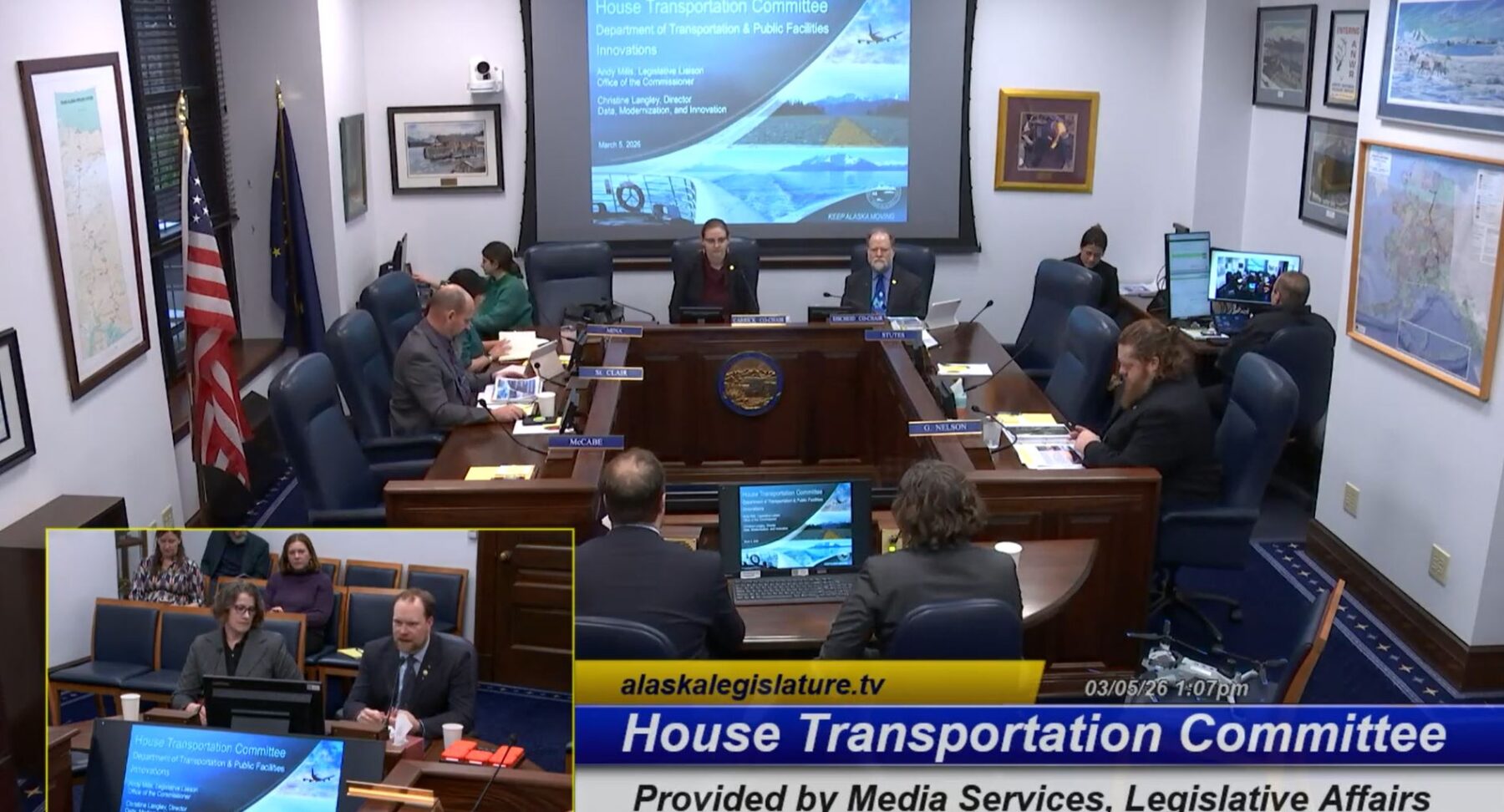
In a forward-looking briefing that highlighted Alaska’s unique transportation hurdles, the Department of Transportation and Public Facilities (DOT&PF) presented a suite of innovative technologies to the House Transportation Committee. The session underscored how robots, drones, artificial intelligence (AI), and advanced mitigation systems are being deployed to enhance safety, efficiency, and resilience across the Last Frontier’s vast, multimodal network of land, air, and sea routes.
The committee heard from DOT&PF Legislative Liaison Andy Mills and Director of Data Modernization and Innovation Christine Langley. Mills framed the discussion around DOT&PF’s pillars of being “agile, modern, and resilient,” focusing on practical implementations rather than speculative futures like fully autonomous vehicles.
Langley set the stage by emphasizing Alaska’s operational realities: extreme weather, remote terrains, and limited resources. “Transportation’s future is technology,” she declared, outlining how innovations maximize coverage and decision-making speed. This quote captured the essence of the presentation, as Langley and Mills showcased tools already in use or piloting stages.
A standout was the underwater robot “Archimedes,” used for inspecting docks and harbors, reducing reliance on costly divers. Complementing this, “Aurora,” a quadruped robotic dog at Fairbanks International Airport, deters wildlife from runways and accesses hazardous spaces like culverts. Co-Chair Rep. Eischied (D-Anchorage) humorously inquired if it barks, prompting Mills to note, “there are so many things that that Boston Dynamics dog can do. Again, I am sure it could actually play Bruce Springsteen and other things, if you wanted it to. But optional flamethrower, we have not opted it on. But there is quite a bit that it can do.” The committee decided to continue pilot evaluations of these platforms, focusing on ethics and public trust, with action items for sharing findings.
Drones took center stage, with DOT&PF managing a fleet of 130 units, though federal Build America, Buy America (BABA) rules require phasing out Chinese-made DJI models, leaving 65 compliant ones like the Skydio X10. Mills demonstrated a “drone-in-a-box” system for autonomous operations, integrated with Starlink for remote connectivity. Applications include construction surveys, bridge inspections with protective cages, and avalanche mitigation—where drones deliver canisters for air-blast detonations, costing $50 versus $500 for howitzer shells. A recent test marked a national first under FAA provisional authority.
Committee members probed deeply: Rep. Nelson (R-Sutton) questioned the DJI phase-out, learning it’s due to BABA compliance, with disposal options like auctions under review. Co-Chair Rep. Carrick (D-Fairbanks) asked about undetonated canister recovery, revealing summer hikes in safer conditions. Eischied requested confirmation on infrared drone use in past avalanches, like Girdwood, and proposed a field trip to observe operations. Decisions included scaling drone-based mitigation with geofencing and training, plus action items for inventories, documentation, and visits by late March.
Emergency innovations shone through distributions funded by the Highway Safety Improvement Program: 42 Jaws of Life sets for 14 EMS agencies and over 800 portable LED “pilots” for traffic control, magnetic and rechargeable, outperforming flares in cost and safety. Rep. Nelson endorsed them from field experience, noting their versatility in stabilizations.
AI integrations included pedestrian lights in Kodiak that spotlight crossers for $37,000 per unit, adapting to local conditions like faded paint. Early results are positive, with plans for Anchorage amid pedestrian fatality concerns. Eischied raised human factors, suggesting lights might encourage proper crossing; a behavioral study is actioned. Fleet telemetry uses AI for predictive maintenance on 70 new units, while asset collection vans and pole-mounted sensors automate data for maps supporting LNG pipelines, including a novel gravel road rating for the Dalton Highway.
Avalanche detection advanced with radar and infrasound systems on Seward Highway and Thane Road, enabling proactive alerts via apps and roadside lights post-QA/QC. A “mobile boom wish” trailer offers quick, targeted blasts. Public-facing tools like interactive STIP dashboards, permitting systems, and 511 enhancements turn data into actionable insights, exemplified by the Typhoon Halong common operating picture.
Looking ahead, a joint DOT&PF-DPS traffic operations center will unify incident response, incorporating connected corridors for sub-10-millisecond signals and vehicle preemption for EMS. Systems like Drivewise for commercial alerts and Alaska Alerts for geofenced public opt-ins promise enhanced safety. Rep. Mina (D-Anchorage) inquired about integrating MPO data, like Anchorage’s plow tracking, leading to commitments for a unified statewide platform.
Statutory updates were discussed cautiously, with Mills referencing federal frameworks like HR 7390 for autonomous vehicles, advising alignment to avoid fragmentation.
This briefing reflects Alaska’s push to leapfrog peers by integrating tech into its challenging landscape, fostering transparency and interagency collaboration for a safer future.


