Traveling this holiday season? Plan for chaos, just in case flight attendants decide to strike.
After a vote by participating flight attendants went heavily toward a strike two weeks ago, over 26,000 flight attendants are set to sit out their shifts if the contract negotiations with Alaska Airlines and American Airlines are not resolved by November.
A strike might not be not on every flight, but on random flights, which would cause airline management to be unable to adapt. It’s a type of asymmetrical labor warfare that would give flight attendance the upper hand.
Some 99.47% of participating flight attendants voted to authorize a strike, and more than 93% of eligible flight attendants participated in the vote.
The Association of Flight Attendants, the AFL-CIO union representing the flight attendants, are asking to be paid during boarding and deplaning, and a 40% overall increase in pay and benefits. They say that current wages for flight attendants make them qualify for federal food stamp assistance during their first year of work for Alaska Airlines.

Currently, flight attendants are not on the clock until the boarding door is closed, the brakes are released, and the plane is pushed back. If there is a long delay in boarding, due to mechanical issues or runway congestion, flight attendants can be on board but not paid for many minutes or hours.
Negotiations, scheduled through November, could lead to a holiday strike during the busiest travel season of the year. The union cannot call the strike until at least the end of September, which marks the end of the 30-day cooling off period that is a labor rule of the National Mediation Board.
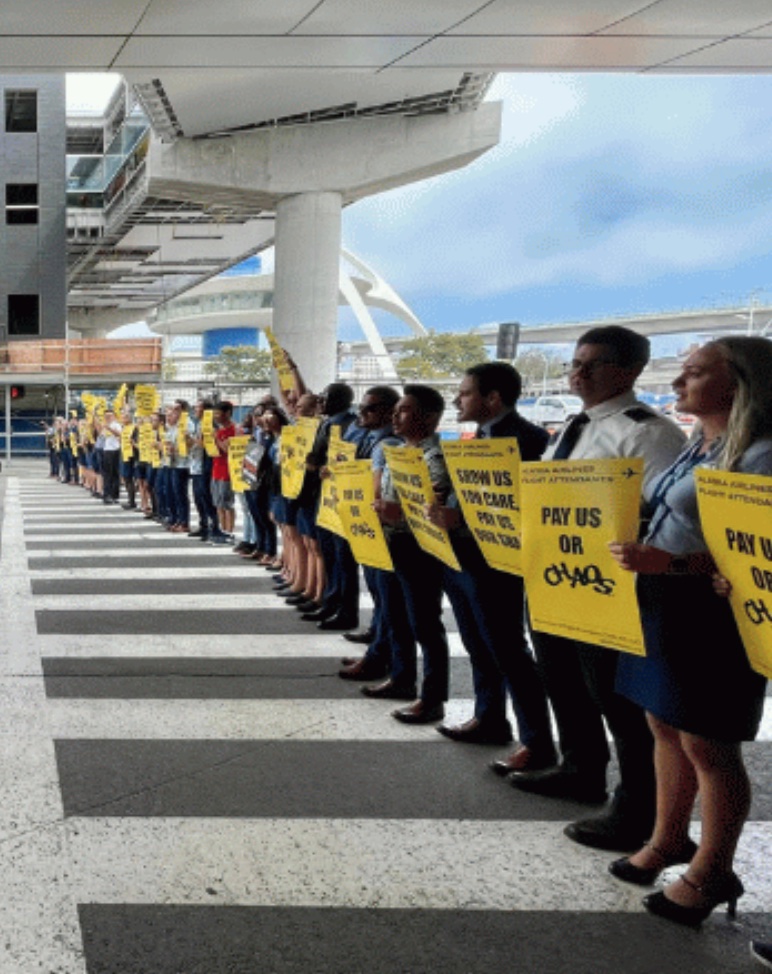
Picketing by Alaska Airlines attendants took place in August in major airports of the west coast, including Anchorage, with some flight attendants holding signs that said, “PAY US OR CHAOS.”