
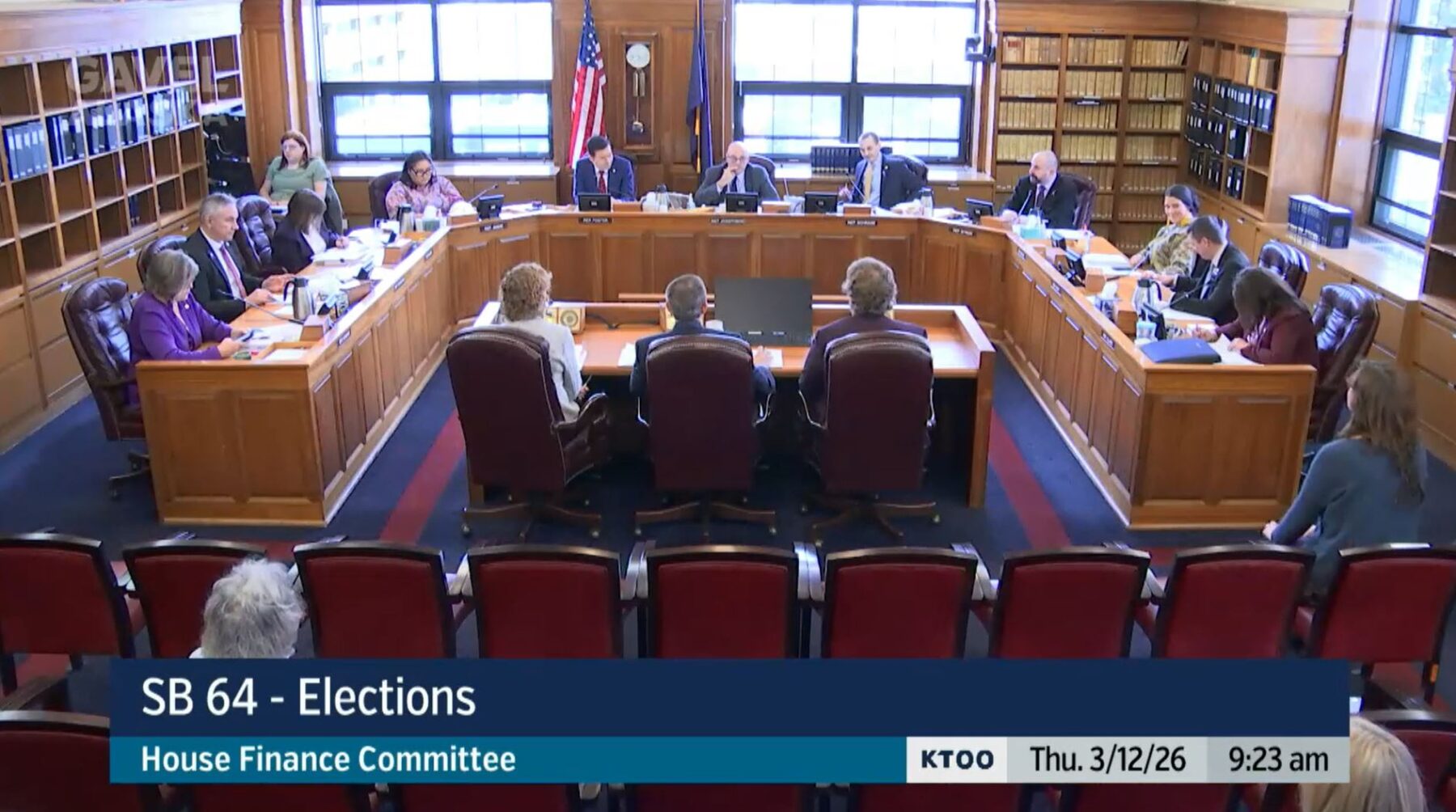
The Alaska House Finance Committee spent more than an hour questioning sponsors and the Division of Elections on SB 64, the sweeping elections reform package aimed at expanding ballot curing and tightening voter roll maintenance. The discussion revealed deep operational and legal concerns, particularly for rural Alaskans, around data privacy, and practical feasibility over ambitious deadlines.
Rep. Jeremy Bynum (R-Ketchikan) framed the discussion, reminding members that “rural Alaska” extends beyond Western regions to include areas like northern Prince of Wales with “no cell phone reception,” where mail delivery itself is challenging. He stressed that any cure framework must avoid favoring urban voters while disadvantaging those in remote communities. Division Director Carol Beecher confirmed the 10-day post-election cure window collides with mail realities: a notice mailed five days after election day leaves little margin for response. “We don’t believe that the mailing of it even from the day of election would necessarily allow the individuals in those communities to be able to send back the information required to cure the ballots,” Beecher testified.
Sponsor staff David Dunsmore pointed to Section 24, noting the bill expands review to 12 days pre-election and requires notification within 24 hours by phone or email (if available) and 48 hours by mail. He acknowledged the bill does not dictate review board meeting frequency, leaving it to regional volume. Beecher emphasized operational flexibility: “It is somewhat fluid,” with Anchorage meeting more often and Nome perhaps only once or twice. Members expressed reluctance to codify rigid schedules that could waste resources in low-volume areas.
Feasibility dominated discussion around effective dates. Section 35 sets July 1, 2026, for most provisions, while Section 34 delays the “true source” tracking to January 1, 2027. Beecher warned of “nearly impossible” compliance for an online ballot tracking system with multi-factor authentication in only 49 days before the August primary. The Division has two IT staff and must prioritize the voter registration system during peak season. “We would be in violation… right away because we cannot do an online system in that short of a time,” she stated plainly.
Rep. Andy Josephson (D-Anchorage) explored staging—manual outreach in 2026, electronic tracking later. Beecher confirmed a manual process is “possible” but auditability would rely on basic logs like Excel, risking disputes. Rep. Alyse Galvin (NA-Anchorage) pressed on volume: roughly under 1,000 curable ballots statewide in 2024, with 512 tied to witness signatures. Beecher noted rural rejection rates are far lower than Anchorage, but mail-only cures remain problematic. Digital returns (fax or imaged) could help, yet the statute as written demands timely receipt within 10 days.
Legal tensions surfaced on witness signatures. Beecher flagged conflict with AS 15.20.081(d), which twice requires contemporaneous witnessing. “We’re not sure how that is possible,” she said. Dunsmore countered that Sections 22 and 24 allow cured ballots at state review, with government ID verification providing stronger identity assurance than a witness. The committee left reconciliation to further drafting.
Privacy and data sharing drew conservative scrutiny. Rep. Will Stapp (R-Fairbanks) confirmed Alaska’s ERIC participation (roughly 26 states) involves hashed voter and DMV data, with no direct state-to-state sharing. Beecher noted AS 15.07.195 authorizes it. Rep. Jamie Allard (R-Eagle River) questioned public voter list contents and potential DOJ access via DOR. Beecher cataloged public fields: name, addresses, party, precinct, voting history, and ascension number (a public tracking field, not voter ID). Confidential data includes DOB, SSN, and driver’s license numbers. Dunsmore and Sen. Bill Wielechowski (D-Anchorage) affirmed improper sharing would violate state and federal law.
PFD data provisions sparked further debate. Section 28 expands data for roll maintenance, while Section 30 would bar using PFD mailing addresses for updates. Beecher questioned utility of certain fields and noted current practice allows silent mailing-address updates. The committee flagged potential drafting issues on page three’s “and/or” logic for notice triggers, with Dunsmore committing to clarify with legal to ensure independent criteria.
Rep. Frank Tomaszewski (R-Fairbanks) asked the core rights question: “When exactly do I lose my ability to vote?” Dunsmore explained inactive status under National Voter Registration Act (NVRA) after non-response, but voters retain rights via question ballots and reactivation upon residency affirmation. Beecher noted current two-notice process can take up to eight years for full removal.
Lawmakers signaled caution before advancing major election changes that could disproportionately burden remote Alaskans or strain limited state resources.


