

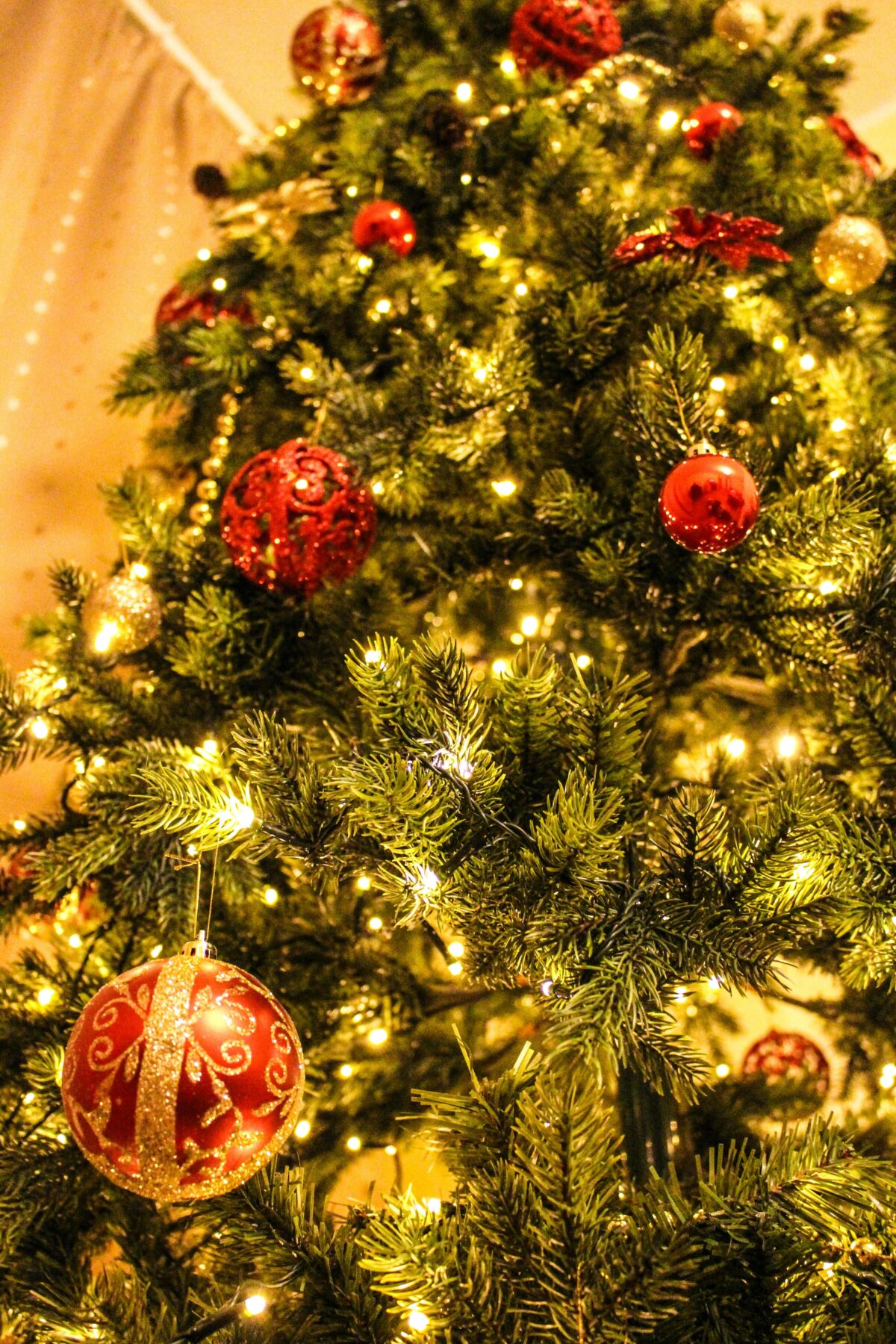
The Christmas tree’s roots trace back to ancient pagan practices, where evergreens symbolized renewal amid winter’s darkness. The Christmas tree was later Christianized by figures like St. Boniface in the eighth century. In Western culture, it evolved from medieval “Paradise Trees” adorned with apples and wafers — representing original sin and redemption — to the candlelit firs popularized in 18th-century Germany and spread globally. Symbolically, the evergreen stands for eternal life and peace, its upward tip pointing to heaven, while twinkling lights evoke Jesus as the “true light” illuminating the world, as noted in biblical references like John 1:14. This fusion of pagan vitality and Christian hope has made it a centerpiece of holiday celebrations, fostering family unity and joy.
In 2024, Washington, D.C received a towering 75-foot spruce from Alaska’s Tongass National Forest that stood as the U.S. Capitol Christmas Tree, embodying the enduring significance of this holiday icon in Western culture. Harvested from the world’s largest remaining temperate rainforest, this “People’s Tree” — nicknamed Spruce Wayne — highlights the uniqueness of Alaskan evergreens, thriving in a vast 16.8-million-acre ecosystem rich in Tlingit indigenous heritage and diverse wildlife. It journeyed 4,000 miles by sea and truck, stopping at communities to share stories of the Last Frontier’s majestic landscapes and cultural traditions.
For families, especially in Alaska, the tradition offers hands-on engagement. Residents can harvest one tree under 15 feet per household on unrestricted state lands, such as in the Mat-Su Valley or Kenai Peninsula, provided they confirm ownership and follow low-stump cutting guidelines to protect forests. “Finding a Christmas tree on State land is a great way for families to enjoy time outdoors,” said Stephen Nickel, Mat-Su and Southwest Area Forester, emphasizing preparation for safe winter travel with tools like shovels and tire chains. Once home, a fresh base cut and ample water keep the tree vibrant, turning a simple outing into a cherished ritual that connects generations to nature and cultural heritage.
Read more on the Division of Forestry and Fire Protections Press Release: