
By ROBERT SEITZ
In my column in Must Read Alaska, on May 31, I shared my review of temperature data from that claims that Alaska is warming two- to four-times faster than the rest of the planet. In that column I described how I found there is not a problem of increased warming but a lack of extreme cold.
Then in my June 7 column I shared information about the history of Glacier Bay and a paper that shows that CO2 and other greenhouse gas molecules cannot have much effect even with a doubling of the current concentration in the atmosphere.
If Alaska is not really warming at a high rate, we can take time to make some assessments on what we really need to work on that is most affected by the slight warming we have had.
The outcome of research reported in “Infrared Forcing by Greenhouse Gases” by W. A. van Wijngaarden and W. Happer demonstrates there cannot have been and cannot be any great warming as the result of greenhouse gas emissions from the burning of hydrocarbon fuels. So it is time to resist, to fight against the global efforts to alter our energy makeup and focus on cheap energy and the economy.
It is time to consider that our warming has just been a recovery from the Little Ice Age and normal variability of weather.
In Alaska, there is no reason to stop our efforts to use renewable and alternate energy sources, as much of Alaska is remote, and does not have hydrocarbon fuels nearby, so can benefit greatly from the development of wind, solar and hydroelectric power.
We should not be forced, however, to prematurely abandon the energy sources which will provide Alaska with a viable economy and ability for citizens of Alaska to survive the cold winters with a sustainable energy source for the Railbelt, natural gas, coal and crude oil. We can still welcome whatever other energy sources that can provide cheap energy to all our communities and industries throughout Alaska.
It is time ensure the science used to provide guidance for U.S. and state policies is real science and not the political science pushed by the IPCC and other global organizations. For too long any research aimed against greenhouse gas warming has been denied funding or a part of any discussion. Those scientists and engineers with opposing ideas are speaking out and publishing and should now be assured a place at the energy table at our Universities and government policy groups.
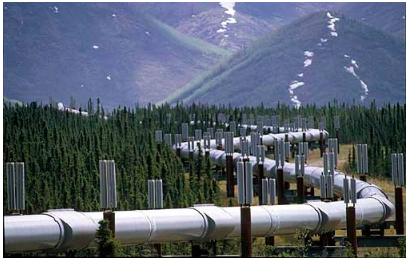
The basis for this “PETITION TO COMPLETE A SUPPLEMENTAL ENVRONMENTAL IMPACT STATEMENT FOR THE TRANS-ALASKA PIPELINE SYSTEM & PLAN FOR DISMANTLEMENT, REMOVAL, & RESTORATION” is the misguided concern about warming from greenhouse gas emissions from burning of fossil (hydrocarbon) fuels.
Since Alaska isn’t warming at the high rate claimed by the USDA compared to average annual temperatures in past records, it is time to provide a more scientific analysis of Alaska data by unbiased researchers so we can determine what conditions we have to deal with and direct our efforts to what is important.
If we start with what we know about the impact of the Little Ice Age and assume the sun provided the energy to warm the planet back from the extreme low temperature experienced 300 years ago, we should end up with a better understanding of our environmental status.
I have also found that the same comparison of average annual temperature values are used to declare “the oceans are boiling,” when comparison of data with on line sea surface temperature values (for both the Pacific and Atlantic Oceans) were usually 4 degrees below normal, with some at or just above normal for that day.
The average annual ocean temperature values also have a “lack of cold temperature” over the recent past as the northern waters are less cold because of the diminished contact with ice. My review of the Arctic ice pack records indicate that the ice pack could be recovering as it is gathering more multiyear ice each year, and does not have an annual decrease of any extent.
And just what is an average annual temperature for this planet? I can’t image any credible manner in which such a value can be reliably achieved. It is time to cease publishing this type of data, and the misleading conclusions developed from them.
The Trans Alaska Pipeline System is our economic engine and we need to get it back up to running at a rate that will benefit all Alaska. Without all the interference from our current federal administration, we should have had a flow rate up to 1 million bpd upon completion of Willow, Pikka, ANWR and others that have been stalled.
So as you enter this fracas please approach this with more passion that you did the call to remove all impediments to the increased production of Cook Inlet gas. We still need to get this moved forward as quickly as we can. Tomorrow would not be too soon. The apparent lack of interest in the recent Cook Inlet leases does not truly represent real attitudes but does result from the ESG-biased financial decisions. I was disappointed that the Reduced Royalty on Cook Inlet gas did not move forward.
As we enter this fight please don’t attack the entrepreneurs who have provided wind, solar, and battery energy storage, as they do benefit the system. We got here by not mandating such alterations. We will need all the energy innovations that can provide benefit somewhere in Alaska.
Robert Seitz is an electrical engineer and lifelong Alaskan.


