
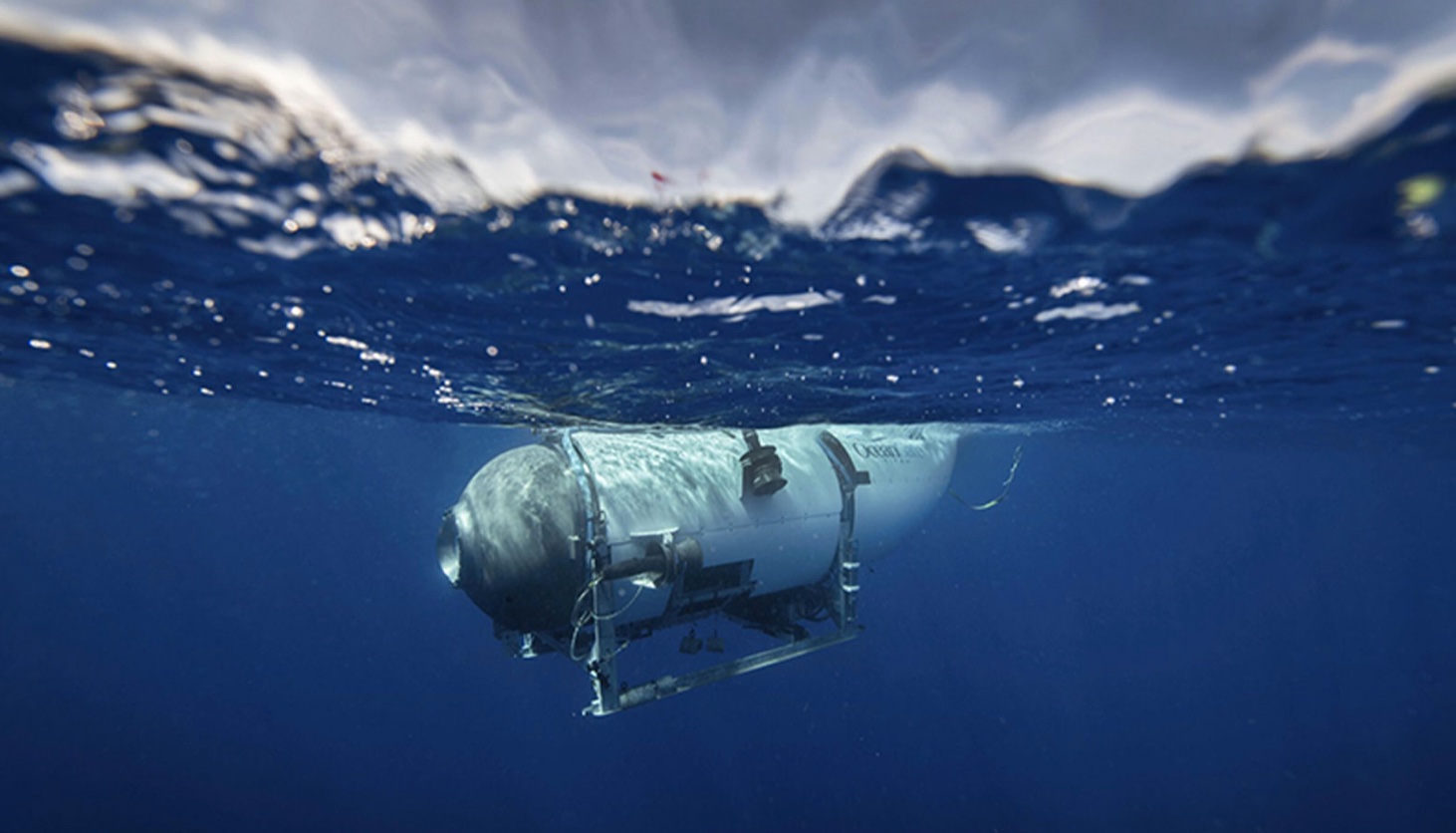
President Joe Biden was certainly made aware of the probable implosion on Sunday of the OceanGate submarine Titan during its descent to explore the Titanic wreckage. The submersible lost communication just two hours after it began its dive to the wreckage.
Despite this knowledge, President Biden appears to have deliberately withheld the information from the public, instead fostering hope for the rescue of the five individuals on board — at least until the Hunter Biden plea deal became part of the news cycle.
The truth was ultimately revealed by the Wall Street Journal, which reported today that a military acoustic detection system, designed to spot enemy submarines, detected what appeared to be an implosion only hours after the submersible began its ill-fated journey to the bottom of the sea.
According to U.S. defense officials who spoke to the newspaper, the Navy initiated monitoring for the submarine shortly after it lost communication. The acoustic detection system detected a suspicious sound near the debris site, which was ultimately discovered on Thursday.
While the Navy could not definitively confirm that the detected sound came from the OceanGate submarine, it played a pivotal role in narrowing the search area before the debris was located.
In a statement to newspaper, a senior U.S. Navy official explained, “The U.S. Navy conducted an analysis of acoustic data and detected an anomaly consistent with an implosion or explosion in the general vicinity of where the Titan submersible was operating when communications were lost.”
The Navy shared the information with the incident commander to aid in the ongoing search and rescue mission. Despite indications of a possible implosion, officials decided to continue their efforts as a search and rescue operation, in the slim chance that there were lives to save.
Meanwhile, all news reports throughout the week indicated that the people on board were alive and running out of oxygen, which would have occurred early Thursday morning — except that the vessel had, in fact, imploded days prior. The four-day saga captivated the attention of the world.
To safeguard national security concerns, the Navy refrained from disclosing the specific acoustic detection system employed, as it is typically utilized to identify enemy submarines. But officials would have at least notified the president, the commander in chief.
The official account from the White House and from the Coast Guard at the time were at odds with what they evidently knew to be true.
Biden was “watching events closely, ” the White House said Tuesday and National Security Council Coordinator for Strategic Communications John Kirby said the president wanted the Coast Guard to participate in search and rescue efforts. On Tuesday, Kirby said the US Navy was on standby “should they be needed because they have some deep-water capabilities that the Coast Guard wouldn’t necessarily have.”
The Coast Guard didn’t immediately respond to the Wall Street Journal’s requests for comment about what information it received, when it received it, and how it was used.
“Throughout the search, rescue crews detected several types of noises, U.S. and Canadian officials said, including the one suspected of being the sub’s implosion. An underwater implosion is the sudden collapse of a submarine when the tremendous pressure of the seawater overpowers the pressure inside the vessel and crushes it,” the Journal reported.
Searchers heard sounds similar to knocking from the vessel, but said they couldn’t conclude the noises came from the Titan.
But a U.S. defense official told the newspaper that “the analysis of the acoustic data was a significant factor in scoping the search area, and thereby enabling the assets on scene to locate the degree of the debris field.”
Since the the Navy said it shared its findings Sunday with the Coast Guard, it also would have shared them with the president.
“It looks that the Titan imploded on Sunday on its way down to the Titanic shortly after contact was lost at a depth of around 9,000 feet,” said a source said to have knowledge of the matter.
In 2020, OceanGate Expeditions CEO Stockton Rush, said that he explained that he preferred not to hire “50-year-old White guys” with military experience to pilot the submersible, which is steered with a $30 video game joy stick.
“When I started the business, one of the things you’ll find, there are other sub operators out there, but they typically have gentlemen who are ex-military submariners, and you’ll see a whole bunch of 50-year-old White guys,” he told Teledyne Marine in a 2020 Zoom interview, as reported by Fox News.
“I wanted our team to be younger, to be inspirational, and I’m not going to inspire a 16-year-old to go pursue marine technology, but a 25-year-old, you know, who’s a sub pilot or a platform operator or one of our techs can be inspirational,” Rush said. “So we’ve really tried to get very intelligent, motivated, younger individuals involved because we’re doing things that are completely new.”
On Thursday, OceanGate company issued a statement:
Statement from OceanGate Inc.
“We now believe that our CEO Stockton Rush, Shahzada Dawood and his son Suleman Dawood, Hamish Harding, and Paul-Henri Nargeolet, have sadly been lost.
“These men were true explorers who shared a distinct spirit of adventure, and a deep passion for exploring and protecting the world’s oceans. Our hearts are with these five souls and every member of their families during this tragic time. We grieve the loss of life and joy they brought to everyone they knew.
“This is an extremely sad time for our dedicated employees who are exhausted and grieving deeply over this loss. The entire OceanGate family is deeply grateful for the countless men and women from multiple organizations of the international community who expedited wide-ranging resources and have worked so very hard on this mission. We appreciate their commitment to finding these five explorers, and their days and nights of tireless work in support of our crew and their families.
“This is a very sad time for the entire explorer community, and for each of the family members of those lost at sea. We respectfully ask that the privacy of these families be respected during this most painful time.”


