
By ART CHANCE
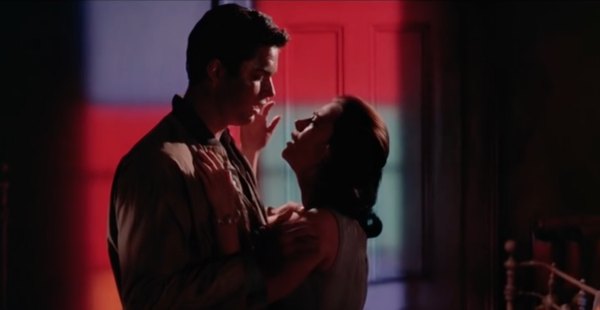
One benefit of being incarcerated at home is you get to watch some of those obscure cable channels you pay for. While mindlessly browsing through channels I found “West Side Story” on Amazon Prime.
I think I know my readership pretty well, and I’m pretty confident that most of us know some of the words from every major song in “West Side Story.” “Somewhere” was the class song for a lot of high school graduations in the Sixties.
The story is set in New York in the Fifties. The Broadway play came out in the late Fifties, and the movie debuted in 1961. It is a view of urban America before Camelot. The story centers on conflict between the Sharks and the Jets. The Jets are the white kids, the Sharks the Puerto Rican immigrant kids.
One of the jarring things about the movie is the Fifties gangstas dress better than most white collar office workers today.
West Side Story is an Americanized and modernized version of Shakespeare’s Romeo and Juliet. Of course, nobody much under 40 knows what Romeo and Juliet is because it was written by a dead white guy.
Romeo and Juliet are from rival families, the Montagues and Capulets. Tony and Maria are from rival ethnicities, the native-born Americans and the Puerto Ricans. They aren’t allowed to fall in love, but they do.
Leonard Bernstein wrote the music, Steven Sondheim the lyrics; that’s about as legendary as you get, at least for the times; no for any time. The music and dance sequences were directed by Jerome Robbins.
A sub-theme is that several of the principals had been hailed before the House Un-American Activities Committee for their alleged communist ties; some co-operated, some didn’t. Some had been black listed. About the only actor you’d recognize is Natalie Wood who played Maria, though her singing was almost entirely lip-synched.
It was filmed in a New York neighborhood that was later leveled to make room for Lincoln Center. The movie was nominated for 11 Academy Awards, won 10, and was the highest grossing movie of 1961.
To me, West Side Story is the apex of the American musical genre; the music is much more adventurous than Rogers and Hammerstein or the more modern Andrew Lloyd Weber.
Sixty year-old songs like “Tonight,” “Maria,” “I Feel Pretty,” and “Somewhere” survive as standards today. The choreography is breathtaking. Who can choreograph a gang fight? My dancing skill is limited to a box step and a halting waltz, maybe a two-step if I’ve had a few, but I know good stuff when I see it. The whole movie is choreographed; there is no random movement.
The times and the politics of the principals are very evident. Romeo and Juliet was about a conflict between two powerful rival families. West Side Story is straight class and ethnic warfare right out of Marx. The Sharks and the Jets are working class kids fighting over the bottom rungs of the social and economic ladder. The white cops roust them both, but are somewhat more tolerant of the white Jets. Tribalism isn’t new.
By today’s standards, the plot and the action are almost boring; think Footloose with a fight at the end. In Romeo and Juliet both die; in Westside Story only Tony dies, and Maria gets to sing at the end.
America had had over 10 years of unprecedented peace and prosperity; the Soviet menace was a distant and abstract thing. JFK had just been elected and America hung on the words of his Inaugural Address.
Back then we were still willing to believe a politician about paying any price and bearing any burden; we didn’t know that the duty only fell to us mere mortals. Blacks, Puerto Ricans, and working class whites of all ethnicities could believe that somewhere there’s a place for us.
Art Chance is a retired Director of Labor Relations for the State of Alaska, formerly of Juneau and now living in Anchorage. He is the author of the book, “Red on Blue, Establishing a Republican Governance,” available at Amazon.


