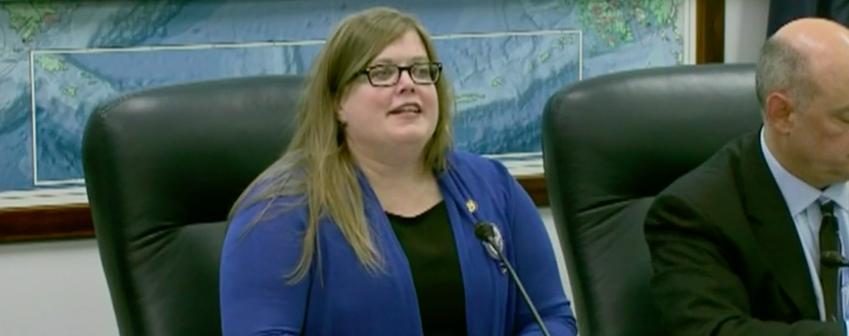
Rep. Geran Tarr of Anchorage plans to offer legislation this year that will mandate “restorative justice” in schools in Alaska.
Restorative justice is a 180-degree difference from a zero-tolerance approach to discipline. It seeks to keep children in school, rather than suspend or expel them.
But it would also require expensive training to get it integrated throughout the schools in Alaska because teachers deal with classroom behavior management in different ways, depending on their own personality and the size and makeup of their classes. Districts and schools can all have their own approaches in Alaska’s vastly different communities.
Tarr has been attending a series of restorative justice seminars this year. Her plans for legislation were revealed by Anchorage School Board member Starr Marsett.
Marsett is no conservative, and said that she is generally not opposed to mandates. But even she bristles as the idea of another unfunded mandate for schools.

“Not that I don’t support mandates, but worry about it being an unfunded mandate. I certainly support the concept but don’t think we can afford any unfunded mandates,” Marsett said during her report about her recent attendance at the restorative justice workshops.
“Rep. Garen Tarr has been very passionate about this,” Marsett said.
The National Education Association explains restorative justice in schools as “a theory of justice that focuses on mediation and agreement rather than punishment. Offenders must accept responsibility for harm and make restitution with victims. The concept has been around for hundreds of years, with indigenous people, like the Maori, using restorative justice successfully in their communities for generations. In the late 20th century, restorative justice gained traction in the US and other countries as various groups sought to improve the effectiveness of the criminal justice system.”
“Restorative justice is a major cultural shift from a punitive model to a restorative model,” explained one proponent of the method, which is now used in the Oakland Unified School District in California. Bad behavior is corrected through a cooperative model that involves conversation, making restitution, and taking responsibility.
Critics say the Legislature failed to act on a reading bill last year, and that children haven’t been in school in Alaska for most of 2020, which makes the restorative justice initiative an odd choice for the Legislature to focus on.