
PRO-JOBS, PRO-ACCESS ALASKANS WAIT TO SEE IF GOVERNOR WILL VETO ROAD — AGAIN
A family in Juneau wanted to move their GMC Yukon with a trailer, two children and two adults to Bellingham, Washington.
They booked it on the Alaska Marine Highway System last week and were quoted a price of $4,151.
That didn’t include a stateroom or meals, of course. The parents and kids would have to sleep on the floor or in chairs for three nights. Showers would be extra.
There’s a better value: It would cost them $1,600 to ship their vehicle on a barge to Seattle and another $1,000 for airline tickets from Juneau to Seattle. All private sector, it should be noted.

Here’s the kicker: Even if the family chose the $4,151.00 ferry option, the State of Alaska would be subsidizing the trip.
By how much? Another $8,000, because that trip costs the State of Alaska over $12,000 for the family of four and their vehicle plus trailer. The family would only be paying a third of the actual cost.
BUILD ROADS WHERE YOU CAN, USE FERRIES WHERE YOU MUST
Ferries are expensive to run. They push a lot of water, burn massive amounts of hydrocarbons doing so, and take expensive manpower to operate and maintain. They are not green machines, as environmentalists would like to believe.
Such is the dilemma for those dependent on the Alaska Marine Highways, and part of the reason some Juneau residents are passionate about creating better access with a 48-mile road to Katzehin and a commuter-style ferry to Haines. They say, “Build roads where you can, and deploy ferries where you must.”
It’s a class thing: Too many working class people just cannot afford to leave Juneau. They spend years there and never have the funds to see what’s beyond the end of the road. While it’s unlikely a road would ever be built to Skagway due to the rugged terrain, a road and a short ferry ride would be affordable for many more than the current four-hour ride to Haines from the Auke Bay ferry terminal.
At Katzehin, there would be eight sailings a day in the summer, and as many as four in the winter. Travelers wouldn’t have to get in line two hours in advance, as they do now, because if they miss the boat, they could catch the next one.
THE FERRY FOR THE PROJECT IS IN THE WATER
On Wednesday, Vigor Shipyard in Ketchikan launched the first of two state ferries built there after Gov. Sean Parnell turned back federal funds in order to give the Ketchikan shipyard a better shot at winning the bid. The ferry will be christened in July, and likely Gov. Bill Walker will be on hand for the happy occasion.

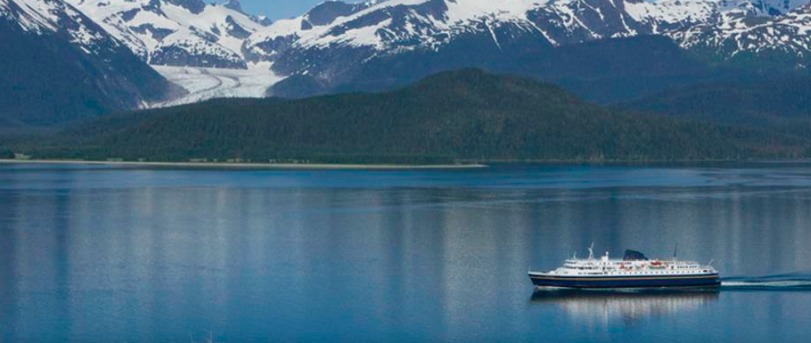
The first Alaska-class ferry, the M/V Tazlina, is 280 feet long and can carry up to 300 passengers. It will begin service in 2019, as the first Alaska ferry to be built in an Alaska shipyard by Alaskans.
Some road advocates in Juneau hope that by the time the ship is christened this summer, Gov. Walker will not have vetoed the $21 million that has been once again set aside for the Juneau Access Project that this new ferry is designed to complement. The day boat was designed without staterooms just for that purpose in upper Lynn Canal, to give Juneau residents a way out, and others an easier way in to Alaska’s capital city.
The money had been saved for the project for years, while it went through its environmental legal challenges. It’s the only major shovel-ready project in Alaska.
Then, Gov. Walker took the money away and set it aside for docks for the existing ferry system, and said the road project was dead.
This legislative session, the money was restored to the road project by the Senate, over the objections of Rep. Sam Kito III, who represents downtown Juneau. His constituents are split on the road, but many are vehemently against Juneau access.
Now, it’s back in the governor’s court again. Which side will he listen to?



