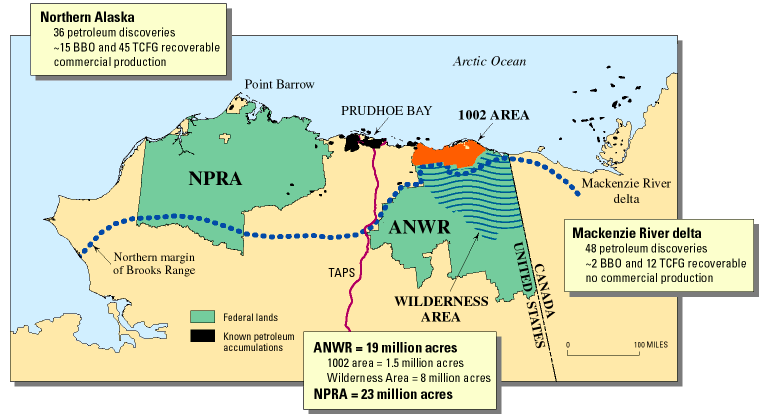
As expected, the Bureau of Land Management received no bids for the congressionally mandated oil and gas lease sale for the Coastal Plain of the Arctic National Wildlife Refuge. The private sector apparently no longer trusts the Biden Administration to follow through.
The deadline to submit bids was Monday, Jan. 6. On Jan. 7, the State of Alaska sued the federal agency and the Department of Interior, saying the tracts were not viable and the Biden Administration was defying a congressional mandate.
“This is no surprise,” said Sen. Dan Sullivan of Alaska. “From Day 1, Joe Biden and Deb Haaland have sought to illegally shut down any chance of developing ANWR and have said as much. They and their eco-colonialist allies have made every effort to delay, and ultimately kill, any chance of successful ANWR lease sales and have canceled the voices of the Iñupiat Native people of Alaska in the process. This latest lease sale was yet another attempt to circumvent the federal law Congress passed and President Trump signed mandating two lease sales in ANWR. Closing off nearly 75 percent of the 1002 area, including lands that are projected to have substantial resources beneath them, is clearly an attempt to stymie interest from industry. Don’t forget: Companies had already witnessed the Biden-Harris administration brazenly and illegally cancel leases from the first sale.”
Sullivan continued on a hopeful note: “The good news is we will soon be working with the Trump administration which, unlike Biden-Harris, has a proven track record of responsible Alaska resource development, faithfully implementing the laws passed by Congress, and respecting the voices of the Iñupiat people of the North Slope who strongly support the ANWR leasing program. January 20th can’t come soon enough.”
Days before, the federal government took away a lease it had granted years ago in the Beaufort Sea. With a government that can make it impossible to develop mineral and petroleum resources, it comes as no surprise to industry observers that companies are now reluctant to take the risk.
Congressman Nick Begich III commented, “The federal government has behaved more like an adversary than an ally when it comes to responsible development in Alaska. Making a lease sale so uneconomic in its construction that no party is willing to place a bid is not evidence of a lack of interest, but rather it is evidence of a keen understanding that these lands under the current regime have not been offered in good faith.”
Begich said, “Alaskan lands should be in Alaskans’ hands, and I look forward to working with the Trump administration and my colleagues in the delegation to ensure greater self-determination of Alaska’s resources than has been available as of late.”
The expired deadline to submit bids concludes the second congressionally mandated sale required by the 2017 Tax Act, which directed the BLM to hold two lease sales in the Coastal Plain within seven years of enactment.
The first sale similarly demonstrated low interest, yielding a total of $14.4 million in high bids on 11 tracts.
Congress included the two lease sales in the Tax Act on the grounds that they would generate approximately $2 billion in revenue over 10 years.
Of the nine leases sold during the previous sale, the two held by oil companies were canceled and refunded at the request of the lessees. The remaining seven are held by the Alaska Industrial Development and Export Authority, but those were canceled by Secretary of the Interior Deb Haaland for what she said were “multiple legal deficiencies.”
There are currently no leases in the Coastal Plain, which was originally set aside for oil and gas. At statehood, Alaska was promised the right to develop revenue from oil and gas. President Jimmy Carter broke that promise by locking up massive amounts of the Arctic. Through the efforts of Sen. Ted Stevens and Congressman Don Young, the 1002 area was released from that lockup in the Alaska National Interest Lands and Conservation Act, so it could provide oil, gas, jobs, wealth, and revenue for the state.
Gov. Mike Dunleavy predicted this outcome back on Dec. 9, writing on X, “The Biden administration has cloaked its latest sanction on Alaska as a lease sale in ANWR. The truth is this lease sale is designed to fail. It limits exploration to the largest extent possible while trying to pass it off as following the law passed by Congress to offer leases that have a legitimate chance of success. The upside here is that in a matter of weeks the Trump administration will come into office and prioritize safe oil and gas development that provides stable and secure energy. Alaska’s four yearlong nightmare ends January 20th.”
In the Tax Act of 2017, Congress demanded that the BLM put leases up for bid, but what the federal government did was only put up nonviable tracts.
The Biden Administration on Jan. 8 has taken no responsibility for the failed leases, nor did it mention the fact that these leases are subject to a state lawsuit over the administration’s bad faith actions.
“The lack of interest from oil companies in development in the Arctic National Wildlife Refuge reflects what we and they have known all along – there are some places too special and sacred to put at risk with oil and gas drilling. This proposal was misguided in 2017, and it’s misguided now,” said Acting Deputy Secretary Laura Daniel-Davis, who came from the environmental industry’s National Wildlife Federation before joining the Biden Administration. “The BLM has followed the law and held two lease sales that have exposed the false promises made in the Tax Act. The oil and gas industry is sitting on millions of acres of undeveloped leases elsewhere; we’d suggest that’s a prudent place to start, rather than engage further in speculative leasing in one of the most spectacular places in the world.”
“The Arctic Refuge sustains people, wildlife and fish in the northeastern corner of Alaska, a vast landscape of rich cultural traditions and thriving ecological diversity. The lands and waters are a critical home to migratory and resident wildlife, have unique recreational values, and contain the largest designated Wilderness within the National Wildlife Refuge System. The Refuge is located on the traditional homelands of the Iñupiat people of the north and the Gwichʼin people of interior Alaska and Canada,” the Department of Interior wrote in a news release, deciding that it is now also responsible for the people of Canada.
This story will be updated.