
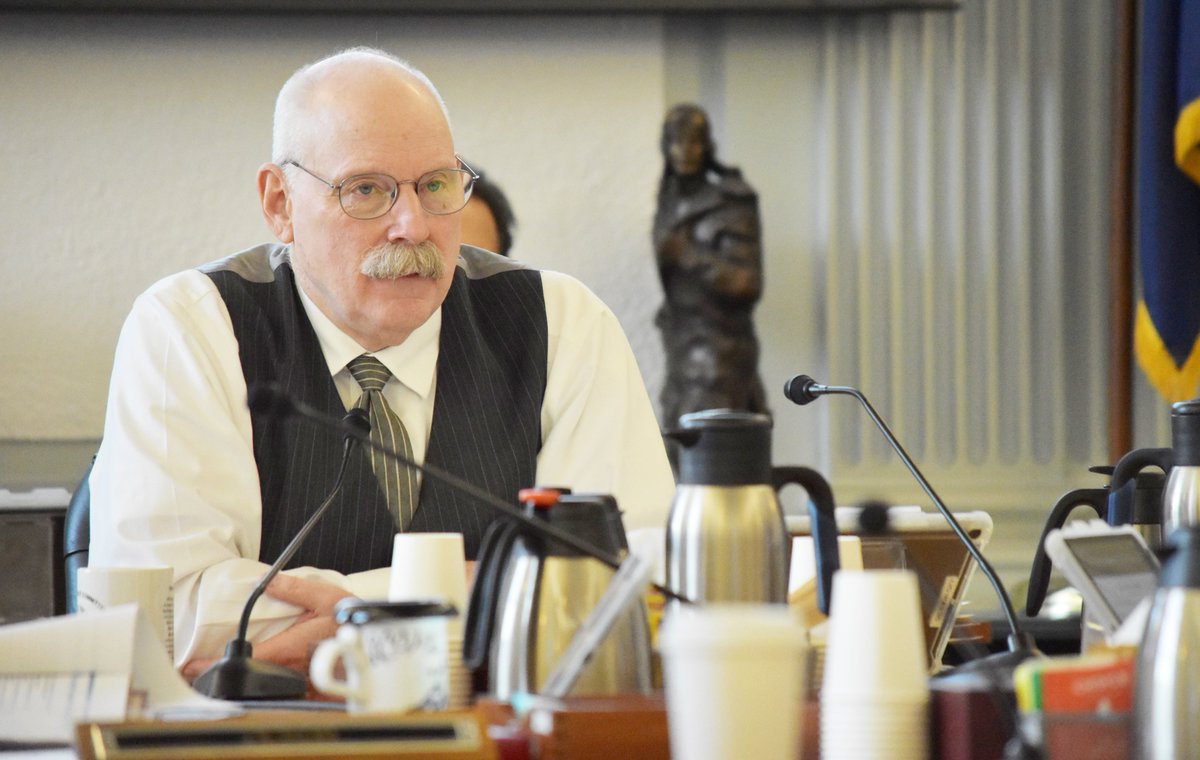
The Senate Finance Committee has released its version of the Alaska state operating budget, which includes a split of the Alaska Permanent Fund’s earnings.
Under the proposal, the government would receive 75% of available oil revenue earnings, while Alaskans would receive 25% in the form of Permanent Fund dividends of approximately $1,304. Additionally, the Finance Committee has budgeted a one-time allocation of $174.9 million for education, which amounts to $680 per student.
Sen. Bert Stedman of Sitka said the budget lives within the state’s means, is balanced, and does not dip into the Constitutional Budget Reserve, which is the account the Legislature may borrow from to meet demands. The fund is reaching the bottom after having been borrowed from repeatedly over the past decade, and never replenished. It has just $2.4 billion left.
“The constitution mandates us to deliver to the governor a balanced budget. Within the confines of the spring revenue forecast and not dipping into our perilously low reserves, we balance the budget with the potential opportunity of revisiting it next January to deal with further maintenance and capital needs,” Stedman said.
The committee used the spring oil revenue forecast of $73 per barrel for the next fiscal year. The budgeters were conservative in that they also left a $93 million surplus, which is a rounding error in a budget, but gives the State a little wiggle room if the price of oil dips.
If oil comes in higher than forecasted, the Senate is proposing replenishing the Constitutional Budget Reserve with the first one billion dollars, and after that, it would up up to $1.1 billion toward the Public Education fund to forward-fund education.
Alexei Painter, director of the Legislative Finance Division, told the Senate Finance Committee on Wednesday that the surplus could be swallowed up by even a small drop in oil prices below the $73-per-barrel forecast.
At the same time, the Senate is weighing a permanent increase to the base student allocation, with is the funding formula for schools. If it comes to an agreement on making the $680-per-student increase a permanent fixture for future legislatures, the senators will back out the one-time increase.
On the House side, the budget proposal has a $600 million deficit and a nearly $2,700 dividend, which is still not a statutory PFD, but is what the House offered as a compromise to the governor’s proposal of a $3,500 PFD.
The Senate also produced a new version of the capital budget — spending on construction and maintenance around the state. SB 41 has $30 million for school maintenance and $32 million for the University of Alaska capital improvements and repairs. The Finance Committee set four goals: Capture as much federal matching money as possible and provide grant writers for communities so they can apply for federal funds, establish food security and resource preservation, strengthen statewide energy programs, and deal with deferred maintenance items.
“We have limited resources to work with, making this capital budget one of the smallest we have seen in a long time. But we have focused on putting in money for major maintenance for schools and the university system to prioritize our existing structures,” said Sen. Lyman Hoffman, capital budget chair of the Senate Finance Committee. “We’ve chosen not to do any individual district projects, but are concentrating on shoring up statewide existing infrastructure.”
The Senate budget totals about $6.2 billion and, unlike the House version, does not require a three-quarters vote of the entire Legislature to access the Constitutional Budget Reserve funds, which is always a major hurdle for lawmakers.
Gov. Mike Dunleavy’s budget, with its $3,500 dividend, has no increases to education, and would require dipping into the Constitutional Budget Reserve to get $900 million needed to balance.
The House and Senate budget differences are normally ironed out through a negotiation in an appointed conference committee at the very end of the session.


