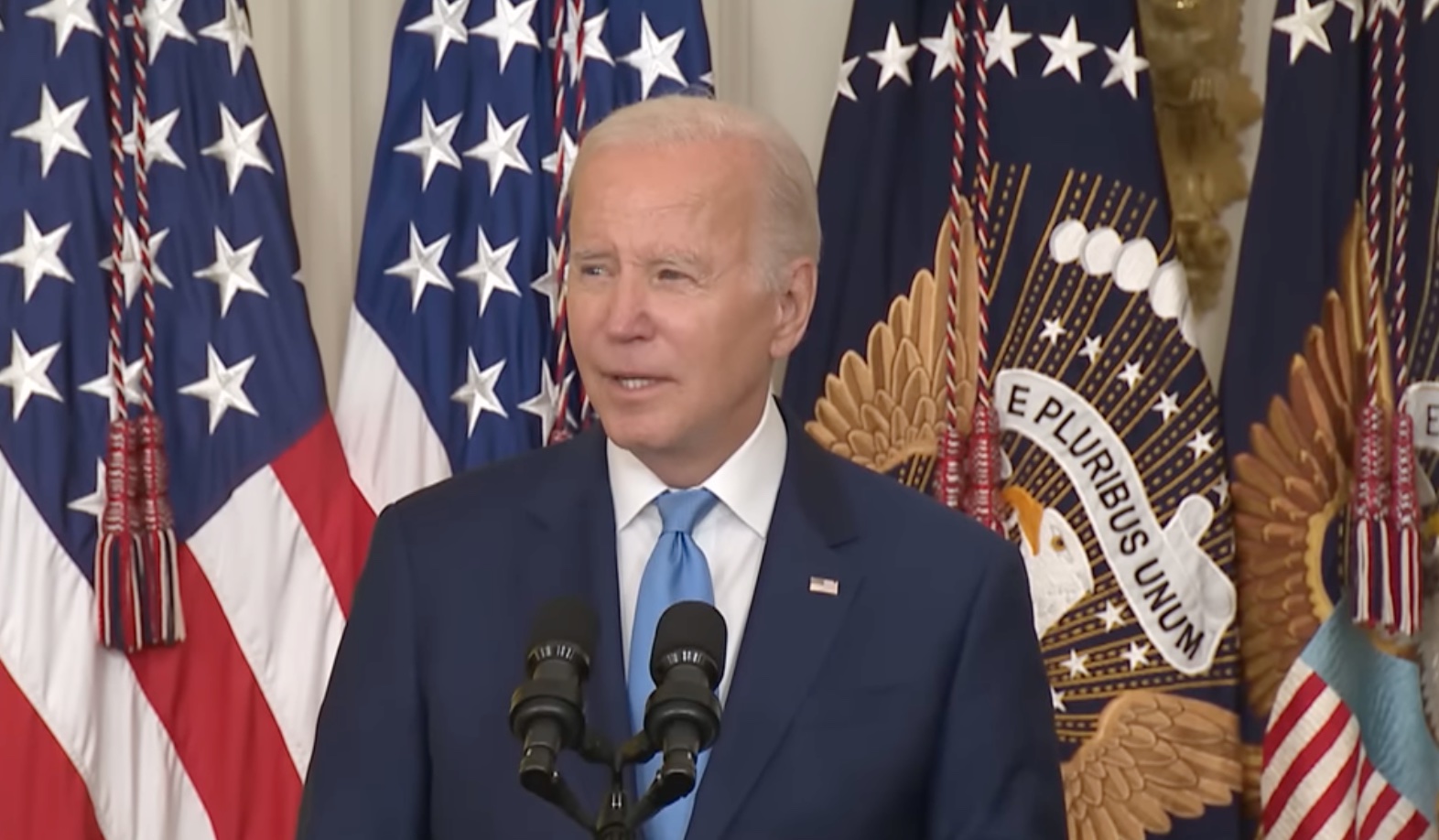
President Joe Biden says he will veto Senate Joint Resolution 63, which if passed by the U.S. House, would terminate the president’s emergency powers enacted on March 13, 2020. Biden has had emergency powers during his entire presidency.
SJR 63, sponsored by Kansas Republican Sen. Roger “Doc” Marshall, was passed in the Senate on Tuesday with 13 Democrat senators joining the Republicans. It now goes to the House. SJR 63 would end the Covid-19 national state of emergency currently in effect under the National Emergencies Act.
Marshall’s resolution, filed in September, followed President Biden’s comments on Sept. 19 that the coronavirus pandemic is over.
Immediately after the resolution passed the Senate on Tuesday, the White House threatened to veto the measure.
“Continuing to protect against COVID-19 and ensuring that our response remains nimble are top priorities of this Administration. Therefore, the Administration strongly opposes Senate Joint Resolution 63, which would terminate the national emergency declared on March 13, 2020, and unnecessarily and abruptly curtail the ability of the Administration to respond to COVID-19,” the White House wrote.

“COVID-19 has posed an unprecedented public health challenge for the United States. While COVID-19 is no longer the disruptive threat that it once was and we have made tremendous progress in combating the virus, the virus continues to pose a risk to the American people and our health care system.
“The national emergency enables the Administration to more effectively respond to COVID-19, including ensuring that necessary supplies are promptly available to respond to the virus and facilitating the delivery of health care at a time when our health system has been under tremendous and prolonged stress. These authorities are critical to continue responding not only to the Omicron variant, but also to emerging subvariants already spreading in the United States and future variants that may arise. Additionally, easing further strain on our health care workforce and health care system and the ability to deliver care to COVID-19 patients will also enable treatment of people suffering from other illnesses who are also put at risk when hospital systems are overwhelmed. Preserving our ability to respond is more important than ever as we head into the winter, when respiratory illnesses such as COVID-19 typically spread more easily. Strengthened by the ongoing declaration of national emergency, the federal response to COVID- 19 continues to save lives, improve health outcomes, and support the American economy.”
The president’s team wrote: “Action by Congress to end these authorities abruptly and prematurely would be a reckless and costly mistake. If Congress passes this resolution, the President will veto it.”
The House is now controlled by Republicans, who may seek to end the president’s emergency authorities and force the veto.
The president will likely keep his emergency powers until the 2024 election cycle. A national emergency declaration stays in effect unless terminated by the president, or through a joint resolution of Congress. Declaring an emergency allows the White House to use the National Emergencies Act, which comes with vast powers.