“It was the best of times, it was the worst of times, it was the age of wisdom, it was the age of foolishness.” — Charles Dickens
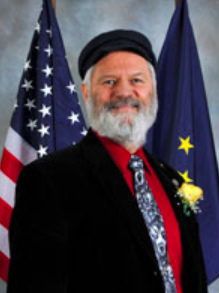
Win Gruening
Several weeks ago, the Juneau Empire Readers’ Council wrote an editorial that chastised Assembly members for drafting an ordinance (modeled on one in Ketchikan) that would exempt passengers from paying sales tax while aboard a cruise ship within the City and Borough of Juneau boundaries. The readers’ council states the ordinance deserves careful attention. I wholeheartedly agree.
The issue is a relevant one and worthy of discussion. But the editorial did little to shed light on the subject. Instead, it chose misleading and incomplete information to illustrate its case.
In claiming the exemption is “ignorant” and the cruise lines are engaged in “corporate hypocrisy,” the readers’ council has once again demonstrated an animosity toward the cruise industry and furthered their quest to demonize it. This kind of hyperbolic invective does little inform the public – it’s foolish and unnecessary.
Let’s place the issue in perspective. Cruise ship passengers are already paying sales tax. Eight million dollars in sales taxes annually, to be exact. They pay sales tax on all their purchases and their tours on shore while in Juneau.
These revenues are on top of the $13 million in marine passenger fees Juneau receives from cruise ship passengers (whether they get off the ship or not). These “head taxes” are not charged on any other “non-cruise” visitor coming to Juneau.
Cruise lines are not suddenly “refusing to collect sales tax” as the editorial states. Historically, city has never required collection of on-board sales tax because there have been and continue to be legal impediments to doing so. Assembly Finance Committee staff recommended existing practice be codified by exempting these specific on-board sales from tax after a study was completed last year. Only recently, has the city decided to move forward on implementing collection of the tax.
The editorial conveniently doesn’t mention the industry appealed city staff’s decision and provided a lengthy legal analysis supporting exemption. Despite that, the city’ Legal Department has disputed this – hence the need for an ordinance.
By choosing to dismiss the legal aspects of this debate the editorial has instead focused on how unfair it would be to ignore collecting sales taxes on board a ship when these same taxes are collected elsewhere in the borough.
Except they aren’t.
There are dozens of sales tax exemptions in the city tax code. Among them are various banking services, optometrists, chiropractors, realtors, nonprofits and lobbyists, just to name a few. There are various reasons for these exemptions but I could make the argument any one of them is “unfair” on its face.
The editorial asks why a fisherman must collect sales tax for fish sold at the dock if a cruise ship would not be required to when a passenger makes a purchase aboard a ship.
One could also wonder why the Juneau Arts and Humanities Council and Sealaska Heritage are not required to collect sales tax on their retail sales when every other store in Juneau is required to do so. Is that fair? They are competing directly with private businesses in downtown Juneau, often selling similar products, and yet enjoy a distinct competitive advantage.
On the other hand, it is hard to see how a coffee kiosk, pool-side bar or salon on a cruise ship competes with any downtown business. The sales tax derived from these limited activities operating while in port would be minimal and, in any case, these services are not open to the public (as is the fisherman’s business).
The editorial suggests the cruise industry is cheating Juneau taxpayers by requesting that existing tax collection practices be continued to avoid the complications associated with the collection of on-board taxes – taxes that would be minimal at best. It’s likely this would result in an accounting exercise that could easily cost more than the amount that would be collected. How wise is that?
City staff interprets the city boundary to include the waters surrounding Juneau meaning cruise ships transiting area waters from Tracy Arm to Berners Bay would be subject to the sales tax. How does a cruise ship correctly identify every on-board purchase subject to tax based on the GPS position of the ship? Add the complication of pre-paid purchases and the accounting issues involved would be a nightmare – especially when expecting cruise lines to report and remit monthly to the city.
If city begins collecting these additional taxes on all cruise ships, Juneau will be the sole municipality in Alaska with this requirement. Is that a distinction Juneau needs right now?
The Assembly should move ahead in passing this ordinance. Why give cruise lines one more reason to cut short their stays in Juneau?
Win Gruening was born and raised in Juneau and retired as the senior vice president in charge of business banking for Key Bank in 2012. He is active in civic affairs at the local, state, and national level.
OUTRAGEOUS-CARE: An Alaskan sent us the final tally that she and her husband would owe if they signed up for Obamacare.
The two own a business and buy their insurance on the Orwellian-named “Affordable Care Act” insurance market, which has one company left in Alaska. The couple has decided they cannot afford the coverage and are now without health insurance for the first time in their lives. Check out the bottom line in “Affordable” — it’s $38,733 a year out-of-pocket:
– When the Republican House Minority filed into House Finance Committee to sit in silent witness against a still-too-large budget, we had to ask: Has that ever been done before?
– Why was Rep. Dan Ortiz, at the beginning of the Education committee meeting he chairs, so quick to welcome the representatives from National Education Association into the meeting room? That would be like Rep. Geran Tarr, co-chair of House Resources, welcoming the lobbyist from the Wilderness Society. Oh wait…
– Will there be fireworks over relinquishing state sovereignty during the Attorney General Jahna Lindemuth’s Senate Judiciary appearance this week? The House Judiciary Committee forwarded her name, with Rep. David Eastman the lone vote against her…
– Are Sen. Donny and Willow Olson really expecting twins? (We actually know the answer: Yes, they are, according to the ultrasound.)
– What? Is it true Sen. David Wilson has a service dog in the Capitol?
– Who put together the fab new Andy Josephson spoof twitter handle with items like these?
GOOD TV: Was it camera operator Cale Green’s idea to dress up Liz Raines, KTVA political reporter, who illustrated the history of the Alaska Education Tax, complete with era-appropriate costume and flinging of the hat? If so, great idea. Rep. Matt Claman wants to resurrect the tax, which could cost some Alaskans up to $8,500 a year if they’re making bank. We’re coveting the hat, Liz:
BAD TV: Who will tell Rep. Justin Parish to stop eating during House Resource Committee meetings? It makes for gross TV:
SENATE FINANCE PERMA-FUND BILLS GET PUBLIC TESTIMONY TODAY: Senate Finance is taking public testimony on the Permanent Fund restructuring bills: SB 70, SB 21, and SB 26 today (Monday) at 4 pm.
SB 70 is offered by the Senate Finance Committee and would draw about 5.25 percent of the average market value from the Earnings Reserve Account of the Permanent Fund over five years. That yields $1.8 billion for state services, pays $1,000 in Permanent Fund dividends, and seems to have the support of the governor, according to his Commissioner of Revenue Randy Hoffbeck.
SB 21 is offered by Sen. Bert Stedman, and limits a draw to 4.5 percent of the average market value of the fund for the first five of the last six fiscal years. Stedman says this will allow the fund to grow, and would allocate 2.25 percent or more for dividends. That’s why this is called the 50-50 plan.
SB 26 is the governor’s plan to restructure how the Permanent Fund Earning Reserve Account works, and is similar to SB 70.
If you can’t get to an LIO, call in at 1-844-586-8085 or send an email to [email protected].
A comparison of the different budget fixes is posted at Alaska’s Future website.
SEN. MIKE DUNLEAVY HAS A QUESTION FOR YOU: Seriously, there’s one question on this survey, and you’re going to want to answer it like the State’s budget depends on it.
SENATE RESOURCES: The governor’s Board of Game appointments will be heard in Senate Resources at 3:30 pm. today (Monday.)
That means it’s suit-and-tie day for Ted Spraker and Larry Van Daele. And Big Game Commercial Services Board appointee Adam Trombley is up, too.
At 3:30 pm Wednesday, Attorney General Jahna Lindemuth will update Senate Resources on how she’s doing on all those federal lawsuits she’s been dropping right and left.
On Friday AOGCC commissioners Hollis French and Dan Seamount are up for confirmation.
HOUSE OPERATING BUDGET: House Republicans, we are told, are offering over 100 amendments to the operating budget in House Finance to try to pare it down on the before it hits the House floor. Republicans were not allowed to offer them in the budget subcommittee so this is the first bite they’ll get of the apple. Will Rep. Paul Seaton rule them out of order?
JUNEAU SALES TAXES: Juneau dedicates part of its sales tax to different grant recipients, who compete for it annually. It would take a 23 percent tax to pay for all the requests if they were all funded, says Assembly Member Debbie White. In other words, a lot of those applicants are going to be disappointed.
SHORT-LISTED: We’re hearing that Joe Balash, chief of staff for Sen. Dan Sullivan, is on the list for a possible appointment in the Trump Administration as Assistant Secretary of the Interior for Lands and Minerals. That’s huge, but that’s not all:
Steve Wackowski, former campaign manager for Lisa Murkowski, might be in the running for a special assistant position.
Tara Sweeney, longtime boss of external affairs at ASRC, is being considered for Assistant Secretary of the Interior for Indian Affairs.
Drue Pearce, former Alaska Senate president, is on the list for the Federal Pipeline and Hazardous Materials Safety Administration. She used to be the Federal Pipeline Coordinator under GW Bush.
Chat Padgett, Rep. Don Young’s state director, may get tapped for an Agriculture Department post based in Alaska.
And then there’s are openings for EPA District 10 agency chief, the U.S. Attorney for Alaska and the U.S. Marshall. No word on prospects for those.
ASRC HOSTS GOVERNOR: While in Washington, D.C. for the National Governors Association, Gov. Bill Walker and others in his posse attended a reception hosted by ASRC. Spotted were Mrs. Donna Walker, Communications Director Grace Jang, Chief of Staff Scott Kendall, DNR Commissioner Andy Mack, Fairbanks Office Manager Melissa Stepovich, Acting Attorney General Jahna Lindemuth, and HSS Commissioner Valerie Davidson. So much for the travel ban.
North Slope Borough, ASRC, and the Alaska Eskimo Whaling Commission were all in the nation’s capital putting their wish lists on the desks of everyone who mattered.
Author Jeremy Carl suffers through a “selfie” photo with Must Read Alaska’s Suzanne Downing prior to speaking at Juneau’s Lincoln Day Dinner on Feb. 24, 2017.
Editor’s note: Readers have asked if Must Read Alaska would reprint the Lincoln Day Address by author Jeremy Carl, who is a fellow at the Hoover Institution (formally knowns as the Hoover Institution on War, Revolution, and Peace at Stanford University and who writes regularly for the National Review. Mr. Carl gave us permission to print his speech, which he made to a sold-out event in Juneau on Feb. 24, 2017.
WHAT IN THE WORLD JUST HAPPENED?
Thanks so much for that warm welcome.
I’m not sure how a U.S. Senator [Dan Sullivan] wound up as the warmup act for me. It’s a bit like having Michael Jordan as the warmup act for a guy you once saw make a couple of nice baskets at a YMCA game. But nonetheless I’m happy to be here.
I am very aware that I am coming to you as an outsider in a state that for many very good reasons places a premium on the knowledge of locals. And so my goal for my remarks tonight is modest:
I want to ensure that Ethan Berkowitz remains the San Francisco area import to Alaska that you dislike most — and that I don’t supplant him by the end of my speech.
If I achieve that, then I’ll consider this talk a success
So let me begin by acknowledging some of our prominent locals who are with us tonight. First and foremost, Sen. Dan Sullivan. I enjoyed getting to spend time with him earlier.
I know Dan has a great reputation as a rising star in our national party, and he’s an outstanding senator for State of Alaska.. And thanks also to all of the Alaskans in the room for helping Dan defeat an incumbent Democratic senator, which is never an easy thing to do.
But before Sen. Sullivan gets a big head let me say that I had a chance to sit with his wife Julie at dinner, and I can confirm that, as he said to the Legislature today, he married up. So we have something in common.
I also wanted to recognize Senate President Pete Kelly from Fairbanks, who was described to me as “smart, principled, tough as nails, and a true leader.” Having had the chance to talk to him I certainly came away with that impression as well.
And I would like to thank all of the other members of the Alaska Legislature who came out this evening. several of whom I’ve had the privilege to meet and speak with earlier. You all have a great record here of supporting conservative, freedom-oriented governance, and it is greatly appreciated
I want to also acknowledge Tuckerman Babcock, the state [GOP] chairman who I enjoyed getting to know over the past couple of days. Thank you for all that you do to help the GOP be successful—I know our state party officials in California well and so I appreciate all the effort you have to do to make the party run.
And thanks to Juneau’s deputy mayor for his welcome, Jerry Nankervis. I understand you are coming straight from hockey reffing, so thanks for getting off the ice and making it here.
I’d like to thank Suzanne Downing from Must Read Alaska, which really is a must-read. Suzanne has been an excellent unofficial co-chair of my welcome committee.
Thanks so much to Ben Brown for the kind introduction and Capital City Republicans for inviting me to come to Juneau and the Republican women for putting on the dinner.
The last person instructed me not to mention her by name, so I’ll honor that request but I will say that her name rhymes with Paulette Simpson and she has been incredibly gracious in taking the lead setting up things for today.
I told Paulette that I do both political talks and more candid academic talks and I asked her whether I should be more political or more candid—and she said be candid. So blame her if there’s something you don’t like — I’ve been reliably informed there are no roads out of town so hopefully my survival skills are good.
If there’s anybody I haven’t flattered yet that I should have, my sincere apologies.
But seriously, I have to say I’ve done many speeches in many places over the years and I’ve never received warmer hospitality and in such unexpectedly great weather than I’ve received over the last couple of days.
I told the organizers that I woudn’t do this for say, the Delaware GOP, much as I’m sure they are great folks. I have five young kids at home and I travel selectively, but really love Alaska—I almost moved here. I’ve been privileged to travel around the state from as far south as Hyder to Homer to as far north as ANWR, and there is just no other place in America—if not on earth– like it. It has always stood for liberty and a natural beauty and resource richness unparalleled in the world. Alaska stands for freedom and the Alaska GOP is what keeps it that way.
When I think about the importance of groups such as the one gathered here this evening, I have an article in the current issue of National Review discussing a renowned conservative political philosopher Harry Jaffa in which I quote Jaffa.
The fate of the world, Jaffa said, depends on the United States, the fate of the United States depends on the conservative movement. And the fate of the conservative movement depends on the health and success of the Republican party.
And that’s a pretty good summary of why I’m here—and why I expect many of you are here as well. We need a strong Republican party if we want a strong America.
I originally titled my talk. “What in the world just happened? And what does it mean for the GOP’s Future? Reflections on the 2016 Election.”
The organizers wisely shortened that title to the more calm “Reflections on the 2016 Election” but my message is going to remain the same.
I’m going to talk about three things—first what we learned from the election itself. Second, what we’ve learned from the early days of the Trump administration. And third where the GOP and the country should go from here. Then, with the appropriate modesty of an outsider, a few thoughts on what this might mean for Alaska.
SO WHAT HAVE WE LEARNED?
That we’re lousy prognosticators
And that includes me. I think I got the dynamics of this election closer to correct than the vast majority other pundits, analysts and consultants. And I was still lousy. I wrote an entire memo to another GOP Presidential candidate in early September of 2015 more than a year before the election in which I said that regardless of media spin this would hinge on turning out white working class vote.
“The most important voters to win in the entire country are working class and middle class white voters in the Midwest and upper Midwest.”
[This was followed by a data modeling discussion of why, while the GOP needed to actively and enthusiastically pursue every demographic group, this particular election hinged on our ability to turn out white middle class and working class voters in the Midwest. Carl went on to note, “The voters who stayed home and didn’t vote for Romney, particularly in the upper Midwest, are just the sort we need to reach. The scenario and data outlined above flips Ohio, Pennsylvania, Michigan, New Hampshire, Virginia, Wisconsin, and Iowa to give us a victory” And that proved a pretty accurate description.]
So in a fundamental sense– at the risk of gross immodesty, in contrast to most of the professional pundits and highly paid consultants, I had the correct GOP victory scenario nailed. And yet, if you’d given me 100 to 1 odds when he entered the race that Donald Trump would be our next president, I probably would have taken it. I knew he could appeal to the voters the GOP needed to win, but I thought that his other much-discussed liabilities would be too much to overcome. The election of Trump surprised all of the experts and we shouldn’t pretend otherwise.
Trump brought out a ton of Republican and other right leaning voters.
I think this is important and gets lost. Trump won almost one million more votes than any Republican presidential candidate in history. And that total doesn’t even include 731,000 votes for Evan McMullin and 4.5 Million for Gary Johnson and 1.2 Million write-ins, most of whom were also probably conservatives. Meanwhile, Democrats got lowest vote share in a two-party race since Dukakis in 1988 right after the Reagan revolution.
Mainstream media’s power has slipped in fundamental ways.
I’ve worked in the media so it gives me no joy to say this, but they were effectively unpaid agents of Hillary Clinton and Democrats—they were more Pravda than independent media. Yet they were not able to deliver victory for the Democrats. And I’m glad that the GOP is finally being more aggressive about calling to account the media’s fake news and fake narratives.
That GOP strength down ballot was incredible.
We hit a century-long high in terms of legislative seats and chambers won. GOP controls 67 partisan state legislative chambers—an all-time record with well over 4,100 of 7,383 seats. That is the most since 1920. There are 24 states with GOP complete control including governorship. Democrats controlled just six. Trump had coattails and GOP votes were dragged over the line. We have 52 seats in the Senate.
In Alaska the Democratic candidate for Senate took just 12 percent [in the primary], which must be a modern record for futility for a party whose candidate wasn’t mired in a sex scandal. Fourth place, at least where I come from, is a fringe party.
In the U.S. Senate overall, the GOP won 13 seats by more than 20 points. This was more than the 10 seats won by the Democrats by any margin.
We won 17 seats by 10 points. The GOP won 12 seats from senators facing their first re-election effort—a remarkable achievement
In 2018, the Democrats will be defending 24 of 33 seats up for election in the Senate. including 10 in states won by Trump. The GOP has only 9 seats up period, of which only two are at all vulnerable to the Democrats barring a stunning upset or scandal. Only one is in a state that Trump didn’t carry. Without jinxing ourselves it would not be much of a surprise if the GOP made substantial gains without losing a single Senate seat in 2017. While I don’t think either scenario is likely we are much more likely to have a filibuster-proof majority of 60 seats than we are to have 49.
In the House, 253 seats (218 are needed for a majority) were won by either Trump or a Republican house candidate or both. 218 were won by both Trump and the House GOP candidate. All in all, It would take a fairly stunning reversal to not have unified GOP government over the next four years. As a famous statesman once said, We’re going to win so much that you’re going to get tired of winning.
Big Money is almost meaningless in presidential elections.
Trump was badly outspent. In a little-known staggering statistic, Jeb Bush raised as much money from major donors as Trump did. Liberals love to talk about campaign finance reform. But at the presidential level, good candidates beat big dollars all the time. And Hillary Clinton was a lousy candidate.
On the GOP side in particular it was an insurgent election.—it wasn’t just Trump. Just 15 percent of GOP votes in the presidential primary went to non-Tea Party or post-Tea Party Candidates. 95 percent of convention delegates were won by insurgents. And we had a lot of good candidates of an earlier vintage: Scott Walker, Bobby Jindal, Rick Perry, Jeb Bush Chris Christie, Rick Santorum, MikeHuckabee . None got any traction at all. This was a change election, and a conservative insurgent one.
Trump or Cruz , the bête noirs of the party establishment, won all but two states. Kasich’s home state of Ohio and Minnesota narrowly won by Rubio.
Democrats’ leadership is mismatched with their party demographics still led by last generation.
The three Dem leaders in house will be almost 80 by the time this congress concludes top two both white. Three Dem Leaders in the Senate all white, The top two are white men—all senior citizens—yet they have an increasingly African-American and Hispanic Party Base that does not have a seat at the table right now. That is going to cause dissention in their coalition and you are already seeing it.
And that leads to perhaps the most surprising and least commented upon phenomenon of Election 2016:
Despite a full media propaganda campaign designed to stir up two minutes of hate against him, Trump actually performed better among Hispanics, Asians, and African-Amercans than Romney. If numbers from previous polling are accurate, probably far better among native-born members of those groups. While we need to do much better, even that arrow is pointed up.
For all of the “White Nationalist” and “Racist” hysteria created by the media around Trump, he was no better than Romney’s level among white voters (58-37). But decompose this and the story becomes very different. He did dramatically better with white non-college voters (+14 vs Romney) but Trump slipped a lot among white college voters losing 10 points with them versus Romney. There’s a huge opportunity for 2020 growth here if he proves more rational than scary media portrait. And considering the media is panting him as a cross between Hitler and Atilla the Hun that should simple bar to jump over.
Now let me move on to what we have learned from the earliest days of this administration, starting with the cabinet picks.
For whatever his flaws may be this most encouraging thing is that Trump is actually a leader. In filling out his administration, he is not just picking loyalists. Nikki Haley, Tillerson, My friend and Hoover colleague General Mattis, Zinke, Chao, Devos, Pompeo, Rick Perry Mulvaney. None of these were early passengers on the Trump train. Some never boarded it at all.
I think for the most part this very encouraging. One of the true hallmarks of a strong leader overcome pettiness and slights inherent to campaigning and pick the right people for the right roles.
He’s been willing to take the fight to the Democrats again and again. He’s not letting up. Do I wish he spent less time on Twitter? Absolutely. But what he’s done has gotten results.
And he’s kept his campaign promises to his voters even if our elites don’t like it: On immigration. On issues like the Supreme Court, assertions of Sovereignty at NATO, and on fundamental regulatory reform. From a policy perspective,, there’s been a lot to like. He’s not changing as president—he’s a tough deal-maker but he’s going to need some of his experienced hands at least on foreign affairs to help advise him and with Tillerson, John Kelly, Mattis, Joseph Dunford he is doing just that.
I think there are several possibilities where the party goes from here. I’m not endorsing one, just laying out various scenarios
We could become a less ideological and more practical party—Trump was certainly not seen as an ideological figure before this campaign. Political scientists Matt Grossman and David Hopkins have talked about asymmetric politics— The GOP fights for its values while Dems are a cynical coalition of interests.This approach would be painful for a lot of the true believers in conservative journalism and policy space—but it may lead to a more effective opposition.
A more overtly nationalist party, In 2016 Dems discovered identity politics cuts two ways. This is what Making America Great Again is all about.
Trump as a blip—he does not become a successful—is not re-elected and we go back to business as usual.
Trump serves as a figurehead to conventional GOP policy—we end up having a fairly conventional administration except for a few pet issues for Trump. This is possible, but it’s not what I’m seeing in the early days of this administration. Personnel is policy and the personnel of this administration look to be conservative and determined.
Trump as transformational President. The Dems have overplayed their hand; Trump runs roughshod over socialism and outdated regulation, proves to be a Reagan like-figure but more aggressive, decimating the opposition and ushering in a new GOP majority era while the Dems socialist identity politics is left of the ash heap of history.
Boy that would be great. I don’t think this is most likely scenario, but I also don’t exclude it.
The biggest thing we learned from this election cycle is that Donald Trump shouldn’t ever be underestimated. So hang on—going to be a wild ride.
Now next let’s talk about what we’ve seen from America since this election. If I may put in academic parlance … apologies if this is too technical for some of you:
The Left are acting like a bunch of whiny, pathetic, sore loser babies.
I think what we’ve seen since election of Trump is a lot of distraction—a mass of protests, crowds at town hall meetings and a non-stop full-court press by the left-wing media, Hollywood and DC insiders to make Republicans and Trump supporters “the other.” To isolate and shame them and him. They are making a lot of noise, but I’m not sure their strategy won’t backfire. The marchers tend to be unhinged and that doesn’t play well with swing voters.
It reminders me of what happened with Governor Scott Walker in Wisconsin a few years back. Tens of thousands of protesters took over Wisconsin capitol for weeks screaming and shouting and holding signs that said in capital letters saying “This is what Democracy Looks like”
Then we actually had an election and Walker won by a bigger margin than before—and at that point we discovered “No THIS is what democracy looks like. “ The let are so used to winning the culture wars without serious pushback that they don’t know how to handle losing. We’re not crazy like they are but we can’t let crazy intimidate us.
And speaking of crazy, I should add that I’m truly surprised at how crazy the media has become. It’s a bit disturbing to hear the president call the media the enemy of the American people, but it’s even more disturbing that it’s increasingly true that the
Washington Post or New York Times today often read like the comment threads on Elizabeth Warren’s Facebook page. It’s not good for journalism or democracy.
In many ways I think the biggest threat to Trump is what political theorists refer to as the “Deep State.” This is the expanded administrative state, the ability of the permanent bureaucracy and allied forces among American elites to leak damaging information and to impede conservative policy choices through intentional slowdowns and obfuscation.
Deep state is at war with Trump, and Trump will have to be very careful—Needs to take on bureaucracy—and have fundamental civil service reform. DC voted 94 percent non-Trump and the surrounding suburbs 70+ percent non-Trump. The bureaucracy and its allies are definitely the sworn enemies of this administration.
That’s why I was encouraged when Steve Bannon at CPAC said, “Trump administration is in unending battle for ‘deconstruction of the administrative state’”
It’s encouraging that this administration understands the terrain on which the battle should be fought and exactly what the stakes are.
ABOUT ALASKA…
Now I’d like to offer a few thoughts on what this all means for Alaska.
I tread carefully here because even though I do follow politics closely in Alaska, I am hardly more knowledge about it than the people here.
Unfortunately, the craziness has come to Alaska. I just read in Must Read Alaska about some disturbing news from Homer — a city by the way, which voted decisively for President Trump
Nonetheless a resolution has been put before the Homer City Council, sponsored by several council members, effectively demanding that Trump and his supporters be condemned.
Here’s some sample text:
WHEREAS, The President now is following through on his promises to deport millions of undocumented immigrants”
(WELL WE CANT HAVE A CONSERVATIVE PRESIDENT WHO FOLLOWS THROUGH ON HIS PROMISES TO UPHOLD US LAW CAN WE?)
BE IT FURTHER RESOLVED that the City of Homer calls on all its citizens to stand against intolerance and resist expressions of hate toward any members of the community
(EXCEPT TRUMP AND HIS SUPPORTERS WHO REPRESENT A MAJORITY OF HOMER)
NOW, THEREFORE, BE IT RESOLVED that the City Council of the City of Homer unequivocally rejects expressions of fear and hate wherever they may exist
(EXCEPT FOR HATRED OF THE MAJORITY OF HOMERITES WHO SUPPORTED TRUMP)
BE IT FURTHER RESOLVED that the city of Homer will not waver in its commitment to inclusion and to continuing to create a village safe for a diverse population.
(EXCEPT FOR POLITICAL DIVERSITY)
And it goes on like this for several pages.
This is San Francisco level political stupidity and the fact that leftists feel emboldened to offer these resolutions in communities that Trump carried shows just how unhinged and unconnected to reality they have become.
So outside the fever dreams of the Left what can we say about what Trump will actually do that affects Alaska?
This is a President that likes to build things. That may sound trivial but it’s really important. Deregulation not just a theory for Trump. He wants to put steel in the ground. That means pipelines—he wants to unlock domestic energy and natural resources—all of that is an opportunity for Alaska.
I would love to personally see triangulation—something where a small amount of revenue from new resources that we unlock would be used to develop national parks and perhaps roads to access them in Alaska and other areas—most of which have few to no facilities. Many of Alaska’s parks are under-resourced—even the popular ones. This could develop more tourism jobs while lowering tourist overload at already overcrowded sites. The tourism infrastructure at this state, particularly at some of the National Parks not reachable by road, could be dramatically improved.
If you have a sense of the true scale and grandeur of this place, as actual Alaskans do, the notion that a few hotels or roads or oil wells on a small portion of Alaska land would fundamentally spoil these is ludicrous. The scale of nature in this state is boundless and there is plenty of room to preserve Alaska’s natural beauty while responsibly developing its resources.
It’s going to mean a focus on blue collar workers and again, I think that is great for Alaska.
It’s going to mean a focus on federalism and as a state that arguably more than any other needs federalism. Because of its unique needs and circumstances, Alaska will benefit.
This president is focused on political and regulatory streamlining.
For the EPA, I think Pruitt has a lot of promise. Contrary to the media caricature, from what I can see this is not an ideologue—he’s a person who wants to refocus the EPA’s mission. But it’s about predictable regulation and a focus on clean air and clean water and removing a lot of the extra political agenda.
And I’d say much the same for the Department of Interior Under Ryan Zinke. And DOE under Rick Perry. The fact that we have elected officials, with their greater understanding of politics, in these roles, rather than just career bureaucrats, is generally a very good thing.
Nobody wants dirty air or dirty water or oil spills, least of all people who put up with the difficulties that exist to live in a spectacular place like this one. But environmental regulation is a question of scale, cost and balance. And I think this administration will have the right balance.
At the same time, we have to be realistic—the drop in oil prices makes bigger offshore plays less likely, so those expecting that Trump will usher in an overnight energy revolution may be disappointed.
Look, there are going to be a lot of distractions over the coming years. There are going to be a lot of whiny liberals screaming in the streets that Trump’s latest move, no matter what it is, is going to end the world. They are going to do everything they can to distract us from doing our jobs to make America stronger, safer, and more prosperous.
So in response to that, if you’ll indulge me, I’d like to close with one of my favorite passages of political writing. It’s from the British philosopher and statesman Edmund Burke, a great supporter of the American Revolution, an opponent of the more radical French revolution, and by many lights the founder of modern Anglo-American conservatism.
In Burke’s masterwork Reflections on the Revolution in France, he offered the following message to his correspondent and his words are wise counsel to Republicans and conservatives anywhere.
Quoting Burke:
“The vanity, restlessness, petulance, and spirit of intrigue of several petty cabals, who attempt to hide their total want of consequence in bustle and noise, and puffing, and mutual quotation of each other, makes you imagine that our contemptuous neglect of their abilities is a mark of general acquiescence in their opinions.
“No such thing, I assure you. Because half a dozen grasshoppers under a fern make the field ring with their importunate chink, whilst thousands of great cattle, reposed beneath the shadow of the British oak, chew the cud and are silent, pray do not imagine that those who make the noise are the only inhabitants of the field, that, of course, they are many in number, or that, after all, they are other than the little, shriveled, meager, hopping, though loud and troublesome, insects of the hour.”
I think we all would have loved to have had a press secretary like Edmund Burke? I’m waiting for Sean Spicer to start his next press conference that way.
The insects of the hour are out in full force today. They are in the media, at our universities, in Hollywood, and even in large parts of our business community. Their goal is to isolate conservatives, to shame them, and to make sure that we cannot be successful in our goals.
What we need to understand is that we represent those powerful yet silent important and numerous inhabitants of the field, The American people, not the few loud and obnoxious grasshoppers.
We need to focus on delivering on the conservative promises that the Republican Party has long stood for—lower taxes, less government, more freedom and a recommitment to American values.
The grasshoppers will always make loud and dissonant noises. To succeed, they need to convince us that they are the many and we are the few—but they remain shriveled and meager as ever.
Abraham Lincoln, whose memory we honor tonight, didn’t listen to the grasshoppers attempting to distract him during the trials of the Civil War. He kept his eyes on the prize—ended the scourge of slavery and ensured that our states would continue to be united.
He focused on the welfare of millions of Americans whom he bravely led—not the siren song of a few whining insects.
Ronald Reagan would do the same thing in 1980 when his opponents accused him of dangerous radicalism and called him every name in the book.
We need to follow their example — that of Burke of Reagan and Lincoln. If we can do that, we’re going to be very successful in the next four years, and we truly will make sure that America’s reality is as great as its promise always has been.
Thank You.
* * *
Do you love conservative content in Alaska? You’ve got it here at Must Read Alaska. Become an underwriter today and keep us going strong and conservative. Contact [email protected] for details on how you can support this site.
President Trump signs the repeal of the Social Security Gun Ban, an Obama-era order. (White House photo).
On Tuesday, President Donald Trump signed a congressional resolution that axed what many Second Amendment advocates call President Obama’s “Social Security Gun Ban.”
The ban was eight years in the making in the Obama Administration, but after the terroristic mass shooting in San Bernardino, Calif. in December of 2015, Obama signed an executive order instructing the Social Security Administration to comb the files of Americans who receive disability payments. Those who were deemed mentally defective were reported to the National Instant Criminal Background Check System, which would add them to the FBI list of people disallowed from gun ownership.
That’s not a club to which most Americans, even those who are mentally ill, want to belong.
The Obama rule was finalized by the Social Security Administration near the end of December, 2016 and would have taken effect at the end of this year. But by the end of February, Trump had shot it down with his pen.
The National Rifle Association didn’t care for the rule and fought it, as expected. Even the ultra-liberal American Civil Liberties Union couldn’t stomach the order, which applied to any number of disabilities — mental, emotional, or physical.
For example, you could have anxiety, anorexia, sleeping disorders, or any number of vaguely defined problems, and if someone was handling your finances for you and you were receiving Supplemental Security Income, you were deemed too dangerous to own a gun or ammunition — for protection, hunting, collection, investment or any other reason.
The only way to get your gun back was to prove to the government, at your own expense, that you weren’t crazy. Good luck with that, gun right advocates said.
Second Amendment defenders noted that Obama focused on guns instead of the radicalization of the Muslim husband and wife duo who killed 14 people and wounded 21 others in San Bernardino. Syed Farook and his wife, Tashfeen Malik opened fire at a holiday gathering of Farook’s co-workers on Dec. 2, 2015, massacring 14 and wounding 22 at a government office. The two then died in a shoot-out with police.
They were not mentally disabled Social Security recipients. They were radical anti-Americans.
But, in the words of President Obama’s former Chief of Staff Rahm Emanuel, “You never let a serious crisis go to waste. And what I mean by that — it’s an opportunity to do things you think you could not do before.”
Obama took Emanuel’s advice. His Social Security Gun Ban put 75,000 Americans in the same class as others who cannot buy guns: felons, drug addicts, and illegal immigrants.
In Alaska, Democrat Rep. Geran Tarr has introduced similar legislation to remove weapons and ammunition from people if family members or law enforcement officers believe they are a threat to themselves or others.
HB 75 would let judges make the call and take guns away from people temporarily through a protective order. It is in House Judiciary, where it awaits a hearing. Tarr’s bill, at this writing, has no co-sponsors.
The memorial service for Barbara Andrews-Mee, longtime aide to Sen. Ted Stevens, is set for 4 pm, March 12 at Indian Lake Estates United Methodist Church, in Indian Lake Estates, Florida.
Her widowed husband Vince Mee said that he will spend the summer in Alaska and will likely have an Alaska memorial or celebration of Barbara’s life.
In lieu of flowers, Vince requested that people make a donation to an organization that supports military personnel or veterans.
Cards may be sent to his address: P.O. Box 7774, Indian Lake Estates, FL 33855.
Alaskan millionaire and private equity investor Robert Gillam has landed his jet in Miami this afternoon, and is heading to Donald Trump’s home at Mar-a-Lago, an estate and private club in Palm Beach, Fla.
Gillam was invited by the president to stay at the resort through the weekend and dine with Trump on Friday, according to sources.
When it was built by socialite Marjorie Merriweather Post, the heiress envisioned it as a winter retreat for American presidents. It was bequeathed to the nation upon her death in 1973, but presidents never used it, and it was purchased by Trump in 1985 after having been returned to the Post estate. The Trump family has private quarters in a closed area of the house and estate.
President Trump refers to to Mar-a-Lago as his Winter White House.
Gillam is McKinley Capital’s founder, chairman and Chief Executive Officer. He was a major donor to the Trump campaign and his name was in play for Secretary of the Interior. That appointment went to Rep. Ryan Zinke of Montana, who was confirmed this week.
HOUSE FINANCE TESTIMONY TODAY THROUGH SATURDAY
House Finance Committee is taking public testimony on the operating budget. Times and locations follow: Thursday, March 2, 2017 1:00 – 3:30 p.m.* Homer, Kenai, Ketchikan, Kodiak, Matanuska-Susitna Borough & Seward 3:45 – 6:00 p.m.* Barrow, Dillingham & Fairbanks Friday, March 3, 2017 1:00 – 3:00 p.m.* Anchorage 3:15 – 4:45 p.m.* Sitka, Petersburg, Delta Junction, Unalaska, Glennallen & Tok 5:00 – 6:00 p.m.* Off Net sites Saturday, March 4, 2017 9:00 – 10:00 a.m.* Bethel, Cordova, Kotzebue, Nome, Valdez, Wrangell 10:00 – 11:00 a.m. * Off Net sites 1:00 – 3:00 p.m. Juneau 3:00 – 5:00 p.m. Overflow Public Testimony as needed
Public testimony limited to 2 minutes each.
Arrive 15 minutes prior to the end of the allotted time period or testimony will close early.
Operating Budget public testimony for “Off Net” callers is scheduled for March 3rd or 4th. Call 465-4648 by 5 pmon Wednesday through Saturday to obtain the call-in phone number.
Rep. Tammie Wilson, R-North Pole, speaks on the floor of the House on March 1 about concerns she has over a $4 billion raid of the Permanent Fund Earnings Reserve that occurred in House Finance on Tuesday.
On Tuesday, the Democrat-controlled House Finance committee made a budgetary end run to use a portion of the Alaska Permanent Fund Earnings Reserve as a patch for the State’s budget hole. And it also capped the Permanent Fund dividend at $1,150.
Essentially, this drained the Permanent Fund without a single public hearing.
House Republicans despaired: In one fell swoop, without any subcommittee process or public notice, Democrats moved an amendment to the operating budget to take $4 billion out of the Earnings Reserve and cap the dividend.
It was far more than what would be needed to balance the state budget. It was also taking money out of the state’s high-return investment account. And it was the clearest signal yet that Democrats won’t allow further cuts to state programs.
The Earnings Reserve is where the Permanent Fund puts the gains it makes off its investments. It, too, is invested and has earnings.
But using the Earnings Reserve has an unexpected consequence: It would prevent Republicans from being able to make any further budget cuts as it removes their one big leverage tool: The Constitutional Budget Reserve, where legislators usually turn for a budgetary fix.
The move is a stunning reversal from two years ago, when House Republican leadership proposed tapping the Earning Reserve Account to prevent House Democrats from growing the budget. Republicans tried to move funds out of the Earnings Reserve as leverage to shrink the budget. The deal was blocked by what’s known as the Musk Ox Caucus of Republicans, who have now joined with Democrats. Now, that move is being used by the Democrats and Musk Ox to grow the budget.
Two years ago, Reps. Paul Seaton and Neal Foster, who now co-chair Finance after igniting the political coup against Republicans, signed a letter saying they couldn’t possibly support using the Earnings Reserve Account.
Their letter in 2015 said, “On behalf of our constituents, we feel compelled to express to you our serious misgivings regarding a plan to transfer funds from the Permanent Fund Earnings Reserve as part of the mechanism to fund the Fiscal Year 2016 Operating Budget.”
The letter was also signed by Reps. Gabrielle LeDoux and Louise Stutes, the members of the so-called Musk Ox Coalition who later joined with House Democrats to overthrow the House Republican Majority.
The letter from these Musk Oxen then continued: “We fear that resorting to Permanent Fund earnings so suddenly as part of a solution to the impasse will sow grave confusion and mistrust among Alaskans. Furthermore, we strongly believe that major actions having to do with the Permanent Fund, such as this, should go before the voters.”
What a difference two years makes.
This year, as Democrats have taken charge in the House, they have reversed themselves and are doing exactly what they objected to two years ago.
“If you have any hope of being part of the budget process and forcing reductions to the footprint of state government, it is essential that you testify during this week’s public testimony,” wrote Rep. Cathy Tilton, a Republican from Wasilla-Chugiak, who expressed dismay at the process on her Facebook page.
However, the Democrat-controlled Finance Committee is not allowing amendments from the Republican members until after all the public testimony time has run out. The Republican amendments have been segregated out, said Rep. Charisse Millett, and will not be fully part of the public process. That makes it unlikely the public will know enough about them to provide comment.
Anchorage and Mat-Su property taxpayers beware. Fairbanks, hold onto your wallet. And Juneau property owners, you’re about to get sticker shock.
On Tuesday, Rep. Paul Seaton, co-chair of House Finance Committee, slipped a stealth budget amendment into the Education budget that cuts $48.6 million in reimbursements to municipalities for school bond debt. That means people in urban areas who own real estate would have to pay the bill.
Those reimbursements have been sent to local districts for years to help them repay loans for capital projects.
Seaton, who has spoken often this year about his “open and transparent” budget process, didn’t tell any of the fiscal hawks on House Finance what he’d done. Perhaps he had told his Democrat colleagues, but the Republicans just happened to be paying attention to an obscure part of the budget where the amendment was inserted without mention.
Fiscal conservatives on the committee discovered it just hours before the committee was to take up amendments to the Education budget and the amendment is now in today’s committee substitute bill. Public testimony will be taken on it on Thursday, Friday, and Saturday.
For Anchorage, that’s an $18.5 million that property tax payers would have to make up.
Juneau property taxpayers would have to make up $4.6 million in taxes.
Mat-Su property owners would face $9.6 million more in property taxes.
Fairbanks property owners would pay another $4.9 million.
SUBJECT TO APPROPRIATION
When local voters were asked to approve school construction bonds, they were told by their school districts that the State always covers 60-80 percent of the loans.
Now, with those projects already under construction or completed, the State would be reneging on its promises to urban property owners.
The “out clause” that the State would use to dodge the obligations is that the municipal bond debt reimbursement is always “subject to appropriation.”
Rural districts, such as Bering Straits, Bristol Bay, Yukon School District, and Lower Kuskokwim, would feel no impact to their taxpayers because they don’t pay property taxes.
The way school construction is paid for in rural areas is different. They get their money directly from the State, as they don’t have the legal structure nor means to pass bonds. In other words, they enjoy a free ride on school construction. The school debt repayment support for urban school districts was designed in part to balance out the disparity between rural and urban school construction funding.
In 2015, the Legislature told municipalities that, for the next five years, the State would not reimburse any new school bonds, but they did not upend commitments that had already been made to voters.
Now, Seaton and House Democrats want to reneg on past commitments, too.
PUBLIC TESTIMONY DETAILS
HB 57-APPROP: OPERATING BUDGET/LOANS/FUNDS HB 59-APPROP: MENTAL HEALTH BUDGET
In the case of postponement, Thursday’s public testimony will be rescheduled as follows:
Saturday, March 4, 2017 – 3-5 pm – Homer, Kenai, Ketchikan, Kodiak, Mat-Su & Seward
Monday, March 6, 2017 – 1:30-3:45 pm – Barrow, Dillingham & Fairbanks
Friday, March 3, 2017 1-6 PM
1-3 pm Anchorage
3:15-4:45 pm Sitka, Petersburg, Delta Junction, Unalaska, Glennallen & Tok
5-6 pm Off Net sites
Saturday, March 4, 2017 9 AM – 5 PM
9-10 am Bethel, Cordova, Kotzebue, Nome, Valdez, Wrangell
10-11 am Off Net sites
1-3 pm Juneau
3 – 5 pm Overflow Public Testimony as needed
Public Testimony Instructions from House Finance Co-Chair Seaton:
Testify in person or on the phone: Limited to 2 minutes each. Arrive (or call in) early to expedite the sign in process, and be sure to arrive at least 15 minutes prior to the end of the allotted time period or testimony may close early. If you are a member of a group with the same message, in the interest of time, please select a spokesperson to testify for the entire group. If you are calling from a community without a legislative information office, i.e., an “Off Net” caller, only call during the designated Off Net time period on March 3rd and 4th; please call 465-4648 by 5 pm on Wednesday through Saturday to obtain the call-in phone number. All Off Net callers are required to hang up immediately after your testimony is taken to keep as many lines open as possible for other callers. Testifiers can continue to listen or watch the meeting online at www.akleg.gov, click on Alaska State Legislature and then choose the “Live Now” button. The hearing may also be televised on Gavel to Gavel, please check listings.
Email Testimony: If you live in a community with a legislative information office, but are unable to access it during the specified time period, you may send your written testimony to the House Finance Committee via [email protected] through 5 pm, Saturday, March 4, 2017.
Barbara Andrews-Mee and Senator Ted Stevens of Alaska, on the cover of a memoir that Mee wrote about her life as an aide to the senator.
Barbara Andrews-Mee, who worked for Sen. Ted Stevens for 36 years, has died in Indian Lake Estates, Florida, where she was retired and had been battling cancer.
Many old-timer of Alaska politics remember her as a tireless aide with a great sense of humor, a loyal friend to the late senator, who described her as dynamite in a small package. She is survived by her husband, Vince Mee, her son Stuart and his wife Dorinda Crist, and son Scott and his wife Mas. She was predeceased by a son, Shawn, and her former husband Don Andrews.
She was born April 16, 1938, in Madison, South Dakota, outside of Sioux Falls. She came to Alaska in 1960 and started working for the senator in January in 1962, retiring in 1997. She worked on Third Avenue for Stevens when he was a lawyer in 1964, when the Great Earthquake struck Anchorage.
She married Vince Mee in 1995. Vince wrote on the Facebook page they shared: “Barb passed 2/22/17. She is the Love of my life. We were married 21+ glorious yrs. Soulmates to the end.”
In a tribute to Andrews-Mee when she retired in 1997, the late Sen. Ted Stevens read a long and loving statement on the floor of the Senate:
Mr. President, we are fortunate when our working associates are knowledgeable, efficient, responsible and willing to go the extra mile. But none of those attributes mean much over the long haul until you add loyalty to the mix. For half of my life–and two-thirds of hers–Barbara Andrews-Mee has been my boss–as a lawyer, a member of our state legislature and as a U.S. Senator.
Her talents are many. But, when I’ve been asked, “What is Barb’s best characteristic?” I say, “loyalty.” That means more to me than any of the help she’s given me and the people of Alaska over more than three decades: work above and beyond the call of duty.
Through our 36 years of working together, Barb has solved problems for countless Alaskans.
She’s been to hundreds–maybe even thousands–of meetings of civic and community groups to keep her finger on the pulse, to help keep me informed. A tireless supporter of our military men and women, she has attended ceremonies on bases and posts, on submarines and on her own ship, the U.S.S. Zephyr, a PC8 coastal patrol craft, which she christened.
Barb has watched parades and air shows and presentations of colors and speeches of all types, and worked to ensure that military people who serve in Alaska are treated with respect as our neighbors and constituents. Barb, can on request, put a file in my hand that is sometimes decades old. She can always locate them. She’s been the institutional memory for the young Alaskans who come to work with us, fresh out of school. And, after they’ve served on the Senate payroll and move on, they come back to see Barb.
My grandmother always told me, “Just remember, dynamite comes in small packages.” That’s Barb. She knows when to use her Norwegian stubbornness or her Alaskan toughness to get a job done. She also knows how to set me straight, and has done it many times.
Many a morning Barb has risen long before dawn, or many a dark night, well after others in Anchorage have gone to bed, she has traveled to Elmendorf Air Force Base to greet, in my name, dignitaries whose planes are making a brief stopover. She gives our visitors an Alaskan gift package–some smoked salmon, crackers, and candy. And every time afterward, the visitors say, “Remember me to Barb.”
She’s met my planes every hour of the day and night when I come home. And she’s made sure I made my flights back to Washington, DC, no matter how tight the time frame, possibly testing the speed limits along the way, but always getting me there. One year I came home 36 times. She met me every time but one. When I got there that night, having left the Senate at 4 p.m., battled traffic and got the 5:30 plane and arrived in Anchorage about 11:30 p.m., there was no one there. I waited, then called Barb. “What’s up?” I said to my sleepy friend. “What’s my schedule?” “You aren’t here, chief,” Barb said. “I won’t tell anyone you’re here if you won’t tell anyone I’m not there!” I went fishing and then went back to DC.
We’ve shared much more than a working relationship through the years, Mr. President. Barb’s friendship has meant much to me and my family. In our worst days, when I lost my wife Ann who was Barb’s good friend, Barb did everything possible to ease our pain, despite her own sense of loss.
Barb’s quick with the quip, and usually has a great joke to share when it looks like our spirits are low. Along with her job, and her sons, her daughter-in-law, and grandchildren, and her husband, Vince, Barb has another special love. It’s golf. The snow has hardly disappeared from our Alaska golf courses before Barb is on the links.
With Vince, she packs up her clubs and heads for sunny climes whenever there’s an opportunity. [[Page S4921]] Like everything else she’s worked on, Barb continues to perfect her golf game. We may not see her on the L.P.G.A. circuit, but she’s going to give those other lady golfers a run for their money.
Mr. President, it’s impossible to sum up 36 years of association in one small tribute. Mike Doogan, a columnist for the Anchorage Daily News, in a farewell column about Barb’s years with us, quoted her as saying, “It’s been a great ride.”
You bet it has. But more than all of her other great attributes, Barb’s loyalty has sustained me, comforted me, inspired me, and helped me to overcome tough situations. She may not be coming into my Anchorage office every day, anymore. She may be soaking up sunshine at her Arizona getaway, or on a Hawaiian Island or a Florida Key.
But no matter where Barb is, she knows she can count on me to be her friend for all time. There is no way to thank Barb, Mr. President. The words “Thank you” are too small to convey the depth and breadth and length of the gratitude I have for all of the wonderful years Barb Andrews-Mee has shared with me, with my family, and with Alaskans. We’ll miss our day-to-day contact, but we’ll always know we have a loyal friend.
Thank you, Mr. President.
WHAT DOOGAN WROTE
Sen. Stevens had printed into the Congressional Record this column by Anchorage Daily News writer Mike Doogan from May 18, 1997:
Andrews-Mee Leaves’em Laughing, and Grateful After 35 Years (By Mike Doogan) You have to say this for Barbara Andrews–Mee: She’s no quitter. She’s worked for the same fellow for 35 years.
``I have been with Ted Stevens longer than I have been with three husbands,” she said last week with a characteristic laugh. “It’s been a great ride.”
The ride ended this month, when Andrews-Mee retires as manager of U.S. Sen. Ted Stevens’ Anchorage office.
Resplendent in a red plaid blazer, Andrews-Mee sat in Stevens’ big office in the federal building and talked about her time with Alaska’s senator-for-life. Her own office, next door, was stacked with files she’s trying to clean out.
Her desk, which once belonged to Stevens’ predecessor, Bob Bartlett, was a jumble of notes and letters. Propped atop a filing cabinet was a big, black-and-white photo of a younger Stevens, looking like his dog had just died, with a hand- lettered caption that read: Whoever said it would be easy?
Maybe it hasn’t all been easy, but for Andrews-Mee it seems to have been fun. The woman is a pistol. Here’s just a sample:
On her height (she’s 5 feet tall): “I tell people used to be 6-foot-2, and then I went to work for Stevens.”
On her age (she’s 59): “Jeez, that’s hell, when you to have to admit your kid’s going to turn 40.”
On why she never ran for office herself: “Oh, no, my skin is too thin. Like the fellow who goes to a football game and when they go into a huddle, he thinks they’re talking about him?”
On the fancy new computer she has at home: “We’ve got the whole thing. Don’t get off at Chicago if you’re going to New York.”
On her plans for retirement: “My god, I am my mother. You know how you just become your parents? My mother was a holy terror 89 when she died and still dying her hair red. I’m not going to sit home and watch soaps.”
Instead, she said, she’s going to play golf–she’s still trying to break 100–serve on the Defense Advisory Commission on Women in the Services, and do volunteer work.
“It’s payback time,” she said, “my country and my state and my community.”
Andrews-Mee went to work for Stevens when he was just another lawyer with political ambitions. He was first elected to the state Legislature in 1962, before there was the oil money to pay legislative staff.
“In those days, Ted would find somebody going to Anchorage and give them three, four Dictaphone belts, and I’d type them up and send them back,” she said. “And that’s how we did legislative mail.”
Stevens’ political success since then owes a lot to Andrews-Mee. His office has a long-standing reputation for solving constituents’ problems, whether or not the constituent is a Stevens supporter.
“When somebody tells me, `I voted for Ted,’ I say, “That great, but we represent everybody,” she said. That attitude is a big part of the reason so many Democrats enter the voting booth every six years and quietly cast a ballot for the Republican.
One way or another, Andrews-Mee has made her boss a lot of friends. So it seems appropriate, out of respect for the job she’s done, to let Andrews-Mee say she’s been happy to do that for Stevens, to let her sneak in one last plug for her boss.
“He’s done a great job.” she said. “Why else would I stay with somebody for 35 years.”