Thursday, December 25, 2025
Home Blog Page 1699

Uh-oh: Juror statements can undo guilty verdict

If you’re on jury duty, watch what you say. Your words during secret deliberations are not so secret anymore, and may be held against you in a court of law.

United States law has moved into the era where your juror comments, which are to be held in secrecy to allow you to speak frankly as you decide a case, may undo your jury’s entire decision.

On Monday, the U.S. Supreme Court ruled that statements made by a juror during deliberations were enough to call that verdict into question.

By a vote of 5-3, the Supreme Court tossed the case of Miguel Pena-Rodriguez back to a lower court to consider the allegations made by two jurors about comments made by a fellow juror.

Pena-Rodriguez was required to register as a sex offender after he was convicted in 2010 of sexual contact with two teenage girls in Colorado. He was originally charged with trying to grope the girls in the women’s bathroom at a Denver horse racing track where he worked. He was also charged with harassing them.

The jury had deadlocked on the felony charged but convicted Pena-Rodriguez of three misdemeanors and sentenced him to two years of probation.

Pena-Rodriguez is Hispanic.

After the verdict, two jurors accused a third juror of saying that Mexican-American men, 9 times out of 10, were guilty of being aggressive toward women and young girls. “I think he did it because he’s Mexican, and Mexican men take whatever they want,” the juror, a retired police officer, allegedly said during deliberations.

Pena-Rodriguez’ defense attorney obtained affidavits from the two jurors who alleged the politically incorrect juror also said that Mexican men are physically controlling of women because they have a sense of entitlement, and that the alibi witness was not credible because, among other things, he was an illegal immigrant.

Never has a case been tossed because of remarks made during the secret deliberations that could considered racist. The decision opens up the door to a flood of appeals that could be based on such comments as, “He doesn’t seem gay,” “He acts so macho,” or “That tattoo is ghetto.”

The Sixth Amendment of the Constitution guarantees the right to a fair trial. Avoiding racial bias is just one aspect of fairness. There are others.

Could utterances made by citizens regarding other qualities, such as religion, ethnicity, gender, gender identity, or intelligence, now be used to unwind a verdict? It appears so.

If a defense team fails to adequately screen potential jurors about their racial bias during voir dire, can they get a “do-over”? Well, now they can.

Chief Justice John G. Roberts noted in October, when the case was being deliberated, that allowing an exception for a race bias would open the door to challenges for other types of bias.

“The next case is going to be religion,” he said. “So whatever we say on race is going to have either a limiting principle that makes sense, or it’s going to open up a broad category of cases.”

Justice Sonia Sotomayor shrugged off that concern, because race is  “the most pernicious and odious discrimination.”

Justice Anthony Kennedy, Ruth Bader Ginsburg, Stephen Breyer, Sotomayor, and Elena Kagan made up the majority decision on Tuesday, weakened what is known as the “no impeachment rule,” which allows open, frank debate and discussion among jurors, whose utterances are kept in complete secrecy so that there will be finality when the verdict is read.

Under the “no impeachment rule,” jurors don’t have to worry about being politically correct or stepping on other jurors feelings when they debate a case. Until now.

The decision means political correctness has overcome the constitutional requirement for secrecy in deliberations.

In the case of Pena Rodriguez v. Colorado, it appears the jury screening process failed. That is the defense team’s fault. It can happen sometimes, as justice is not perfect.

Yet, it is unlikely that overturning the constitutional requirement for secret deliberations in favor of the changing whims of political correctness will result in better justice.
Congrats Alaska voters — Armstrong, Repsol, and SB 21

Rarely does a new state tax policy deliver such unambiguously positive results, so quickly.

But, the announcement yesterday that Repsol and Armstrong Oil have confirmed that their huge North Slope oil discovery is on the higher side of initial estimates is the latest indication that the More Alaska Production Act of 2014 (SB21) has been an unqualified, blockbuster success story.

Alaska voters can give themselves some hearty pats on the back for that — about 90,000 pats, in fact, which is the number of voters who voted no on the 2014 ballot initiative that sought to repeal SB21.

By ratifying SB21 in no uncertain terms, voters kept a policy in place that has delivered to Alaskans their first increases in pipeline throughput in over 15 years.  Yesterday, those voters got the news that a major new find has been confirmed that could add a jaw-dropping 20 percent to Alaska output.

ARMSTRONG

Bill Armstrong

Armstrong Oil and Gas is no stranger to Alaska oil tax whims, especially the efforts of left-wing legislators to treat the producers like their own political piggy banks.

Armstrong for two decades has been among the independent oil companies that, in a world of big oil, are the little engines that could.

President Bill Armstrong has hung in there through the tax mood swings of the disastrous “ACES” policy and its predecessor tax hikes, and was finally rewarded in 2014 when the More Alaska Production Act (MAPA, or SB21) was passed and ratified by voters.

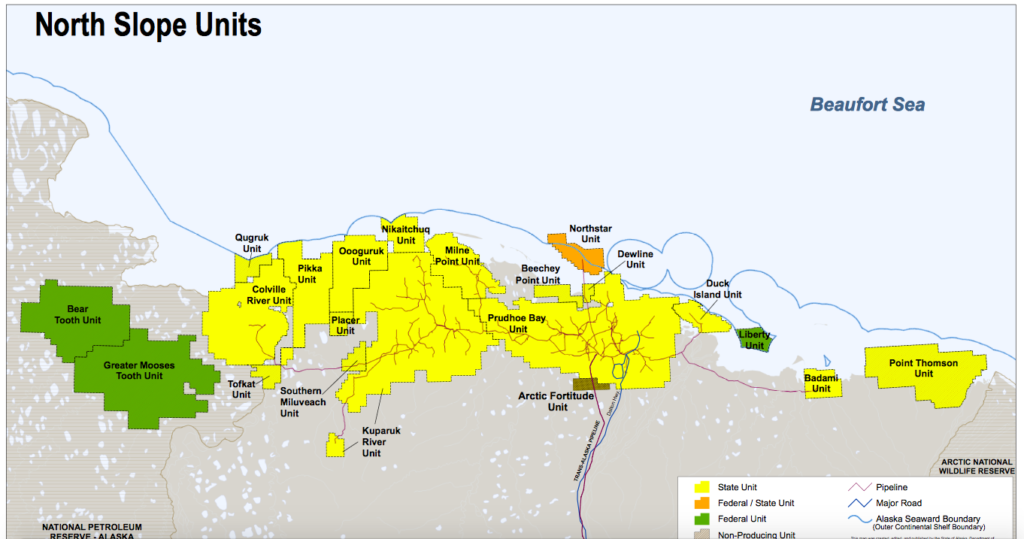
Today, Armstrong too can pat itself on the back. After joining forces with Repsol, Armstrong is now the proud majority stakeholder of a great set of holes at the Pikka prospect, which is described by the company as the largest North American find in 30 years.

Although it made headlines this week, this find has been in the trade journals since early fall. After drilling some additional delineation wells this winter, Armstrong and Repsol confirmed that the find is, indeed, a whopper.

With an estimated 1.2 billion barrels of recoverable oil, the Horseshoe-1 discovery well indicates more than 150 feet of net pay — a way of calculating the total from various holes — in several reservoir zones in the Nanushuk section. A sidetrack, Horseshoe-1A, found more than than 100 feet of net pay. Those are some sweet pay zones. Drilling took place during the 2016-2017 winter season.

Republican Alaska lawmakers and former Gov. Sean Parnell can also pat themselves on the back. They are the ones who put forward and passed the important tax reform legislation in 2014. The MAPA reforms modified some of the worst aspects of the old ACES taxation plan, which had made Alaska a very unattractive place to produce oil.

The proof of that lies in the sharp production declines that occurred year after year during the bad old days of the ACES era. ACES punished producers with extreme taxes when prices were high, although taxed less in a low-price environment.

The More Alaska Production Act (MAPA), as SB 21 was called, evened it out so the low-price years brought in more tax revenue, but when prices soared the severance tax rate was not as confiscatory.

That turned out to be a good thing because, shortly after SB 21 was passed, oil prices dropped like a rock.  MAPA is now bringing in much more revenue than the old ACES system would have at today’s prices.

On top of that, production increased even at these lower prices, which is bringing in even more revenue than ACES.

This has helped Alaska limp through the painful economic adjustments brought on by too-big government and not enough revenue to pay for it.

“The North Slope project is representative of the new movement in Alaska where smaller independents work and operate in areas previously dominated by major oil companies.  Armstrong has participated in 16 wildcat and appraisal wells on the North Slope in the last four years,” Armstrong told Oil & Gas 360 last year.  “Every single well was successful, and a third-party engineering firm places total proven reserves at 497 MMBO in the region.”

Those reserve estimates just jumped markedly.

HARD FOUGHT TAX REFORM

ACES and MAPA had some things in common, including providing for tax credits to incentivize more exploration.  Those credits led Repsol to drill in the Pikka area, where they and Armstrong have drilled 13 wells. First production is expected as soon as 2021, with a potential of 120,000 barrels of oil per day. That should warm up a cooling Trans Alaska Pipeline.

The repeal of ACES in favor of MAPA was a hard-fought battle.  For example, Rep. Harriet Drummond, D-Anchorage, stood outside the bill-signing ceremony carrying a protest sign that read: “Corrupt Bastards Club – Third Floor.” The third floor of the Dena-ina Center is where Gov. Sean Parnell and Republican leaders were signing SB 21, and Drummond and a handful of Democrat protestors were having none of it.

Sen. Bill Wielechowski, D-Anchorage, also hated the legislation, writing in the Anchorage Daily News at the time that “SB 21 took us back to a failed policy we had in place for three decades and cost us hundreds of billions in lost revenue. We got nothing in exchange for this bill.”

Nothing, if you don’t count more revenue and more production.

Even today, the left-leaning majority in charge of the House of Representatives is trying to rewrite SB 21, with HB 111 being offered by Rep. Geran Tarr and Rep. Andy Josephson, Anchorage Democrats now infamous for telling the Alaska Center for the Environment last fall that they should use their official legislative offices as satellite offices for their environmental lobbying.

Tarr and Josephson want to increase taxes when prices are low, as they are now. But is that wise?

Roger Marks covered the topic at the Alaska Support Industry Alliance on Friday. His talk was titled, “Evaluation of HB 111: Allocating Misery of Low Prices.”

Marks told the breakfast meeting that, in its current form, HB 111 might exacerbate a flaw in the current tax system. He explained that while SB 21 may have stimulated exploration and production, the law shifts does shift the low price risk to industry taxpayers. HB 111 shifts it even more.

Marks also doesn’t think the cuts in production from OPEC countries are something Alaska can depend on to keep prices higher. Even as prices rise — and they eventually will — shale oil production will return in the Lower 48 and elsewhere. The technology of shale oil fields has been a game-changer.

Right now, companies have a hard time making money in Alaska, where the cost of doing business is high and taxes and royalties take a big bite. HB 111 increases the minimum tax from 4 percent to 5 percent of gross, and decreases the per-barrel credit from $8 to $5 at prices below $110 per barrel.

That 1 percent might raise the state another $37 million, but it might also act as a damper on production.

HB 111 also ends the state purchase of refundable credits, but producers can still carry the credits forward until they have income to offset them.

Putting future tax credits on hold might be necessary, since there is a shameful backlog of existing credit obligations that the governor has not paid to several companies. But the evidence is in that past tax credits, combined with sensible tax policy, are resulting in exciting new oil discoveries.

Now, if tax policy remains steady and bills like HB111 do not see the light of day, Alaska might even see production of that oil.

A day without drama

It was in the Juneau International Airport this week when it struck home: The American Left has twisted its mission of “liberation of the oppressed” into a pretzel. It is now merely a Coalition of Grievances that lifts up oppression as an American value.

A white, retirement-age man sat near me in the departure lounge waiting for his flight. His gray sweatshirt bore the image of a Muslim woman with perfect features and bright red lips wearing a headscarf made of an American flag, and some script from the Constitution imprinted nearby: “We the People” — the sort of script you usually see conservatives wearing on their ball caps.

You’ve seen this hajib-wearing image by now all over the media. Campy and unexpected, it has replaced the Barack Obama HOPE poster as the image d’jour for the liberal agenda. It’s the new symbol for “those who oppose.”

And yet, there’s a deep irony that cannot be ignored: Muslim women wear the headscarf for religious reasons, for modesty, and because for many of them, they simply have no choice. They have no choice about most of their lives. Many of them are living under oppressive regimes that will stone them to death if they don’t submit.

The American flag headscarf is a lovely touch, but most Muslim women don’t wear bright red lips. Many of them are beaten by their husbands, and their genitals are mutilated at a young age. Their faces, so often, cannot be shown outside the home. They don’t get medical care.

The hajib, a symbol of liberation and our Constitution? When did it become normalized for progressives to lift up the oppression and marginalization of women as their symbol of freedom?

Whether it’s a day without pink knit hats or a day without hajibs, I don’t want a day without women. I want a day without fake identify politics and fictitious grievances.

I’m a hat-wearing woman who wants her a days filled with hard work ahead, problems to solve, checklists to punch, people to help, communities to serve, friends to comfort, and so much to do I cannot get to it all.

I want a day with dozens of phone calls, some laughter, and just enough face-palm moments to keep me alert.

I want the blessing of my women friends to call and text, and my men friends too. The voice of a child would be icing on the cake at any time of the day.

And I want my day to start and end with star-gazing, because it’s still winter-ish in Alaska. Most of all, I want to appreciate everyone who helps me get through the day and keep focused on the work I do best.

“A Day Without Women” may have been the day when Identity Politics jumped the shark and finally overstayed its welcome. But there’s been a quiet rebellion underway since early 2016, when most of America wondered why all lives didn’t matter, not just black lives. They were being bullied into silence, but they would have their say at the ballot box in November.

In January came the pussy-hat brigade, women and men wearing those adorable two-eared pink hats that represented female identity and power, and with them came the creative vulva-vagina costumes parading down the streets of every major city. Conservatives in America went to work, took care of children and elders, and tried to not judge the narcissists too harshly. They just silently removed offenders from their Facebook feeds.

Civil folk may be too polite to say it, but I will: “I could do with a day without all the drama.”

THE DAY AFTER THE DAY WITHOUT WOMEN

Fifteen-thousand students in Alexandria, Virgina didn’t attend school yesterday because too many of their teachers decided to take the day off in observation of “A Day Without Women.”

Over a thousand families were forced to find alternative care for their children on that day, because 300 women decided not to show up for work in the act of ultimate petulance.

It was an exercise that may have had unintended consequences.

Today, it’s back to work for the participants who decided that they were terminally special and that they would make their absences felt. They may be alarmed to discover that not only were they not particularly missed, some of their coworkers may have breathed a temporary sigh of relief at the absence of whining, micro-aggression and a self-absorbed victim mentality. 

In other words, the Day Without Women points to the universal truth: The world goes on without us. Others fill in, pick up our slack, get things done. We are all special and we all get a trophy for participation, regardless of our genital plumbing.

And finally, the wheels of industry will turn because most people, women very much included, will be good enough to show up to work and turn the lights on. And they likely won’t be wearing a pussy hat.

Senators to AG Lindemuth: Fight to win

CONFIRMATION OF NEW AG HELD DUE TO FISHING ACCESS CASE

Jahna Lindemuth

Acting Attorney General Jahna Lindemuth was vetted today by the Alaska Senate Judiciary Committee.

It started well, but quickly got bumpy for the state’s top law enforcement officer when she explained how she was negotiating a settlement to a land access case that was, for some senators, a bridge too far. They appeared far from convinced she was the fighter that Alaska needs.

Lindemuth was asked by senators why, instead of defending Alaska in court, she was negotiating the case that Ahtna Corp. had brought against the State’s historic right-of-way to the Klutina Lake fishing and recreation area, a place where everyday Alaskans have access to salmon and other fish.

Ahtna Corp. sued the State of Alaska about nine years ago, Lindemuth explained. The trial had been set for late April when she filed a pleading with the court to stay the case, in other words put off  the trial, so that her department could negotiate a settlement.

Lindemuth said she had to decide whether or not to pursue the case and it was her judgment and her right as attorney general to settle.

A 150-year-old historic trail designation makes all traditionally used trails and byways official state rights of way. RS-2477 gives the public a 100-foot passage through Athna land to the fishing grounds.

Ahtna wants to downgrade the right-of-way designation from RS-2477 to a lesser 17-B, which would greatly diminish access for Alaskans.

Alaska has fought for RS-2477 standards for years, but now the Walker Administration has no stomach to fight.

“We had an all-day mediation at the end of January that went late into the night until 10 at night, and then two weeks more of back and forth between lawyers on the ground on it before I was confident enough that we were close enough for a framework about what would be on the table, before I could put off the litigation.

“I hope that folks at the end of the day will look at it as a win-win,” Lindemuth said. In every negotiation there is compromise, she said, and the State will not get everything it asserted, nor will Ahtna, she said. Some question whether the right of way actually exists.

She would not get into the particulars of the case, since she is negotiating it. But she allowed that she didn’t want to go to litigation because the state could lose, and it would affect other access cases. Settling was her best decision, she said.

Sen. Pete Kelly, R-Fairbanks was not impressed.

“I really don’t want you as the AG to find a win-win situation. Your client is the State of Alaska and I want you to win on this and that should be your approach.” – Sen. Pete Kelly

“I don’t want you dropping this case and pulling the pin,” Kelly said. “I am not as interested in process or win-win or anything like that.

“RS-2477 exists,” he continued. “The problem we had over the years is getting governors to assert, and we need to make sure all the noise is out of the way as we assert our State right on RS-2477, which is federal law.”

To make sure she didn’t misunderstand, Kelly spelled out his concern once again: “It appears as if you’re going to a settlement that doesn’t make sense for the State of Alaska.”

He said he’d need a lot of answers on RS-2477 before he could recognize Lindemuth’s name to the floor for a vote. (As Senate President, Kelly has procedural discretion to move her nomination forward or hold it back.)

Sen. John Coghill, R-Fairbanks, seemed to agree: Access is so limited in Alaska, he asked her to hear them and their concerns on the access issue.

Sen. Mia Costello, R-Anchorage, noted that Lindemuth’s negotiation would have far-reaching impacts on other access issues across the state, and said she was surprised that Lindemuth was afraid to go to trial because the case might fail.

Costello recalled working for Gov. Wally Hickel and said he would fight the federal government without fear of failure. She challenged Lindemuth, who had years before attended elementary school with her in Anchorage, to “take a stand, fight and risk failure.”

Lindemuth could not address the committee’s concerns because she has already entered negotiations in the case.

Lindemuth’s confirmation was held in committee for further hearings next week that will include public testimony.

New House Finance bosses bundled the cuts and voted them down

The past several days in Juneau have shown that not only is the House Finance Committee soft on budget cuts, they are in no mood to reduce Alaska’s bloated state operating to any degree whatsoever.  In fact, they are actually increasing it.

Yes, you read that correctly.

The minority Republican members of the House Finance Committee are trying to reverse the tide of spending, however, even if their objections have fallen on deaf ears.

Rep. Tammie Wilson, R-North Pole, started poring over Gov. Bill Walker’s unfunded budget on Dec. 15, when he first offered it for review.

Walker’s budget had a roughly $900 million hole that needed to be filled. His gasoline tax proposal would only raise $143 million. Wilson thought she could help by providing some cuts that would reduce the need for more taxes.

She went through it line by line, and came up with over $300 million in surgical cuts.

Rep. Cathy Tilton, R-Chugiak-Wasilla did the same thing this winter. Tilton came up with additional efficiencies with the expertise of someone who is qualified enough to be a leading budget analyst. Tilton spent years as an aide to House Finance and is also a numbers-oriented owner of multiple Alaska businesses.

Between the two budget hawks, they provided House Finance Committee on Friday with 280 budget amendments totaling $421 million in agency spending reductions.

In the end, the bosses running House Finance bundled the amendments offered by Wilson and Tilton into two large packets of related amendments. Down they went into the ash heap, in a vote that occurred along caucus lines, although not before Rep. Wilson read 93 of them into the record.

There will be no budget reductions coming from the Democrat-led majority in the House. In fact, only budget increases, and possibly income taxes, gasoline taxes, education taxes and a host of other ideas to raid the pocketbooks of Alaska’s families.

THE RABBIT HOLE

Budget amendments were due to Legislative Finance Division by 5 pm on Saturday.

In spite of waiting throughout the weekend and Monday for word on any changes that would be required by the Legislative Finance analysts, the budget hawks got shot down on Tuesday, when the amendment package arrived with a surprising memo attached that was dismissive of their amendments.

The memo from Legislative Finance to the committee said that “actuals” from 2016 were not to be relied on and that was a red flag for any amendments that cut the budget.

All of the proposed budget cuts came from the minority Republicans on the committee.

In other words, in Finance Wonderland “actuals are not actuals.” Further, the memo stated, any reductions should have been vetted in the Finance subcommittees:

ACTUAL SUBCOMMITTEES DON’T EXIST: Yet under House Democrats’ reorganization of Finance, the budget subcommittee budget process has been rolled into the policy committees that are separate from the Finance Committee. And in those committees, Republicans were marginalized — both on policy and budget matters.

Budget hawk Republicans didn’t put the amendments into the “subcommittee” process because they were told they’d have to put them in later. Now, they’re told they should have offered the amendments earlier in the process.

Clearly, the House Majority is not in a budget cutting mood, in spite of overwhelming public support for slimming down state government.

And before all was said and done, Democrats had not only rejected every single cut, they actually increased the budget offered by Gov. Bill Walker by $3.8 million.

Senators Murkowski, Sullivan meet with Trump

Sen. Dan Sullivan and Sen. Lisa Murkowski of Alaska

ALASKA TIME WITH THE PREZ: Alaska has a slot on today’s calendar for President Donald Trump. At noon Alaska time, the president will meet with Secretary of the Interior Ryan Zinke, and Alaska Senators Lisa Murkowski and Dan Sullivan. The meeting came at the request of the White House, Must Read Alaska has been advised by DC sources.

The appointment that follows on the president’s calendar is at 1:05 pm Alaska time. Trump will meet with conservative leaders on the topic of health care before dining with Sen. Ted Cruz and Mrs. Cruz.

Last week, Gov. Bill Walker sent a letter to the president requesting a meeting. He had asked the delegation to sign it, but there was no action, and no meeting scheduled to include Walker.

The governor asked to make his Alaska Gasline Project the centerpiece of the meeting. It’s a safe bet, however, that the gasline will not be front and center at today’s meeting, according to sources close to the delegation. Walker had a close relationship with the Obama Administration, flying with the former president to Alaska on Air Force One to show him the state and talk to him about the gasline.

The meeting with the senators will more likely touch on the seriousness of Alaska’s recession, due in no small part to the actions of the last president and his Interior Secretary Sally Jewel.

Opening of the Arctic National Wildlife Refuge to greater oil exploration may not be front and center, because that will take action from Congress, not the president. However, the many agencies within the Department of Interior that touch Alaska are probably on the agenda.

The King Cove to Cold Bay Road will almost certainly  be discussed, we’ve learned.

“This is an opportunity for the DC delegation to make it loud and clear that Obama and Jewell were a reign of terror economically for Alaska, and now we can turn the corner and rebuild our economy,” a DC source told us.

Walker rolls over on access to Klutina Lake fishing grounds

WHITHER THE KLUTINA ROAD

The Walker Administration is negotiating behind closed doors to cut off public access to one of the most popular and unique fishing, hunting and recreation resources in Alaska, the Klutina Lake area.

It is a move that is sure to dismay tens of thousands of Alaskans for whom the area is a deeply important part of their outdoor traditions.

The Klutina Road on the north side of the Richardson Highway runs from near Copper Center to the Klutina Lake area, and uses an historic easement across land owned by Ahtna, Inc.

It’s a road used since Statehood  to access salmon country. Thousands upon thousands of Alaskans have traveled to the shores of Klutina Lake, and brought home millions upon millions of omega-3-rich protein from its waters.

Part of a mining road that went from Copper Center to Valdez, it crosses through a lush boreal forest along a legendary river.

Alaskans fish for king and red salmon, arctic grayling and dolly varden in a place where they can launch their boats and do what Alaskans love to do: Catch dinner. It’s a place so important that the Alaska Department of Fish and Game has online pages dedicated to it.

It’s a special sportsman’s paradise to which Gov. Bill Walker is cutting off access.

Through Attorney General Jahna Lindemuth, it appears that the Walker Administration is going behind closed doors to negotiate a right-of-way settlement with Ahtna Corporation, which has challenged a 150-year-old historic trail designation.

RS-2477 is a law passed in 1866 that designates all wagon trails, foot trails, pack trails, and mining roads as official state rights of way. It’s how Alaskans get across federal and state lands and also Native land, and includes iconic places such as the Iditarod trial and much of the Yukon Quest route.

Ahtna wants to downgrade the right-of-way designation from RS-2477 to a lesser 17-B, which would greatly diminish access for Alaskans. A 100-foot right of way would become a 50-foot right of way.

Drivers could not park, camp, or launch boats in the river. In other words, the State government, which has fought for RS-2477 standards for years and has called the area the textbook case of RS-2477 law, is downgrading the public’s access from a gold standard to tin.

The Alaska Outdoor Council is strongly objecting, but most hunters and fishermen have no idea that Walker is selling them down the proverbial river behind closed doors.

The terms of the negotiated settlement have not been made public. But if Walker goes down this road on the Klutina, as the legal documents indicate he is doing, all other landowners affected by RS 2477s could face the same fate — negotiate, settle for cash, or fold and cut off access to all but Native corporation shareholders.

On Feb. 27, 2017, Alaska Superior Court issued a stipulated motion for stay, which states, “Ahtna, Inc. and the State of Alaska are pleased to report a tentative settlement of this long-running dispute.” The order then cancels the April 24, 2017 trial date and says, “The parties will work to finalize the settlement and obtain necessary client approvals within the next 90 days.”

That sidesteps all public process for giving up State sovereignty over legal rights-of-way.

THE ALASKA OUTDOOR COUNCIL AND ALASKA’S HISTORIC TRAILS

Congress granted states and territories rights-of-way over federal lands in the Mining Law of 1866, with the exception of military land and reservations. Covered under the law are foot trails, pack trails, sled dog trails, wagon roads, mail routes, and other seasonal or permanent public access.

The Organic Act extended general land laws to the territory in 1884.  Up until 1968, when the Secretary of the Interior issued Public Land Order 4582, “the land freeze,” to allow for settlement of Alaska Native land claims, these historic rights-of-way were established to help citizens access public resources, including lands and waters.

When Congress then repealed the 1866 law in 1976, it preserved all pre-existing rights-of-way for public access.

In 1998, Alaska Statute 19.30.400 defined the States’s rights and responsibility to assert and manage these public rights-of-way for all Alaskans, and ordered “every effort” be made to minimize effect on private property owners while protecting public rights to use the historic access.

The mining trail from Valdez to Copper Center is part of the 1898 Gold Rush transportation system of camps and staging areas along the Klutina River. By 1960, a road was constructed and maintained by the state.

State law asserts that the RS 2477 road is 100-foot wide, historically used for activities related to transportation such as parking, stopping, camping, and accessing other public lands and waters, and includes numerous side trails and camping sites established prior to land conveyance to Ahtna, Inc.

The Bureau of Land Management issued an interim conveyance to Ahtna, Inc. in 1980, reserving a 60-foot easement along the road and a 24-foot trail easement for the trail toward Valdez, where it crosses Ahtna land.

Ahtna sued the State in 2008, saying the road is not an historic trail. Ahtna has this list of demands that the State is now bargaining away behind closed doors:

  • Limit the State’s authority to maintain, repair, and improve the road and rights-of-ways only
    with Ahtna, Inc. approval
  • Cash payment for public trespass on Ahtna land
  • Limit width of the 100-foot easement to 60 feet or less based on usage
  • No parking, rest areas, or accessing the Klutina River or other public land
  • Terminate the RS 2477 designation wherever it overlaps the 17(b) easement so public uses of the road are
    subject to federal regulations rather than State law

In 2013 Athna wrote,  “Ahtna has made a good faith effort to settle the dispute with the State in order to preserve the Klutina drainage, but each attempt has failed because the State refuses to place any limitation on the expansive scope of its claimed RS 2477 ROW and associated recreational amenities.”

Previous governors have upheld the State’s public trust to preserve access to longstanding recreational areas, but it appears that Gov. Walker’s Administration is now on a clear path to yield State sovereignty to the federal government, tribes or other entities whenever he faces a legal challenge.

Chris Cox says Anchorage downtown murder rate is higher than Chicago

AND THAT’S A PROBLEM: It’s not lost on downtown Anchorage Assembly candidate Chris Cox that his lifelong neighborhood has a murder rate that exceeds that of Chicago.

In fact, you’re nearly twice as likely to be murdered in downtown Anchorage as you are in the Windy City, he said. And that is saying something.

With 26,000 people, Assembly District 1 would have 7 murders a year to be equal to Chicago’s murder rate. But in 2016, it saw 13 murders.

It was a new record that Chris Cox says has to be reversed.

District 1B, the most diverse neighborhood in the city and probably the state, should be up in arms over violent crime, says Cox. It’s such a big issue for him that, at this point in his campaign for the election that takes place April 4, crime has become his focal point. He’s up on step about it.

That, and the rate the city is burning through its cash on things that are frivolous. That also needs to change, he said. Property taxes are high enough. But back to the murder capital of Alaska…

“Overall, Anchorage is roughly twice as bad [for homicides] as the entire country,” Cox said. “We need more police officers on the streets. We need to take better care of them. We especially need genuine support from the community.”

He should know. The son of a career police officer, Cox was raised in East Anchorage with strict law-and-order family values. He graduated from East Anchorage High School, finished college in Texas, and then came back to start making a living.

His first home out of college was a youth hostel in downtown Anchorage, and that showed him the need for affordable housing.

Through time, sweat equity, trial and error, he ended up owning several rooming houses in the downtown core, and 90 percent of his tenants were clearly struggling with their lives — they were addicted, in and out of jail, had mental health or resiliency issues, and were trying to get back on their feet.

Cox gave them tough love and a place to live. But he was not a pushover: “90 percent of them didn’t have the money to move in, so I had to work with them.”

Cox also bought and refurbished hotels, owned a bar or two, an automotive company, and a concert promotion company.

“If it looked like a door in front of me, and I thought I could make a go of it, I’d go through it,” Cox said.

Then he got cancer. He survived, reassessed his priorities, and decided to get involved helping redirect the path that Anchorage is on.

“I got an email from [Assembly member] Patrick Flynn who said, if you think you can do a better job, then go do it. So I said to myself, ‘I will.'”

Christopher Cox candidate page.

Cox, who is a registered Republican, is one of several candidates running for District 1B, which encompasses Downtown, Mountain View, Government Hill, Inlet View, South Addition, and Bootleggers Cove. He has lived in Westchester Lagoon, but now lives in Fairview, where he is in the process of buying a home.

His other concerns are education and keeping Anchorage’s municipal budget fiscally conservative.

“If you have to make a choice, I always favor fire and police over everything else,” he said.

A meet-and-greet fundraiser for Cox will be held at Fat Ptarmigan, 441 5th Street, Anchorage, from 4-7 pm today, March 7.

Others who have filed for this downtown seat being vacated by Assembly member Patrick Flynn include:

Christopher Constant

Christopher Constant, a Democrat who is former president of Fairview Community Council, Constant has worked as an administrator at Akeela Inc., which is a substance-abuse nonprofit, and as a real estate manager.

Christopher Constant candidate page.

David Dunsmore

David Dunsmore is a Democrat’s Democrat. He’s a former aide to Fairbanks Rep. Adam Wool, and to Assemblyman Pete Petersen. He has served as a caucus director for the Alaska Democratic Party in Alaska’s Capitol, where he was the liaison between the party and Democrat legislators. He has the endorsement of Democrat and union manager Rep. Chris Tuck.

David Dunsmore candidate page.

Mark Alan Martinson is registered nonpartisan who has run for the Assembly in prior years.  The audio-visual technician is also a Segway tour guide with E Street Audio Visual in Anchorage.

Albert Langdon Swank Jr. is unaffiliated, leans Democrat, and is a consultant and owner of an Anchorage engineering and scientific services firm.

Warren West is a Republican who is retired from the US Air Force. He served during the Vietnam Era and then started an electronics business, Westcom. He also has extensive experience in the schools and teaching CPR.

Warren West candidate page.

Juneau continues sales tax exemption for cruise passengers

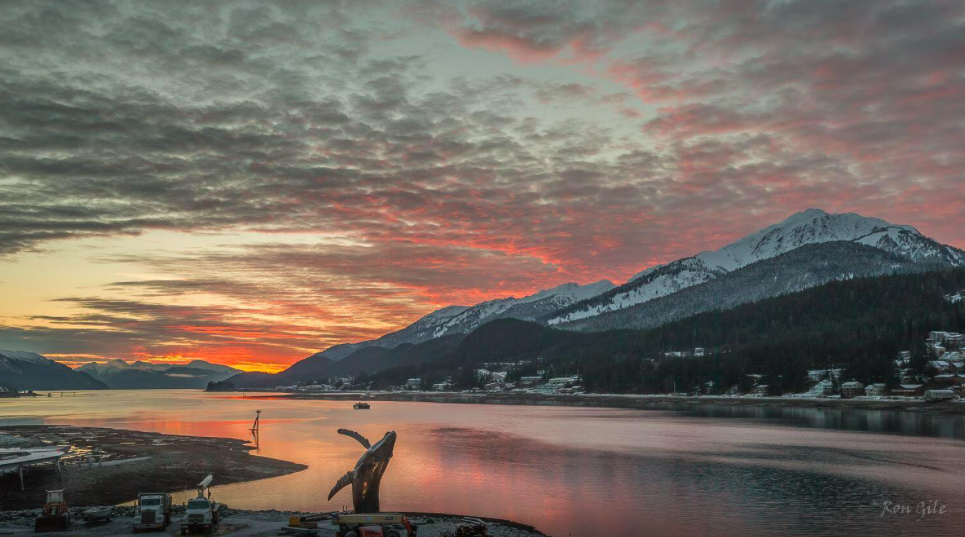
The Juneau Whale Project, photographed by Ron Giles (from the project’s Facebook page)

The Juneau City and Borough Assembly on Monday voted to continue the existing practice that exempts cruise ship passengers from an onboard sales tax. It’s a “wet foot tax” Juneau could technically collect from visitors who are underway in the waters of the borough.

Currently, the city collects about $8 million in sales taxes from passengers and crew once their feet hit the docks and they visit stores and restaurants.

But while they are onboard the ships, the city hasn’t extended its sales tax to those purchases that occur as the ships motor to and from the city.

Ships enter and exit the borough far south of Juneau and have a few sales — such as alcohol, salon, and spa sales — that could be taxed.

Some, like Assembly member Jesse Kiehl, wanted to squeeze out that extra $100,000 of anticipated revenue for the city. The pro-tax crowd pushed to have the exemption lifted, and some pushed hard at last night’s meeting.

TAXATION CHANGES BEHAVIOR

Taxing passengers while they are floating to and from the port could have unintended consequences, however.

Rather than having to collect taxes on bottles of wine at onboard meals, ships could choose to leave an hour earlier to make sure they were out of the borough before onboard dinner starts. They’d avoid the extra hassle of bookkeeping for the $100,000 or so remittance to the city, and they’d save their passengers money.

But that extra hour would mean a huge loss of sales at local shops and restaurants, because the hour before the ships leave is prime retail time in the downtown core, as visitors return from their day trips and mill about the shops for last-minute gift items before returning to their ship.  In other words, lifting the exemption could conceivably result in fewer tax collections at the end of the cruise day.

Alaskans well know the value of a tax break: For years and years, when traveling to Washington state, Alaskans have been quick to whip out their Alaska driver’s licenses to avoid paying Washington’s 6.5 percent sales tax, which when local sales taxes are added can reach 9.9 percent.

But some revenue seekers in Juneau were not ready to extend the same courtesy exemption to visitors entering Alaska’s capital by cruise ship.

More than one million people arrive on cruise ships in downtown Juneau during the five-month cruising season. Between the sales and passenger tax, the city collects more than $20 million a year.

WHALE OF A LAWSUIT

In a separate measure, the Juneau Assembly voted to spend sales tax money instead of passenger head tax money to continue defending itself against a lawsuit from the cruise industry.

The lawsuit involves a manmade island that houses a whale sculpture that is the subject of much controversy because the project construction was made possible by passenger taxes.

Using passenger taxes to pay lawyers to fight cruise lines over a passenger tax didn’t seem like a friendly gesture, so the Assembly voted to replace that litigation money with regular unrestricted sales tax.

The litigation was brought last year by the industry because it felt the city was not spending passenger taxes on legally allowed uses, but instead building discretionary projects of little or no value to the cruising public.

Rorie Watt, city manager of Juneau, included a draft ordinance in the Assembly packet that would award his office an additional $100,000 to pay lawyers to defend the city in the lawsuit the cruise industry had brought over the development of The Whale Project, which the industry believes is not an appropriate use of the passenger tax because it is too far from the docks to be a practical amenity for the tourism sector.

The city has already spent $280,000 defending the project — never mind the cost of the project itself — as it heads into a trial that is expected later this year.