Friday, December 19, 2025
Home Blog Page 1576

Permanent Fund investments gained 8.86 percent

7

TRUSTEES HEAR PITCHES ON ENVIRONMENTAL INVESTING

The Alaska Permanent Fund’s investments gained 8.86 percent through the third quarter of fiscal year 2018.

The fund ended March with assets totaling $64.6 billion.

Over the last five years, the fund has returned 8.35 percent, and that compares to a return of 6.52 percent over the last 20 years, which includes the financial crash of 2008-2009, when the value of the fund fell to $26 billion after a peak of $40 billion in 2007.

The Board of Trustees met for its quarterly meeting last week in Anchorage to review the performance and risks of the fund’s assets, and to hear a presentation on investing in alternative energies in a strategy called Environmental, Social, and Governance (ESG) investing.

The trustees heard from a former Obama White House official who now works at Blackrock investment group. Brian Deese, the managing director and global head of sustainable investing at BlackRock, was President Obama’s senior advisor for climate and energy policy, helping to negotiate the Paris Climate Agreement and other national and international initiatives.

Deese told the Permanent Trustees that he believes sustainability-related issues including board composition, human capital management, and climate change – have real financial impacts. Those who engage in ESG investing do better, he said, than those who don’t.

“They are more competitive than their peers because they more efficiently use their resources, and/or have better human capital management as well as better manage long term business plans. This leads to higher profitability and higher dividends,” his presentation materials said.  “They are less vulnerable to systematic market shocks and therefore show lower systematic risk. Lower systematic risk means a lower beta, which translate to lower cost of capital and a higher valuation. Further valuation is increased through the increased size of investor base.”

A screenshot of part of the presentation from Blackrock’s Brian Deese.

Similar presentations were made by John Goldstein, Goldman Sachs’ managing director, ESG and impact investment client strategy; and Hilary Irby, Morgan Stanley’s managing director and co-head of global sustainable finance.

The presentation materials are linked here:

2018_05_23-24_APFC_Board-of-Trustees-Quarterly-Meeting-Packet

Many of the Permanent Fund’s external managers already incorporate ESG strategies alongside their traditional strategies, according to a news release from the Alaska Permanent Fund Corporation. The trustees seemed disinclined to stray from their current successful investment strategy and adopt the carbon-free model.

Groups have attempted to persuade the Permanent Fund in the past to invest in Alaska projects, and Gov. Bill Walker in 2016 asked the trustees to consider buying up the distressed debt the State owed to oil explorers due to the nonpayment of tax credits by the Walker Administration.

The Permanent Fund trustees also reviewed legislative actions including Senate Bill 26, establishing a percent of market value (POMV) draw of $2.7 billion from the Earnings Reserve Account to fund general government services and the dividend program for Alaskans who have lived in the state for one year or longer.

The Legislature implemented a statutory structure for using Permanent Fund’s earnings with the passage of SB 26, limiting appropriations to 5.25 percent of the market value for 2019, 2020, and 2021, and then stepping down to a 5 percent draw beginning on July 1, 2021.


Trump rolls back pay requirements for guides on federal lands

SMALL GUIDE COMPANIES AND OUTFITTERS BENEFIT

President Donald Trump has rolled back an Obama-mandated minimum wage requirement for outfitters and guides who operate on federal lands.

Interior Secretary Ryan Zinke announced the rollback on Friday while on a trip through South Dakota.

President Obama had enacted a $10.10 minimum wage requirement by executive order in 2014 for businesses that operate on federal lands, such as national parks, monuments, and recreational areas.

The mandate swept in outfitters and guides, including river, fishing, hunting guides, and operators engaged in multi-day expeditions, who were forced into an overtime wage structure that is inappropriate to their lifestyles. The rule applied to mountain guides and all their expedition assistants in places such as Denali National Park.

Still covered by the minimum wage rule are lodge and food service workers at establishments that have permits to operate on federal land.

“President Donald J. Trump is a businessman and a job creator who knows that government one-size-fits-all approaches usually end up fitting nobody. The President’s Executive Order, ‘Exemption from Executive Order 13658 for Recreational Services on Federal Lands,’ gives more flexibility to small guides and outfitters that operate in National Parks and other public lands,” Zinke said.

“The order will have a positive effect on rural economies and American families, allowing guides and outfitters to bring tourists out on multi-day hiking, fishing, hunting, and camping expeditions, without enduring costly burdens. The outdoor recreation sector is a multi-billion dollar economic engine, and the more people able to enjoy our public lands, the better,” Zinke said.

“We objected to outfitters being in the executive order under Obama, and never got a bit of notice back from that administration,” said Rod Arno, executive director of the Alaska Outdoor Council. “It’s pretty hard to be a seasonal guide in Alaska, where our seasons are so short and intents, and you are on call 24-7 because of the dangers of weather and bears. The expense of compliance with Executive Order 13658 was harmful, if not impossible. A lot of guides are doing it as family businesses and are not paying themselves most of the time they’re actually working.”

Guides are typically paid by the day for outings that have wide variables. An experienced fly-fishing guide can make several hundred dollars a day, but a climbing guide may be paid according to his or her experience and the technical demands of the climb.

Most Alaska fishing lodges have a six-day programs, and guides can make up to $7,000 a month plus 10-15 percent tips, which they often share with lodge staff. Many of those guides are out-of-staters who then move on to guiding in the Lower 48 or all over the world.

Facebook’s systematic viewpoint suppression begins

CONSERVATIVE NEWS SITES WILL FEEL THE PINCH
It’s been coming since January, when Facebook founder and CEO Mark Zuckerberg announced that new rules for political coverage would go into effect. And they did, creeping in slowly until last week, when a major shift took place.
News organizations like Must Read Alaska are now considered political entities by Facebook, and must provide photo identification to the company to prove that they are not Russia (or other nations)  bots or bad actors. This process will take a few weeks to complete and is not guaranteed (Facebook has already rejected the identification (U.S. passport) of Suzanne Downing, editor, which was provided last week. It is in the appeal process).
In addition, regular news is being rejected by Facebook for “boosts,” which is how small news organizations get their material seen by more people — they pay a fee to Facebook to get wider distribution.
Here’s how it works in real life:
 
– Facebook blocked the paid distribution of the Must Read Alaska Memorial Day Events Calendar to Alaskans.
 
– Facebook blocked the paid distribution of the Must Read Alaska candidate and election deadline calendar, aimed at conservative Alaskans interested in politics.
 
– Facebook blocked the paid distribution of the nonpolitical column about the meaning of Memorial Day, written by Win Gruening.
 
– Facebook blocked a news story about Rep. Lora Reinbold filing for Senate. (MRAK did not attempt to boost a similar story about Dan Saddler filing for the seat, since it would clearly be rejected.)
 
– Facebook requires that all of this news is labeled “political advertising” rather than news.
 
Zuckerberg said Facebook would begin blocking political news and only include “trusted sources,” which will be determined in some way the Facebook community will not be privy to.
 
We’re now seeing exactly how that works: Suppression of some voices rather than others is the new Facebook reality. Content that is meaningful to some people with certain values and political leanings will be blocked.
Must Read Alaska enjoys strong support across the state and more than 150,000 views per month because we provide news that readers appreciate.
Action steps: Fortunately, Must Read Alaska also has a robust e-newsletter that goes to more than 11,000 Alaskans three times a week. You can sign up at the right side of this page, and get exclusive content, plus links to our latest stories. Continue to share our stories on Facebook as we up our game to overcome the Facebook bias.
Thank you! 

Memorial Day isn’t just another holiday

3

BY WIN GRUENING
SENIOR CONTRIBUTOR

Memorial Day is a day of remembering the men and women who died while serving in the military.  It should not be confused with Veterans Day, which celebrates the service of all U.S. military veterans or Armed Forces Day, which specifically honors those currently serving in the U.S. military.

While all these holidays are important, Memorial Day is special because it honors veterans who fought and sacrificed their lives in the service of their country.

By some accounts, the practice of decorating soldiers’ graves began around the Civil War period – hence the original name “Decoration Day.”

The preferred name for the holiday gradually changed from “Decoration Day” to “Memorial Day,” which was first used in 1882.  Memorial Day did not become the holiday’s more common name until after World War II, and it was declared the official name by federal law in 1967.

It was held on May 30 for over 100 years until 1970 when it changed to the last Monday in May.  It remains one of the least commercialized and most honored and revered of American holidays.

I was lucky enough to visit Washington, DC recently with friends and we took the opportunity to spend the better part of one day at Arlington National Cemetery as preparations for Memorial Day were underway.

No matter your background or political persuasion, there isn’t a way to prepare yourself for the emotional experience of viewing the graves of thousands of veterans.

Among the individual graves we visited were President John F. Kennedy and Sen. Ted Stevens – both WWII veterans. We also visited the Tomb of the Unknown Soldier, which guards the remains of unknown service members from WWI, WWII, and the Korean War.

You cannot help but get a lump in your throat when hearing Taps being played during a wreath-laying ceremony at the Tomb, which is guarded 24 hours a day – 365 days a year –  by elite soldiers from the 3rd U.S. Infantry Regiment.

Arlington National Cemetery is steeped in history.  Originally land belonging to the grandson of George and Martha Washington, it was later inherited by Mary Custis, who was married to Gen. Robert E. Lee.  At the onset of the Civil War, the property was abandoned and the Union Army began using the land as a cemetery as war casualties mounted.

Ultimately, Congress returned the estate to the Lee family, and on March 3, 1883, the government purchased it for $150,000 (equal to $3.3 million in 2018) at a signing ceremony with Secretary of War Robert Todd Lincoln.

President Herbert Hoover conducted the first national Memorial Day ceremony in Arlington National Cemetery, on May 30, 1929.  Since then, Arlington has evolved into a national shrine to all those who have honorably served our nation in times of war – as well as peace.  It now is the resting place for over 400,000 active duty military members, veterans, and their families.

More than 3,000 ceremonies and memorials take place there every year along with national observances for Memorial Day and Veterans Day.

Today, Americans almost universally give tributes and praise to servicemen. The practice of spitting on soldiers – popular at the time of the Vietnam War – has disappeared.

However, while soldiers are rightly treated personally with respect, there is growing national amnesia about our past participation in military actions, and why so many brave soldiers died.

It’s become popular to paint armed conflict itself as something that our nation needs to apologize for rather than the tyranny, totalitarianism, and unspeakable atrocities that often precipitate these actions.  Instead of pride in our country for protecting freedoms here and abroad, what we hear about are vague references to “mistakes” and descriptions of aggressors and defenders as morally equivalent.

Yet, America’s birth and baptism by fire in a violent revolutionary war created a tradition of liberty and bastion of freedom that remains, almost 250 years later, as a guardian of true democracy.

Memorial Day is, above all, a tribute to those who died for our country, but it should also remind us of America’s greatness and unselfish willingness to defend freedom around the world.

Win Gruening retired as the senior vice president in charge of business banking for Key Bank in 2012. He was born and raised in Juneau and graduated from the U.S. Air Force Academy in 1970 and served as a Air Force pilot for six years during the Vietnam War. He is active in community affairs as a 30-plus year member of Juneau Downtown Rotary Club and has been involved in various local and statewide organizations. 


Monday’s Memorial Day services in Alaska

1

The National Moment of Remembrance Act asks Americans to pause whatever they are doing at 3 pm, local time to remember those who gave the ultimate sacrifice for the freedoms of the United States of America. Other events taking place start Sunday and continue on Monday, including:

SUNDAY

ALASKA VETS MOTORCYCLE MEMORIAL RUN TO BYERS LAKE

McKinley View Lodge gathering at Mile 134 Parks Highway at 2 pm to ride to the veterans memorial at Byers Lake, where there will be a memorial service. Hundreds of motorcycles will be on the highway.

MONDAY

ANCHORAGE 

JBER Memorial Day Service, Fort Richardson National Cemetery, 11:30 am, guest speaker Col. John “Jimmy Joe” James, commander 49th Alaska State Defense Force. Master of Ceremonies 1SG David “Diesel” Foli, US Army Retired. Midnight Sons Chorus and The Glacier Brass.

Anchorage Remembers, Delaney Park Strip 9 on West 9th Avenue, 9:30-10:30 am
Music, spiritual words, and laying of wreaths to honor the fallen. Keynote speakers: Mayor Ethan Berkowitz, Lt. Gen. Ken Wilsbach, commander of the Alaskan Command and 11th Air Force, and the senior military officer in Alaska.

Anchorage Memorial Park Cemetery is open 8 am to 8 pm. No balloons, barbecues, games, glass or pets allowed.
Hours of Operation: 8 a.m. – 8 p.m.

14th Annual Memorial Day Car Show, Northway Mall in Anchorage, noon-4 pm, sponsored by the Anchorage Corvette Association with proceeds going to  The Last Frontier Honor Flight, Inc.

MAT-SU

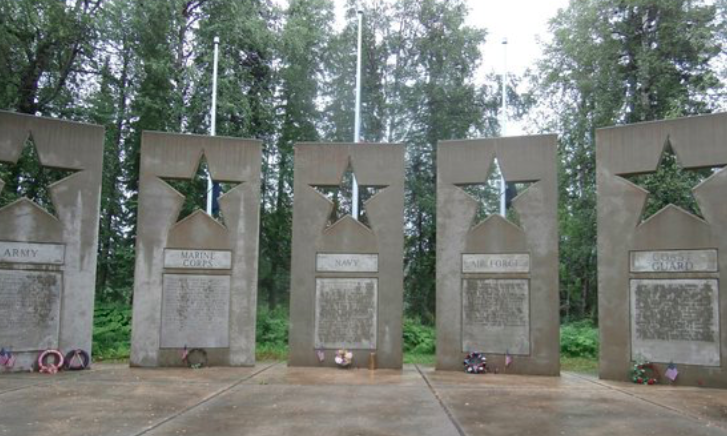
Veterans Wall of Honor ceremony at 1 p.m. Located near the Mat-Su Visitors Center in Palmer, Mile 35.5 Parks Highway.

Memorial Day Barbecue at American Legion Post 15 starting at 2 pm, 1550 S. Mystic Circle.

Annual Memorial Day Walk led by local Amvets, departing from the Wasilla Post Office at 10:45 am to Aurora Cemetery. Ceremony immediately following at cemetery.

JUNEAU

American Legion hosts a ceremony at Alaska Memorial Park off Riverside Drive at 11 am.

VFW hosts a ceremony at Evergreen Cemetery at 11 am.

Southeast Alaska Native Veterans host observance at 11:30 am in the Elizabeth Peratrovich Hall on Willoughby Ave.

American Legion Auke Bay Post 25 hosts a chili and ribs barbecue at its location at Mile 13 in the afternoon.

FAIRBANKS

Post 11 hosts a Memorial Day observance at 11 am at Veterans Memorial Park, 700 Cushman St.

Ceremonies at 1 p.m. at the gazebo in Gold Rush Town.

Golden Heart Park ceremony at 2:30 pm in downtown Fairbanks.

Services at cemeteries include: Clay Street, 11:30 am, Birch Hill, 12:30 pm, Northern Lights, 1:30 pm.

Fairbanks North Star Borough hosts a Memorial Day celebration from noon to 4:30 pm at Pioneer Park.

KENAI

The Avenue of Flags will be seen at the Kenai City Cemetery at 10:30 am

Memorial service begins at noon Leif Hansen Memorial Park.

The Avenue of Flags will occur at 2 pm at the Soldotna City Cemetery.

SEWARD

The Avenue of Flags will occur at 11 am at the Seward American Legion Cemetery.

Know of a Memorial Day observance in Alaska not listed here? Send it to suzanne @ mustreadalaska.com.

Candidates face deadlines

Some important deadlines for candidates and campaigns are coming up quickly:

JUNE 1: Deadline for party and no-party candidates to file for primary and general elections, Division of Elections, 5 pm.

JUNE 1: Deadline for director of Division of Elections to designate early voting and absentee in-person voting sites. Deadline pertains to primary and general elections

JUNE 8: Deadline to receive the original copy of the electronic transmission Declaration of Candidacy. If the original copy, in its entirety is not received by this date, candidate will be notified of non-receipt in order to re-file with proof that previous Declaration was filed and mailed timely in accordance with the law. Deadline pertains to the primary.

JUNE 11: Deadline to receive complaints regarding the eligibility of a candidate. Complaint must be received by close of business on the 10th day after the filing deadline. Eligibility must be determined within 30 days of receipt of the complaint. Pertains to primary and general election.

JUNE 22: Deadline for candidates for federal/statewide offices, candidates for US Senator, US Representative, State Senator and State Representative to file their Official Election Pamphlet materials so that the division can translate it into the appropriate Alaska Native language to assist limited English proficient Alaska Native voters. This date is approximately 30 days prior to the statutory deadline date to submit OEP materials to allow sufficient time for tranlsation of materials.

JULY 2: Deadline for political party candidates to withdraw from the primary election, 5 pm. This is the last date when Gov. Bill Walker could withdraw from the Democrats’ primary ballot and withdraw from the primary election.

JULY 2: Last day an incumbent candidate for renomination can be disqualified and replaced due to death or incapacitation by a party petition; 52 days prior to Election Day. (Deadline date of June 30 falls on a Saturday, moved to Monday July 2).

JULY 3: Ballot certified for the printer to begin printing primary ballots.

JULY 7: Deadline to begin sending absentee ballots (mail or electronic transmission) for any requests received from voters who fall under the Uniformed and Overseas Citizens Voting Act (UOCAVA) and sending absentee by-mail ballots to non-UOCAVA voters who are requesting an advance ballot due to living, working or traveling in remote Alaska or overseas; 45 days prior to Election Day.

JULY 9: Deadline for judicial retention candidates to file their Official Election Pamphlet materials so that the division can translate it into the appropriate Alaska Native language to assist limited English proficient Alaska Native voters. This date is approximately 30 days prior to the statutory deadline date to submit OEP materials to allow sufficient time to translate materials. Pertains to the general election.

JULY 9: Deadline to provide a statewide voter list to each political party; 120 days prior to General Election Day.

JULY 12: State Review Board begins the logic and accuracy testing of the ballot tabulation system. Pertains to primary.

JULY 16: Deadline for political party submissions for the Official Election Pamphlet; July 15 of an election year. (Deadline date of July 15 falls on Sunday, moved to Monday July 16).

JULY 22: Deadline for voters to register to vote or update their registration; 30 days prior to Primary Election Day.

JULY 23: Deadline for party and no-party candidates to submit materials to the Division for the Official Election Pamphlet; July 22 of an election year. (Deadline date of July 22 falls on a Sunday, moved to Monday, July 23).

JULY 27: Target date for first mailing of absentee by-mail ballots to all other voters who requested a by-mail ballot (non-UOCAVA and advance ballot voters). If official ballots are available prior to this date, ballots will be mailed to the voters as soon as they are ready for distribution. Pertains to the primary.

JULY 27: Deadline for election supplies and ballots to be in regional offices; 25 days prior to Primary Election Day.

JULY 30: Deadline to mail Ballot Measure Pamphlet to voters and post on website; 22 days prior to Primary Election Day.

AUG. 21: Primary Election Day, 7 am to 8 pm. All absentee ballots must be postmarked by this day.

AUG. 21:  Deadline for no-party candidates to file nominating petition signatures; must be filed or postmarked on or before 5 p.m. AST on Primary Election Day for the general election.

SEPT. 4: Deadline for candidates to withdraw from general election

NOV. 6:  General Election Day, 7 am to 8 pm.

Other deadlines can be found at the Division of Elections.

Pretrial release regs comment period ending June 4

The Department of Corrections is preparing to enact regulations for the pretrial risk assessment tool it uses when deciding whether to recommend release of arrested persons before their trials.

The regulations update provisions regarding pretrial furlough of prisoners so that, under certain circumstances, the commissioner may find a past or pending disciplinary action does not affect the prisoner’s suitability for community placement. Other changes are included in the regulations as well.

The public comment period on 22 AAC 07.020 closes at 5 pm, June 4, 2018. Earlier versions of the regulations attracted no public comments.

Written comments may be submitted to the Department of Corrections Regulations Writer, PO Box 112000, Juneau AK 99811-2000, by fax at (907) 465-3315, or via e-mail at [email protected].

Comments may also be submitted through the Alaska Online Public Notice System.

Walker’s stealth fish meetings disenfranchise Board of Fisheries

BACKROOM POLITICS, PAID FACILITATOR, NO AUTHORITY

BY CRAIG MEDRED
CRAIGMEDRED.NEWS

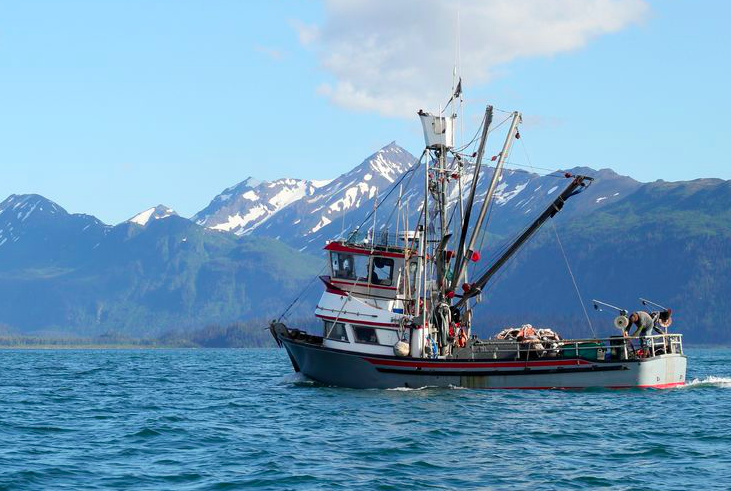
With the fishing season beginning in the 49th state, Alaska Gov. Bill Walker has been holding private meetings to forge an agreement between commercial, sport and other fishing interests on how to manage salmon in Cook Inlet.

The reason why is unclear. 

By law, the regulation of state fisheries falls solely under the jurisdiction of the Alaska Board of Fisheries. One of the first acts of the Alaska Legislature after Statehood in 1959 was to establish a Board of Fish and Game – later split into the separate boards for fish and wildlife management – to insulate resource decisions from backroom politicking.

“Under the Alaska Constitution, the Board of Fish and Game was founded in 1960 to provide for public discussion (of) the state’s fish and wildlife management,” according to a legislative history. “Public involvement is one of the most essential aspects of the board process.”

Alaska Outdoor Council executive director Rod Arno on Friday accused Walker of playing politics with Inlet fisheries in direct violation of the intent of the state’s founders. The AOC is the state’s largest fishing and hunting organization.

Were Walker’s secret dealings not enough, Arno added, what the governor and a state-paid facilitator are  doing makes no sense given that Walker has no authority to alter fishing regulations. Even if Walker could broker a deal on management of Inlet salmon in secretive, closed-door meetings, Arno noted, the deal would need the approval of the seven-member Board of Fish.

The board members are appointed by the governor, but must be approved by the Legislature. The board is not scheduled to consider Cook Inlet salmon issues until the 2019-2020 session. The state votes on a new governor this fall.

Walker is running for re-election. Arno and others have speculated that what is really going on is an effort by the governor to craft something he can claim has brought peace between warring fishery factions in Upper Cook Inlet (UCI) in the hopes this could win him some votes.

But even if Walker could broker such a deal, which seems unlikely, Arno said, it would set a bad precedent.

“It gets right back down to the (fish and game) advisory committees,” he said. “They feel they’ve been disenfranchised.”

[Read more at CraigMedred.news]

Dan Saddler jumps into Senate Seat G race

Rep. Dan Saddler bumped into Lora Reinbold in the lobby of the Division of Elections on Thursday, as he filed for Senate Seat G, which is an open seat representing a military-heavy portion of Eagle River.

Saddler is the current House representative for District 13, and has lived in Eagle River since 1992, with roots in Alaska that stretch back to the 1970s. He has served in the House since winning his seat in 2010. His prior experience includes being a legislative aide in the Senate, and as House Republican majority press secretary. He was a newspaper reporter for the Anchorage Times, and worked as a special assistant to the Department of Natural Resources. He has a career in journalism, and in public relations with a Native Corporation.

Saddler, who was unopposed in his House race in 2016, will compete against Rep. Lora Reinbold of District 14, who had filed just minutes earlier in the day.

Saddler served on the Community and Regional Affairs committee this session. When the House was run by Republicans, he served on Finance, Education, Labor and Commerce, Resources, Military and Veteran Affairs, Energy, and Joint Armed Services (co-chair for six years). He was co-chair of Resources during  the highly charged SB 21 oil tax reform (which passed).

Legislation he has gotten through to law includes the Veterans’ Driver License bill, where you can prove your veteran’s status without having to carry discharge papers. He sponsored the digital fishing license law, so sports fishers don’t have to carry papers on them. Saddler won passage of legislation to allow disability savings accounts, allowing families to take care of their disabled family members without those disabled Alaskans losing their benefits.

Fred Dyson, longtime senator who had served this district (before reapportionment it was District F) from 2003-2015, has endorsed Saddler.

Saddler’s District 13 seat could be filled by Craig Christenson, a Republican who filed for it earlier this year.

[Read: Lora Reinbold files for District G Senate]