
By PEDRO GONZELEZ
As the Trump Administration attempts to ramp up its crackdown on immigration, the president signed an executive order this week aimed at ensuring “taxpayer resources are used to protect the interests of American citizens, not illegal aliens.”
The move sent ripples through the networks of non-government organizations that rely on these resources to carry out activities that support those illegally residing in the United States. Must Read Alaska recently reported on one such entity, the Alaska Institute for Justice.
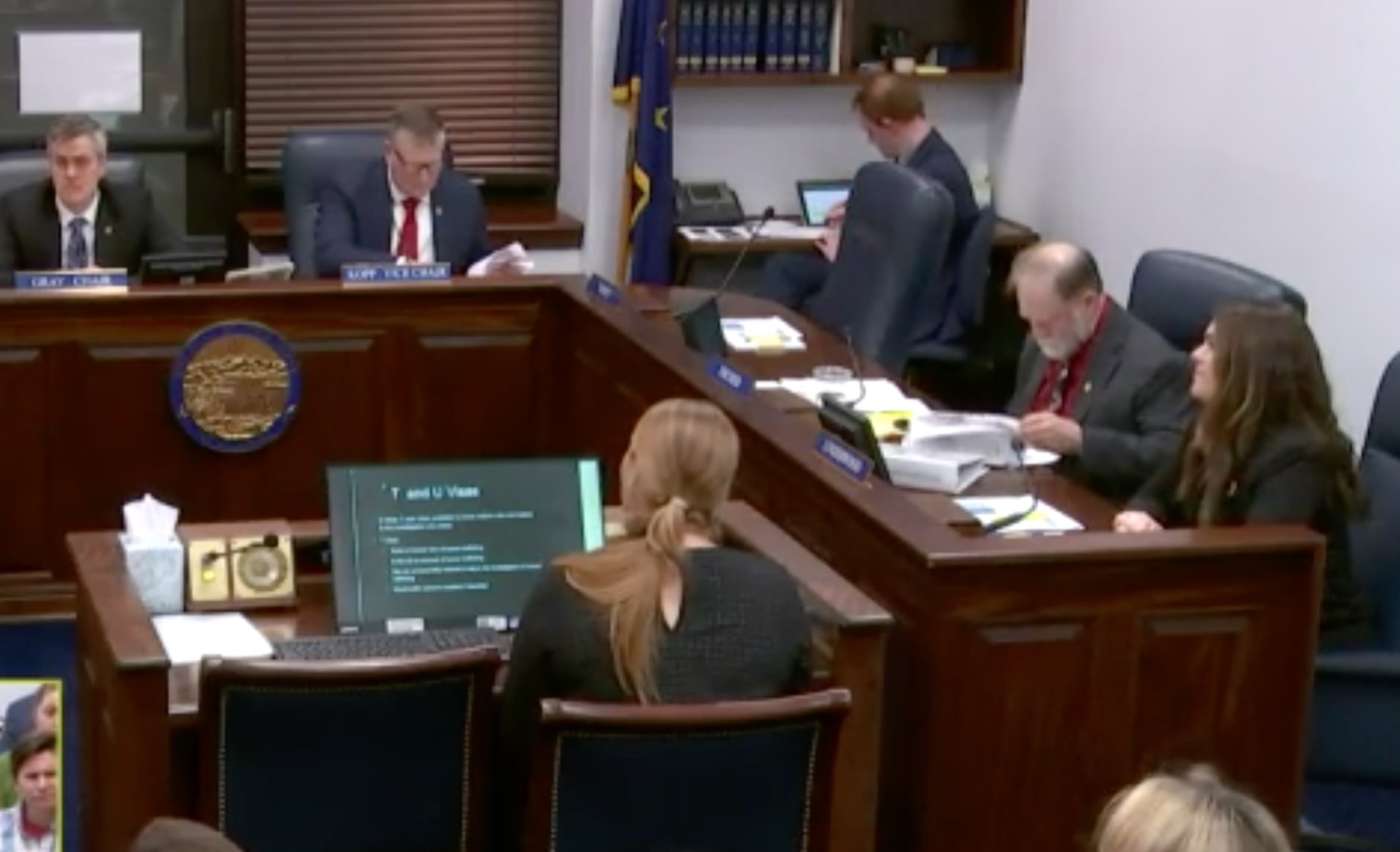
On Wednesday, Anna Taylor, the group’s deputy director, participated in a revealing presentation before the House Judiciary Committee. Taylor appeared alongside Mara Kimmel, an AIJ co-founder and the executive director of the ACLU of Alaska. Kimmel is the wife of former Anchorage Mayor and Democrat Rep. Ethan Berkowitz, who left elected office in a shroud of controversy.

At the outset, Kimmel stated that Alaska has the fourth-highest rate of naturalized citizens in the country. She also touched on the visa types used by employers in the state, such as the H-1B. According to Kimmel, that particular program is used to hire people for jobs in industries that range from oil and gas to education.
When it was Taylor’s turn to speak, she outlined AIJ’s various services and programs. Much of what she said overlapped with Kimmel’s remarks, focusing on legal immigration, visas, and a variety of statistics.
The subject of illegal immigration was notably absent from the presentation. An awkwardness descended on the room when Republican Rep. Jubilee Underwood of Wasilla brought it up.
“My question would be, on the flip side of that, do you guys have any lists of things that would be considered illegal immigration and what that looks like?” Underwood said. “If so, what does your organization believe is the solution for that?”
Taylor struggled to formulate a response.
Illegal immigration is “complicated because immigration law is so complicated,” Taylor said.
She seemed to be grasping for a way to deflect from Underwood’s question and ultimately did by focusing on terminology.
“Illegal and legal, I tend to use the words ‘documented’ and ‘undocumented’ because that’s focusing on someone’s status, and it’s a more precise term because people’s status can change so much,” Taylor continued. “It’s a complicated answer.”
According to the White House, it’s not so complicated and the public, for now, more or less agrees with that position.
A recent NPR/Ipsos poll found that “a plurality (48 percent) of respondents say they support Trump’s call for mass deportation of all immigrants living in the U.S. without legal status.”
That is also why money received by organizations that work against removal efforts has become a hot topic.
During the hearing, Democratic Rep. Genevieve Mina asked about AIJ’s funding. Taylor replied that a good deal of the services they offer are “free” thanks to federal grants.
Except it’s not technically free. Taxpayers are subsidizing it. Many of them would likely object to this use of public funds or would at least like a say. Voter frustration with this state of affairs contributed to the election of Trump, as immigration was and is a top issue for the American electorate.
As previously reported by Must Read Alaska, the institute has received more than 30 percent of its support and revenue from such grants in the last two years.
Underwood’s remarks and Taylor’s responses start around 37:38 at this link.



