
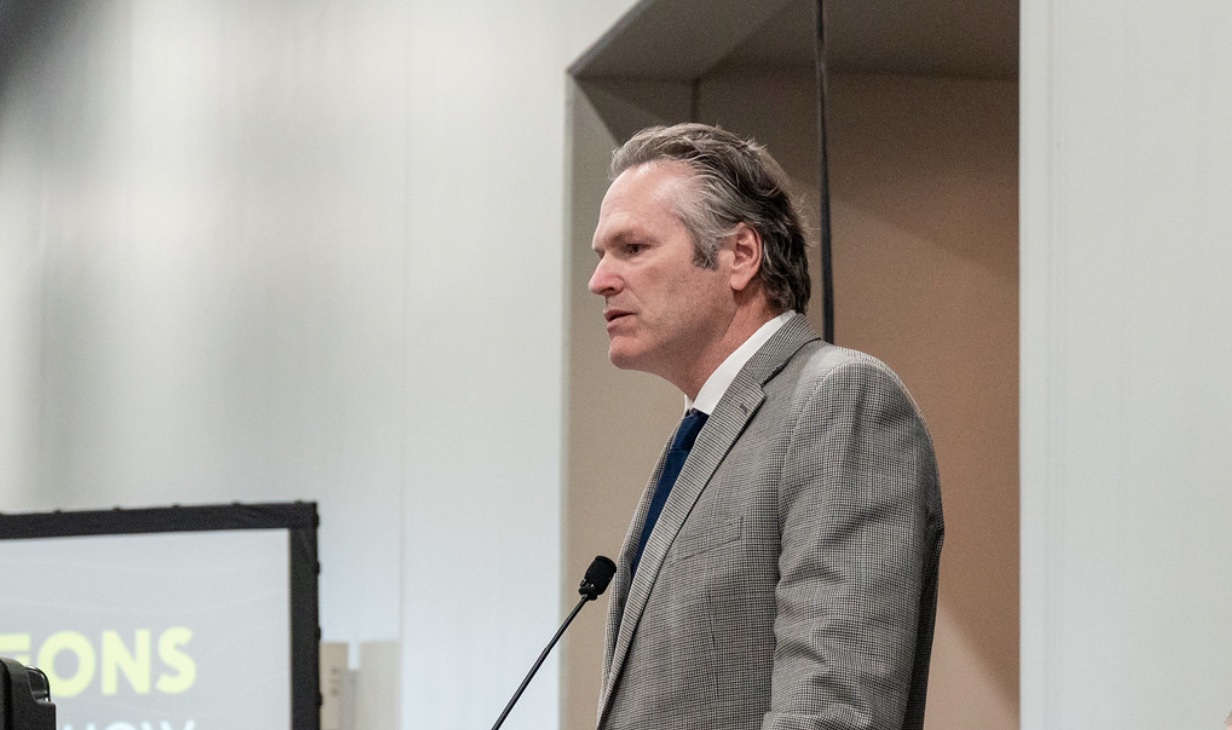
As the Alaska Legislature gavels into session on Tuesday, Gov. Mike Dunleavy issued a statement about his top areas of concern for this year’s lawmaking season. They include items he is bound to be talking about in his sixth State of the State Address, which will be Jan. 29 at 7 pm.
Affordability
“A major focus for this year’s legislative session is affordability. Alaska can be an expensive place to live, but we can also do something about it. Food and energy security, childcare, housing, access to land, and healthcare are the key areas we need to work on to make Alaska an even better place to live. But as we work to solve these issues, we must ensure that we are not focused only on the short term, but that our work sets up Alaska to be prosperous over the next 50 years,” the governor said. That is going to mean generating wealth, which means resource development.
“We have the ability to generate wealth to pay for the services Alaskans need but we have to be committed to developing our resources to pay for new or existing programs. We can’t continue to say ‘no’ to developing resources,” he said.
Public Safety
Public safety has been a priority of Dunleavy since before he was elected in 2018. Dunleavy’s FY25 proposed budget invests in public safety by adding 10 additional Village Public Safety Officers, three new investigators focused on crimes against children, and four investigators fully dedicated to missing and murdered Indigenous persons cases.
Improving Educational Outcomes
Alaska’s K-12 students are still significantly underperforming by every measure.
Dunleavy seeks to advance tribal compacting of education. During 2023, the Department of Education and Early Development selected five tribal partners to start negotiating a state-tribal education compacting demonstration project. Ten months of negotiations concluded with a final legislation report that outlines how Tribally Compacted Public Schools can be advanced through new legislation.
Work to address Alaska’s teacher retention and recruitment challenges that began after Dunleavy’s 2020 State of the State address have continued in 2023. Drawing on research and findings from the Governor’s Teacher Retention and Recruitment Working Group, Dunleavy introduced HB 106 to provide lump sum cash incentives of either $5,000, $10,000 or $15,000 directly to classroom teachers depending on the district where they taught.
The bill is currently in House Finance Committee.
In August, the Department of Education published Alaska’s Teacher Retention and Recruitment Playbook which identifies practical, professional and policy recommendations to address Alaska’s persistent issues with retention and recruitment.
Alaska is Open for Business
Dunleavy introduced, and the Legislature subsequently passed a bill in 2023 that will allow the State to take part in the global markets for carbon trading. This bill will promote more active forest management. Together with a bill the governor signed to establish an Alaska lumber grading program, Dunleavy is working to shift Alaska’s forests from liability that bring in very little revenue and require spending millions of dollars on wildfire suppression each year to an asset that is revenue positive.
Another Dunleavy bill before the legislature would enable the State to generate revenue by storing carbon in depleted oil and gas reservoirs and other underground formations.
The Alaska Affordability Act
Affordability for Alaskans has been a primary focus of the Dunleavy administration. This session, Gov. Dunleavy will introduce the Alaska Affordability Act that he believes helps with expenses that impact a family’s budget: childcare, energy, housing, and food security.
The Task Force on Childcare was established to develop a plan to improve availability and affordability of quality childcare throughout Alaska. The task force delivered preliminary recommendations in November, and a second report is due in July. The administration will be implementing the task force’s recommended regulatory changes and working with the legislature on additional statutory changes.
The governor created the Alaska Energy Security Task Force to develop a comprehensive statewide energy plan for energy generation, distribution, and transmission and identify solutions for Alaska with a focus on affordability, reliability, and security. The Energy Security Task Force report was published in December.
In addition to continuing the work in these areas, Dunleavy said he will abe advancing ways to improve the affordability of housing and increasing food security under the Alaska Affordability Act.
Energy
The Alaska Energy Independence Fund will provide loans to families and rural utilities to help finance sustainable energy projects. This includes power generation and storage, as well as efficiency improvements.
Legislation incentivizing new Cook Inlet natural gas production and geothermal energy will also be introduced this session.
To increase the diversity of energy sources in the Railbelt region the Dunleavy administration will propose legislation to streamline the regulatory structure of the transmission lines and include budgetary measures to upgrade and improve the lines used to transport electricity from power plants to homes and businesses. Creating innovative solutions to upgrade the grid and manage the high cost of energy in rural Alaska is crucial for the future affordability of Alaska.
Alaska has an abundance of energy resources and an all-in approach to energy will create the lowest cost of energy, ensure reliability, and avoid dependency on outside sources. Dunleavy expects to have conversations about developing all energy sources available to Alaska, he said.
“I look forward to the next 121 days of working with lawmakers on what matters most to Alaskans,” said Governor Dunleavy. “While we may have different opinions on policy issues, we are all striving to reach the same goal of making Alaska a better place to live and raise a family.”


