By SUZANNE DOWNING
I speak from experience, the experience of an Alaska public school graduate: The public schools in Alaska are not what they used to be.
Once, we were at the top of the heap. Our students scored among the best in the nation. OK, OK, that was the 1970s.
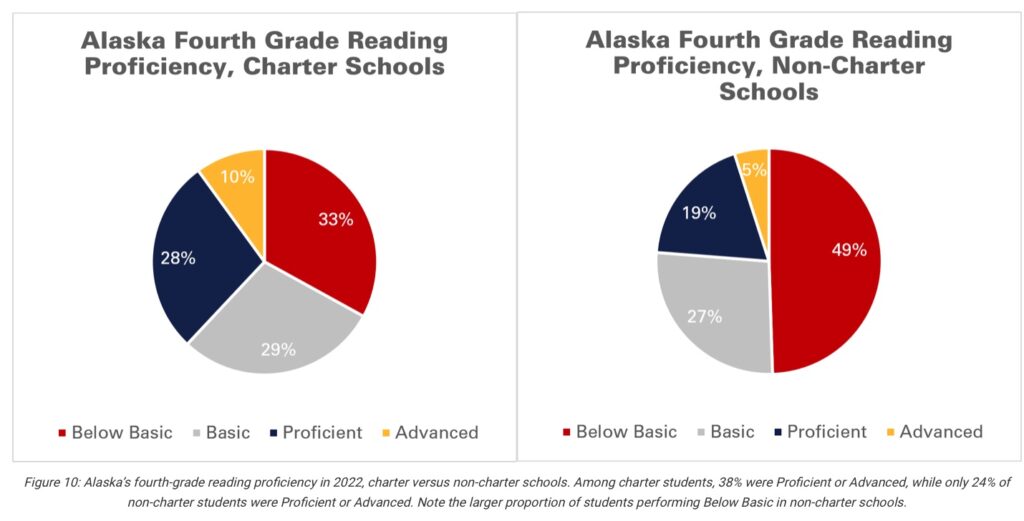
But since then, Alaska has slipped, and now ranks 49th in fourth-grade reading on the National Assessment of Educational Progress.
If Alaska’s educational system was the private sector, the product line would be discontinued and the company would have filed for bankruptcy protection by now. Our state, once the envy of states across the nation, has failed our students miserably.
The CEO of the state is a former school teacher and superintendent. Gov. Mike Dunleavy knows Alaska students deserve better. That’s why he launched a major reading initiative that received bipartisan support in 2022, to focus on the basics, so students can at least read at grade level by the time they enter fourth grade.
He’s not up for reelection again, so what better time to deliver even more meaningful education reforms than now, when the National Education Association can’t easily foil him?
Or can they? It appears they can, if they go after those who are up for election, as the entire Alaska State House of Representatives is this year. The NEA has a chokehold on this state, which is perhaps one reason our students are failing.
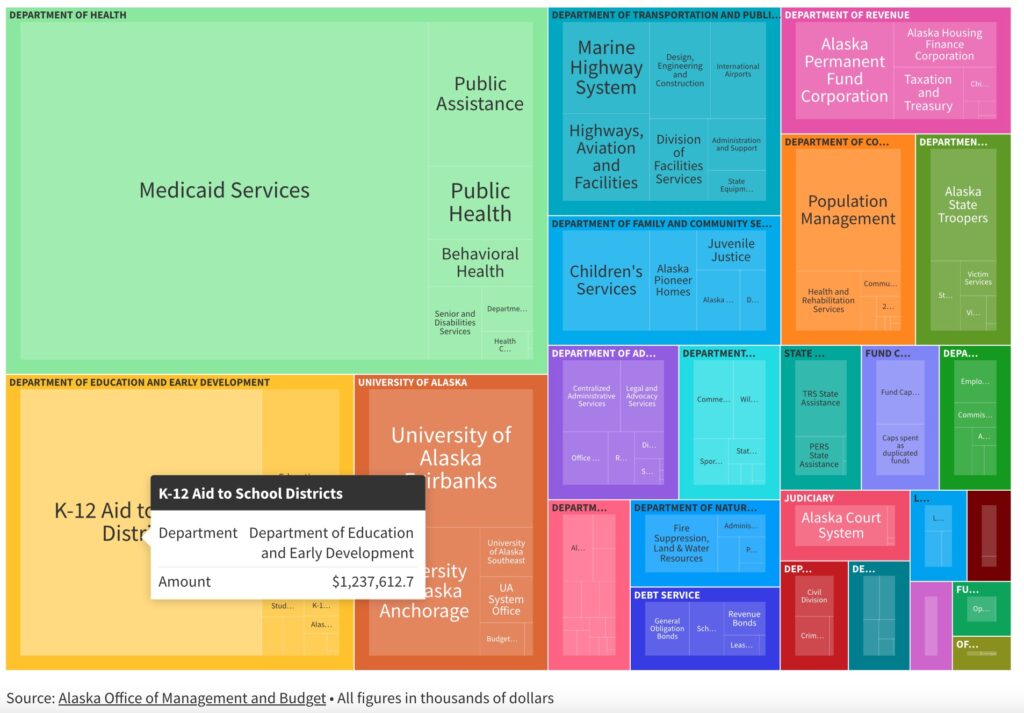
In Alaska, school funding has been essentially flat for years, in spite of what the education industry says. Although the funding formula — the base student allocation — has not changed much in the past decade, each year the governor and Legislature make up for the flat BSA with one-time budget appropriations to keep school programs in the black, while the state looks for a way to pay for everything Alaskans have come to expect of their government during an era of Medicaid expansion and flat returns from oil revenues.
Meanwhile, our state’s public schools have lost over 3,000 students in eight years to private schools, home schools, outmigration, and low birth rates. School boards, never inclined to trim budgets, have refused to consolidate campuses, close schools, or get back to basics. They are caught up in the “old think,” from days when our state had more oil dollars than sense.
For example, the Anchorage School District spends $80 million a year on administration. The overall budget is $547.5 million. Anchorage has 2,424 teachers and over 2,900 “other” staff, including counselors, psychologists, and over 1,200 administrators — one administration employee for every two teachers. The administrators are paid handsomely.
Southeast Alaska has 17 school districts, some with student enrollment of barely 100. But the districts are protective and won’t allow any consolidation, even though it’s long past due.
Senate Bill 140, which started out as an unneeded rural internet bill, ended up as a union-powered vehicle to spend more on education without asking schools to make even a one-degree course correction.
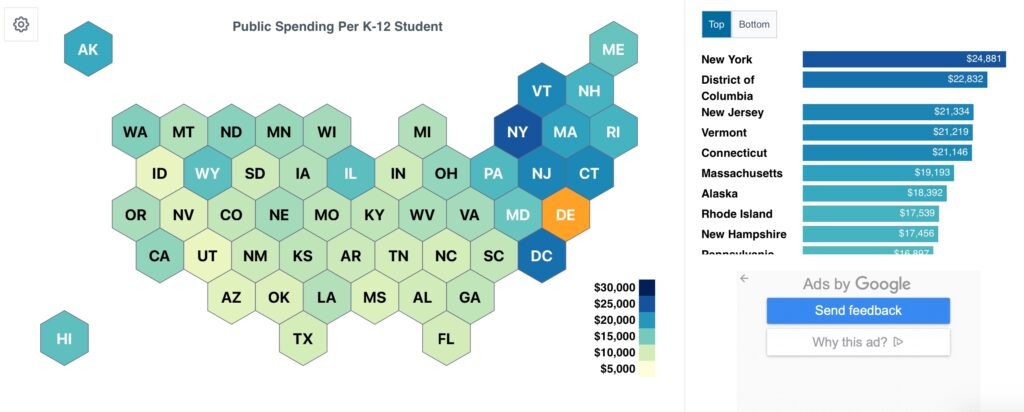
Throw money and you’ll get different results? Alaska already has a healthy state education budget; nearly $19,000 is spent per student per year. In addition to the base student allocation, Dunleavy proposed this year:
- $8.3 million for school construction and major maintenance.
- $5 million for the Alyeska Reading Academy and Institute.
- $1.5 million for Teacher Recruitment, Retention, Certification and Apprenticeship Development.
- $1.5 million for continued Career and Technical Education Initiative.
And yet the education industry wants another quarter billion dollars baked into the annual formula, without offering even a crumb to education reform. Next year, they’ll be back for another quarter billion.
Gov. Mike Dunleavy said he wanted a couple of things changed if Alaskans were going to be asked to throw their Permanent Fund dividends at education.
He wanted an alternative way for charter schools to be authorized, so that local districts, controlled by unions, couldn’t stop parents from organizing a high-performing school. He also wanted teacher retention bonus pay — money that would go straight to teachers who stick around, and not to administration or unions. In fact, unions would not get access to that bonus to skim money for dues.
It’s not as if the governor was asking for vouchers, which is a subject that always sends liberals into fits of rage. But the education industry threw a hissy over the boost to charter schools and the idea of bonus pay.
Some Republican legislators cowered from these simple requests that the governor had made, even though charter schools are the one bright shining star in Alaska’s educational gloom. They didn’t fight for the governor. Instead, they fought him, thinking that the Democrats would not run someone against them this year.
We now are at a possible showdown with a Republican governor and several Republican members of the Legislature who are at odds. Some legislators simply want to cheat Alaskans’ out of their Permanent Fund dividends in order to buy a perceived peace with the suboptimal performance of the National Education Association Alaska.
Some legislators, who ran and won on conservative principles, are fearful they might be unelected if they stick to conservative values and the conservative team.
The legislators in question know who they are. They’ve all been contacted by the governor to see if they will override his veto when they reconvene next week. He even gave the Legislature a respectable two-week period to come up with alternative legislation so he could get a few education reforms in return for his signature. They could not work together well enough to move the needle in two weeks.
It’s not exactly a Republican divorce, but there is a sense of betrayal and the sides are a little miffed at each other. Although not certain, it still can be healed.
For his part, Dunleavy is popular with the people. He won reelection without even having to go through a second round of vote counting in the ranked-choice process. He is, by Morning Consult pollsters, among the most popular governors in America, having survived a Democrat-fueled recall attempt in his first term. They rank him sixth from the top of all 50 governors. And he is, as the executive of the state, the highest-elected Republican and that makes him the honorary head of the Alaska Republican Party, in the same way that Joe Biden, highest elected leader on the Left, is the head of the Democratic Party.
That’s not what the “AKLibraryChick” caucus says on X/Twitter. She says he’s the most hated person in Alaska since statehood. This is the type of discourse found in NEA-Alaska, the same type of people who have delivered such abysmal results in our classrooms:

Good thing Dunleavy has tough skin because this is the kind of thing that libs lob at conservatives every day.
I’d like to think that Republicans who Dunleavy helped elect, who asked him to appear as the guest at their fundraisers, and who asked him for endorsements, would work with him and not join with the Democrats and AKLibraryChicksters in trying to prevent him from succeeding in actual education reforms — something that means everything to him as a former teacher, administrator, and school board member.
As for the Republican legislators who are thinking about overriding his veto, there are some new faces in Juneau and many of the legislators in the House are unseasoned in the negotiations that lead to outcomes. They are scared that the NEA nasties will put a target on them and pluck them from office that they just won in 2022. For now, being reelected may be more important to a few legislators than sticking together as an actual conservative team to create real reform in the one chance they may have in their entire lives to fix something as big as the education mafia.
Last week, we caught wind of a new independent expenditure group that is making it clear they will support pro-education candidates — and by that we don’t think they mean it’s just about pro-spending. We think it means they’ll support those who stick with a reform-minded governor and try to actually improve results, not just underwrite the embarrassing, suboptimal status quo.
Suzanne Downing is editor of Must Read Alaska and a graduate of Juneau-Douglas High School.