
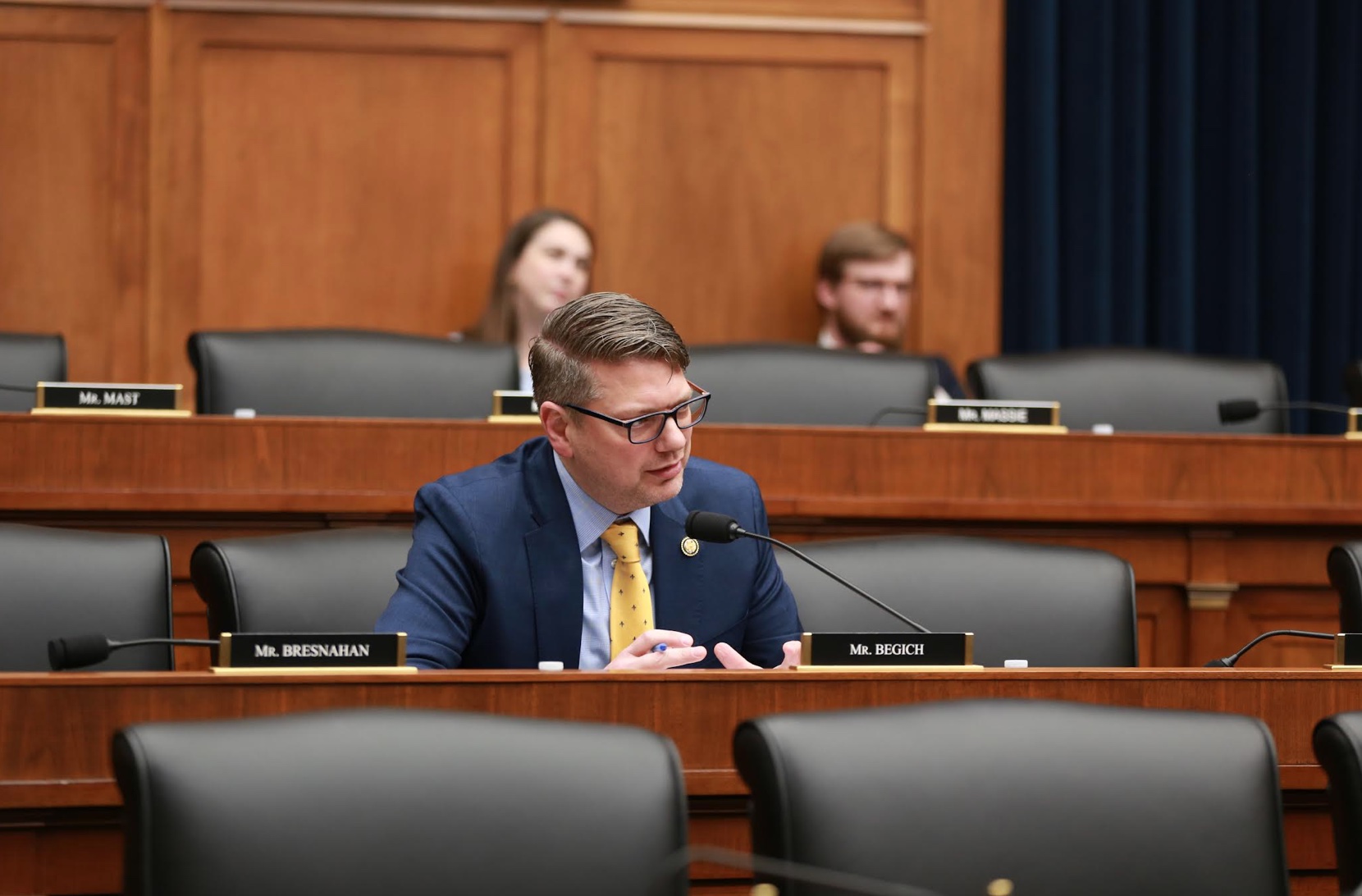
Alaska Congressman Nick Begich voted Thursday in favor of a sweeping federal rescissions package that claws back $9.4 billion in previously approved but unspent government funds. The bill, House Resolution 4, passed the US House in a narrow 214–212 vote and now heads to the Senate.
In a statement released on X, Begich called the measure “a necessary step for restoring fiscal responsibility in our nation,” adding that “America has been built on principles of freedom of expression, self-determination, sovereignty, personal responsibility, and limited government. This package supports those values by rescinding $9.4 billion from programs that do not reflect the will of the taxpaying public.”
The legislation cancels funds that had been allocated to various foreign aid efforts and to the Corporation for Public Broadcasting, which supports NPR and PBS stations nationwide, including Alaska’s public radio and television networks. Much of the targeted foreign spending was routed through the US Agency for International Development (USAID), which Begich described as “ideologically-shaped” and “misused to promote political and socially left policies abroad” under the Obama and Biden administrations.
“This package helps refocus our support in ways that are consistent with America’s core values, rather than promote the agendas of international bureaucracies and ideological NGOs,” Begich wrote in a statement.
The congressman said cuts to public broadcasting subsidies, are due in part to how the media landscape has changed dramatically since the early days of radio.
“While rural communities have in the past been indirectly supported through state-sponsored media, we must acknowledge how far we have come in terms of connectivity since the birth of radio more than 120 years ago. Alaskan residents have embraced today’s pervasive cellular, satellite, and wireline technologies, connecting rural communities to critical information and resources in rich and compelling ways.”
Rescission does not affect emergency management funding directed to rural communities. “Importantly,” he said, “emergency management funding from these budgets that is directed to rural communities has been preserved.”
He added that he will continue to support both “new connectivity technologies” and “durable legacy technologies such as radio and long-range digital television” to ensure Alaska’s remote communities stay connected.
A rescission, under the 1974 Impoundment Control Act, allows Congress to cancel previously approved funding that hasn’t yet been spent. It requires only a simple majority in both chambers, making it easier to pass than most other forms of budget legislation.
While rare, rescissions are sometimes used to signal fiscal restraint or redirect funds away from programs that have become politically unpopular.
With the House’s narrow approval, the bill faces an uncertain future in the Senate, where senators like Sen. Lisa Murkowski and Sen. Susan Collins are unlikely to go against public broadcasting, which has been a political ally of theirs for years. Murkowski also has issued statements in support of USAID, calling the cuts by the Trump Administration a “confusing and callous handling of personnel matters.”


