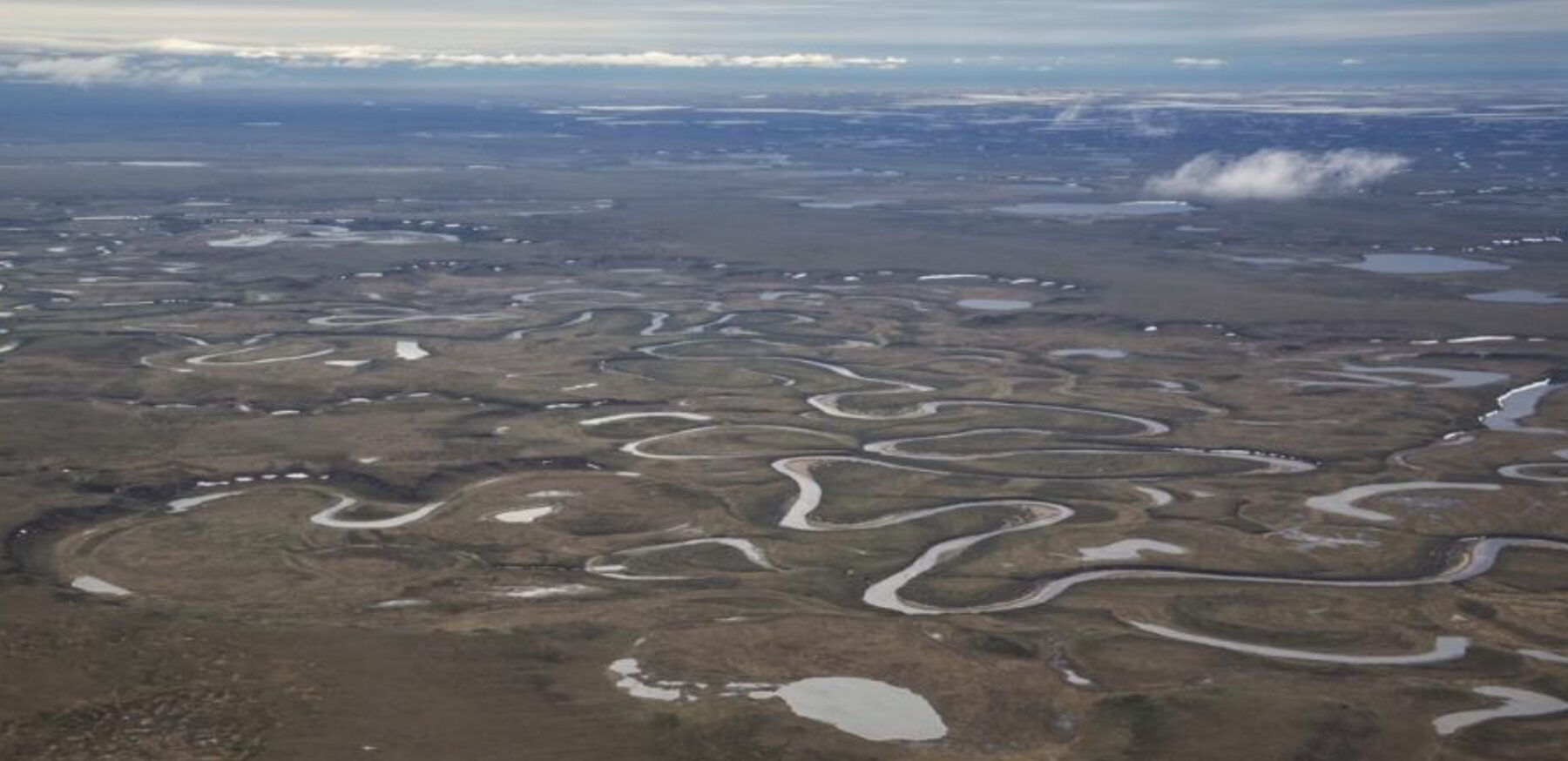
The 23 million-acre petroleum reserve on the North Slope was set aside as an emergency oil supply, originally for the U.S. Navy, by President Warren Harding.
In 1976, in accordance with the Naval Petroleum Reserves Production Act, administration of the reserve was transferred to the Department of the Interior’s Bureau of Land Management (BLM) and renamed the NPR-A.
President Joe Biden is on the verge of locking down half of it, making it unavailable for oil and gas development. He intends to do so with a new rule that is proposed by the Biden Administration through the Bureau of Land Management, a division of the Department of Interior. The pubic comment period has ended, and the rule will be finalized soon.
Rep. Mary Peltola endorses Biden’s reelection and has had no apparent willingness or ability to reverse the impending economic damage to Alaska.
“The initiative, set to be finalized within days, marks one of the most sweeping efforts yet by Biden to limit oil and gas exploration on federal lands. It comes as he seeks to boost land conservation and fight climate change — and is campaigning for a second term on promises to do more of it,” Bloomberg reported.

While the Willow project would not be affected, this new rule appears to be more extensive than originally proposed by the Biden Administration. It threatens to make it nearly impossible to economically develop another Willow-sized project.
“That’s spooking oil companies with holdings in the National Petroleum Reserve, which — along with the rest of Alaska’s North Slope — was viewed as a major growth engine for the industry before the shale boom. Interest has surged again in recent years, fed by mammoth discoveries. Tapping the region’s reservoirs could yield decades of production,” Bloomberg reported.
“Company executives and Alaska lawmakers have increasingly raised alarm over the plan, saying it could thwart oil and gas development across much of the reserve, even on existing leases. The opposition has united a broad spectrum of foes, from Alaska Natives to lower-48 oil producers,” the news agency said.
The opposition includes Santos, which has leases on more than one million acres in the NPR-A and is developing the Pikka Unit as a joint venture with Repsol. Santos said in a letter to the Bureau of Land Management that the rule is going to mean entire projects being denied.
“ConocoPhillips, which has 156 leases in the reserve, warned the regulation would violate its contracts and “drive investment away from the NPR-A.” And Armstrong Oil & Gas Inc., whose leases there span 1.1 million gross acres, said the measure could block it from building the infrastructure needed to access those tracts,” Bloomberg said.
The new regulation would limit future oil development in some 13 million acres (20,000 square miles) of designated “special areas,” including territory currently under lease. Some 10.6 million acres would be completely locked down.
But wait, there’s more: “The proposal would create a formal program for expanding protected areas at least once every five years — while making it difficult to undo those designations. And it would raise the bar for future development elsewhere in the reserve,” Bloomberg reported in a story that is behind its paywall.