
By CRAIG MEDRED
When and how was it that American journalists became so contumelious toward the U.S. working class?
On second thought, let me rephrase that to head off the comments from conservative critics of the media who imagine a long history of bias.
When and how was it that American journalists judged it publicly cool to badmouth blue-collar America?
Case in point: “Watching the videotape of the Matanuska-Susitna Borough school board meeting on April 22, you can actually see America’s IQ points circle the drain and slip away.”
These are the words of Washington Post book writer Ron Charles pontificating on something he imagined was done by the ignorant, country bumkins of “The Valley,” as other residents of the Anchorage metro area know the land the city’s upper class considers the home of the “trailer trash”.
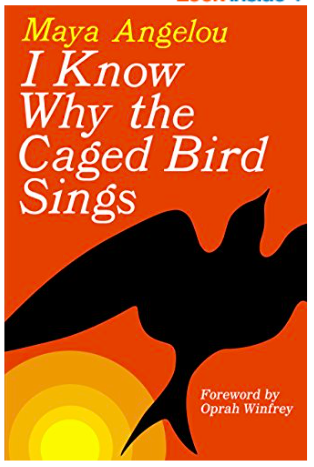
From reading Twitter – where you can daily find the well-researched and always accurate reporting of one Donald Trump, president of the United States (POTUS) – Charles concluded “the Mat-Su Borough District School Board voted 5-2 to ban five books from MSBSD schools.”

Only it didn’t.
The books in question weren’t banned from schools, and there is no plan to do so.
Charles either failed to watch the videotape he linked or he didn’t watch it closely, because in that recording one of the members of the Board leading the push to remove books from a class curriculum very clearly states that “I don’t want the books to disappear. I think (students) should have a right to go read these books.”
What the Board did do was remove the books from the “High School English Election Curriculum.” That might have been a bad decision – public entities make bad decisions all the time – but nobody was planning a pyre in Palmer, a bonfire in Big Lake, or a war on literature in Wasilla.
The American Nazi party had not succeeded in filling Mat-Su School Board seats with card-carrying party members.
When this was pointed out to the local newspaper – the Mat-Su Valley Frontiersman which first tweeted the inherently inflammatory words “book ban” – it corrected its reporting to accurately describe what happened, and later wrote another story headlined “Not a full ban.”
Whatever a “not full ban” might be.
VIRUSES
By then, of course, it didn’t matter. The book ban version of reality was off and running unchecked like a new coronavirus:
- “Mat-Su School Board book ban draws ire after vote with no public comments,” Alaska Public Media.
- “Alaska school board bans five books including the Great Gatsby because they ‘depict rape, incest and contain sexual references’ – but some board members admit to not having read the novels,” England’s Daily Mail.’
- “Alaska School Board Bans 5 Books Including ‘Great Gatsby’ and ‘Invisible Man,'” The Daily Beast.
The kicker came when Alaska reporter Dermot Cole, a former columnist for the Anchorage Daily News, lambasted the Frontiersman for correcting its original story.
“The newspaper was wrong to post a correction on its story saying, ‘The original version of this story included the word ban. The books were not banned, but rather removed from the curriculum,'” he wrote.
“The books were banned from the curriculum.”
And what curriculum would that be? Well, according to the teachers who explained things to the Board, it would be the curriculum for an English elective for juniors and seniors that would only be offered if there were enough juniors and seniors interested in the class.
An aged journalist, Cole was playing the favorite word game of old-school journalists called “it might be wrong but it’s not really wrong.” Historically, this was done to avoid the need to write “corrections,” which many thought made their newspapers (if you remember those) look bad because everyone knew how accurately processing huge volumes of information and condensing it into a story in a brief period of time was a task so simple any idiot could do it.
With the internet today revealing just how difficult the job is, the myth of flawless reporting is dead. But it has been replaced by the need of partisans to paint black and white the big, American world of greys.
So Cole pulled up his partisan pants, zipped them shut, and took the defense of a journalistic mistake to a whole new level.
You can only feel sorry for someone who can’t tell the difference between books being banned from schools and books being removed from a reading list for a class that might or might not happen.
Read the rest of this column at CraigMedred.news.


