

By DAVID BOYLE
One of the most controversial issues facing the Alaska Legislature is whether K-12 education funding should be increased, and by how much. The Senate and House leadership disagree on the amount.
In the past few weeks, the House Democrat minority wanted a $321 million increase of education, which would result from a base student allocation formula increase of $1,250 per student, as seen in HB 65. Importantly, this would be a recurring expense because it is proposed for the funding formula going forward.
The House Republican majority offered a $175 million increase, but put it outside the per-student funding formula. Thus, it would be a one-time increase, not a recurring cost.
During the House floor debate this increase in funding would have to come out of the Constitutional Budget Reserve, which requires a three-quarter vote of the Senate and the House.
The final House vote on funding K-12 from the reserve fund failed by one vote. Thus, the House sent the operating budget to the senate with no increase in the education formula.

On April 26, the Senate Finance Committee made several changes to the operating budget, which can be seen below. The Senate decided to fund K12 at approximately $175 million, the same as the original House figure.
The Senate did not put this money into the education funding formula. Like the original House budget, the Senate decided to fund this outside of the formula, as a one-time allocation. Here is a look at the senate’s final budget changes to the house budget:
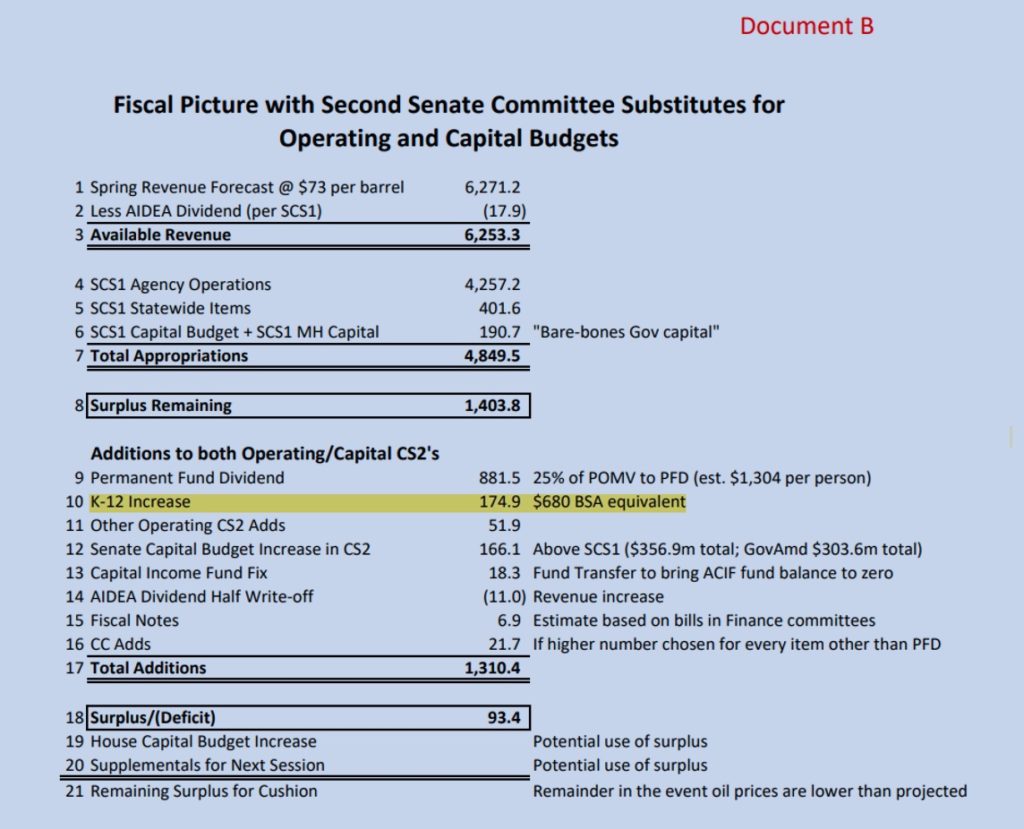
Note that the nearly $175 Million increase is a $680 BSA equivalent increase. This is because the $175 Million increase is divided by the magnified student number of 257,000. Remember, the actual number of students enrolled in brick-and-mortar schools is about 107,000 and the 257,000 number of students that is used in calculating the funding results from the the funding formula multiplier effect.
In reality, if the K12 funding is increased by $175 Million, the per student increase is about $1,635. This would be a 27% increase in per student funding, not the 14% a Senate Finance member stated.
If the entire Senate votes for this budget, then it will go to the House for approval. If the house approves, then it’s done. If the house disapproves, then the operating budget goes to a conference committee made up of members of the House and Senate leadership, including Finance Committee leaders.
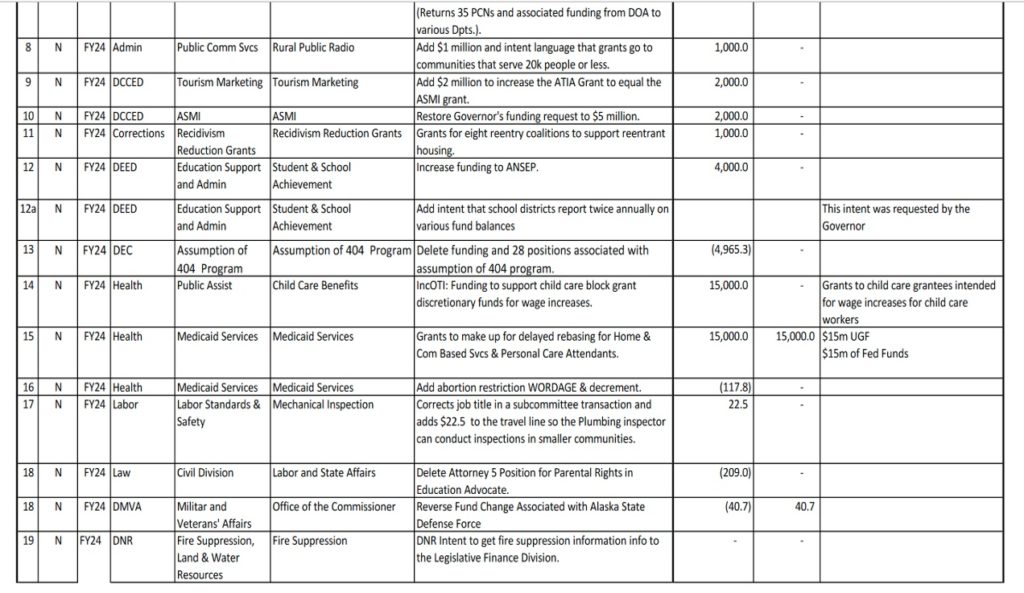
One budgetary plus for the teachers’ unions is the Senate sent a message to its allies in the education industry and the governor, when it deleted $209,000 from the Department of Law for a Parental Rights in Education Advocate, as seen in the budget detail below:
But the big question is, “Will this increase in K12 funding improve academic outcomes?”. There is no accountability required from the school districts for how to spend the extra funds. Will it be spent on salary increases? Will it be spent on more Diversity, Equity & Inclusion training? Will it be spent on bonuses for district administration personnel?
Or will the extra funding actually go to the classroom to improve student outcomes?



